Your digging level

For this genre
0/8
🏆
Sign in, then listen to this genre to level up

Description

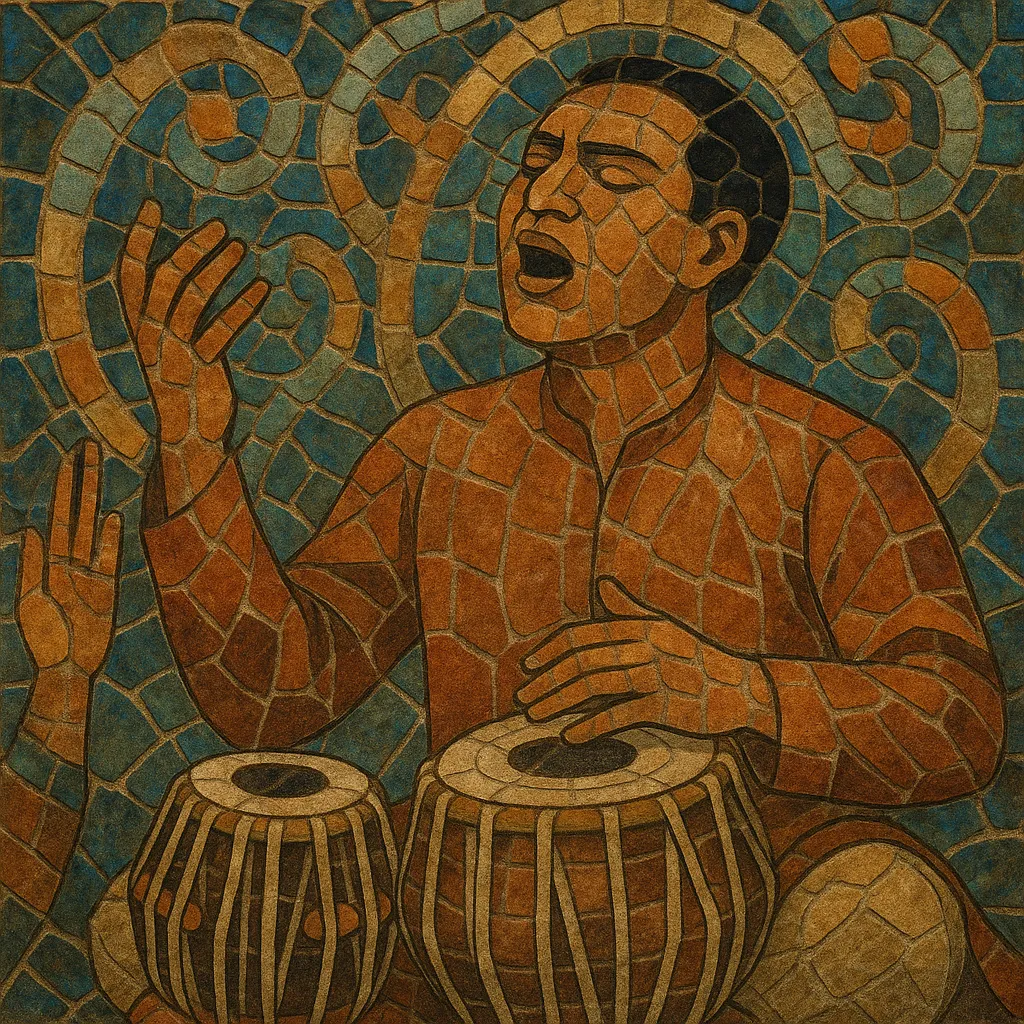
Tarana is a fixed-form vocal composition within Hindustani (North Indian) classical music that sets syllables derived from Persian and Arabic phonemes (such as "tanom," "yalali," "odar dana," "tadeem," etc.) to a medium or fast tempo. Rather than conveying semantic meaning, these onomatopoeic syllables act as rhythmic–melodic vehicles for showcasing laya (tempo), layakari (rhythmic play), and taans (fast melodic runs).

Traditionally placed in the drut (fast) or madhya (medium) section of a khayal recital, a tarana is built in a chosen raga and tala and typically features a compact sthayi–antara structure. Its brisk gait and percussive phonetics make it a favorite for climactic concert moments and for Kathak dance, where its crisp syllables map neatly onto footwork and bols.

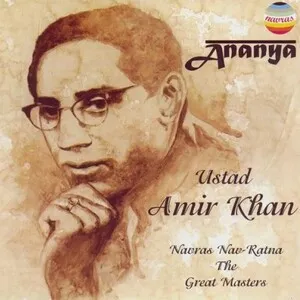
The form is attributed to the 13th–14th‑century poet–musician Amir Khusrau. In the 20th century, Ustad Amir Khan investigated its origins and codified practice, and vocalists such as Nissar Hussain Khan popularized its concert presence.


Sources: Spotify, Wikipedia, Discogs, RYM, MB, user feedback and other online sources

History

Origins (14th century)

Most traditions credit Amir Khusrau (1253–1325) with inventing tarana under the Delhi Sultanate. Drawing on Persian tarannum practice and Sufi musical aesthetics, he introduced strings of non‑lexical syllables shaped by Persian/Arabic phonetics into Hindustani melodic frameworks. From the outset, tarana emphasized speed, rhythmic articulation, and virtuosity rather than texted poetry.

Consolidation in khayal performance

As khayal rose to prominence (17th–18th centuries), tarana found a stable role as a concise, high‑energy composition placed after a slower vilambit khayal. Its form coalesced into sthayi–antara sections within a chosen raga and tala, using mnemonic syllables to articulate tans and bols in tight rhythmic alignment with tabla thekas.

20th‑century study and popularization

Ustad Amir Khan (Indore gharana) researched tarana’s historical syllabary and championed aesthetically expansive, architectonic renderings. Nissar Hussain Khan became widely known for brilliant, fast taranas. Major khayal vocalists—Bade Ghulam Ali Khan, Bhimsen Joshi, Kishori Amonkar, and others—incorporated signature taranas that highlighted their layakari and taan work.

Modern presence and cross‑pollination

In the modern era, tarana remains a recital staple and is frequently used in Kathak dance. Its phonetic flair and driving pulse have influenced semi‑classical idioms and found their way into film/"filmi" and fusion settings, where composers quote tarana syllables within orchestral or popular textures.

How to make a track in this genre

Choose raga and tala
•   Select a raga (e.g., Yaman, Darbari, Multani, Desh) and a tala with a clear, propulsive theka (Teentaal 16 beats, Ektaal 12, Jhaptal 10). •   Decide on madhya (medium) or drut (fast) laya—tarana typically favors drut for brilliance.
Build the text and structure
•   Craft a compact sthayi–antara using non‑lexical syllables of Persian/Arabic color: examples include “tanom,” “yalali,” “tadeem,” “odar dana,” “dar-dar,” “yalana.” Keep phonetics crisp and percussive. •   Align syllables with tala sam(s) and vibhag boundaries; design a memorable mukhda that lands strongly on sam.
Melodic–rhythmic design
•   Outline the raga’s pakad and chalan early, then develop with taans (akar and bol‑taans) using the syllabic text. •   Employ layakari (dugun, tigun, chaugun) and tihai cadences to articulate sections. Interleave sargam passages sparingly to clarify pitch architecture.
Voice and accompaniment
•   Voice is primary; sustain with tanpura. Harmonium or sarangi can provide melodic support; tabla articulates the theka and interacts with bol‑taans. •   Maintain immaculate intonation and vowel–consonant clarity; articulate consonants like “t/d/r/l/n” to punch rhythmic cells without harshness.
Performance arc and finish
•   Start with a clean sthayi exposition, accelerate through taans and bol patterns, and craft 1–3 well‑placed tihais that resolve emphatically to sam. •   Conclude decisively, often by recalling the mukhda or a tightened tihai that seals raga and tala together.
Practice tips
•   Do riyaz with a lehra/tabla loop; alternate between straight pulse and syncopated layakari. •   Drill tongue–jaw agility for rapid consonant clusters; practice breath‑group planning for long taans. •   Record and evaluate diction, sam landings, and symmetry of tihais.

Best playlists

Top tracks

Locked
Share your favorite track to unlock other users’ top tracks

Upcoming concerts

in this genre
Influenced by
Has influenced

Download our mobile app

Get the Melodigging app and start digging for new genres on the go
© 2026 Melodigging
Melodding was created as a tribute to Every Noise at Once, which inspired us to help curious minds keep digging into music's ever-evolving genres.
Buy me a coffee for Melodigging