Your digging level
Description
Son de Pascua is a festive, largely instrumental Christmas repertoire from Central America, most closely associated with Guatemala’s marimba tradition.
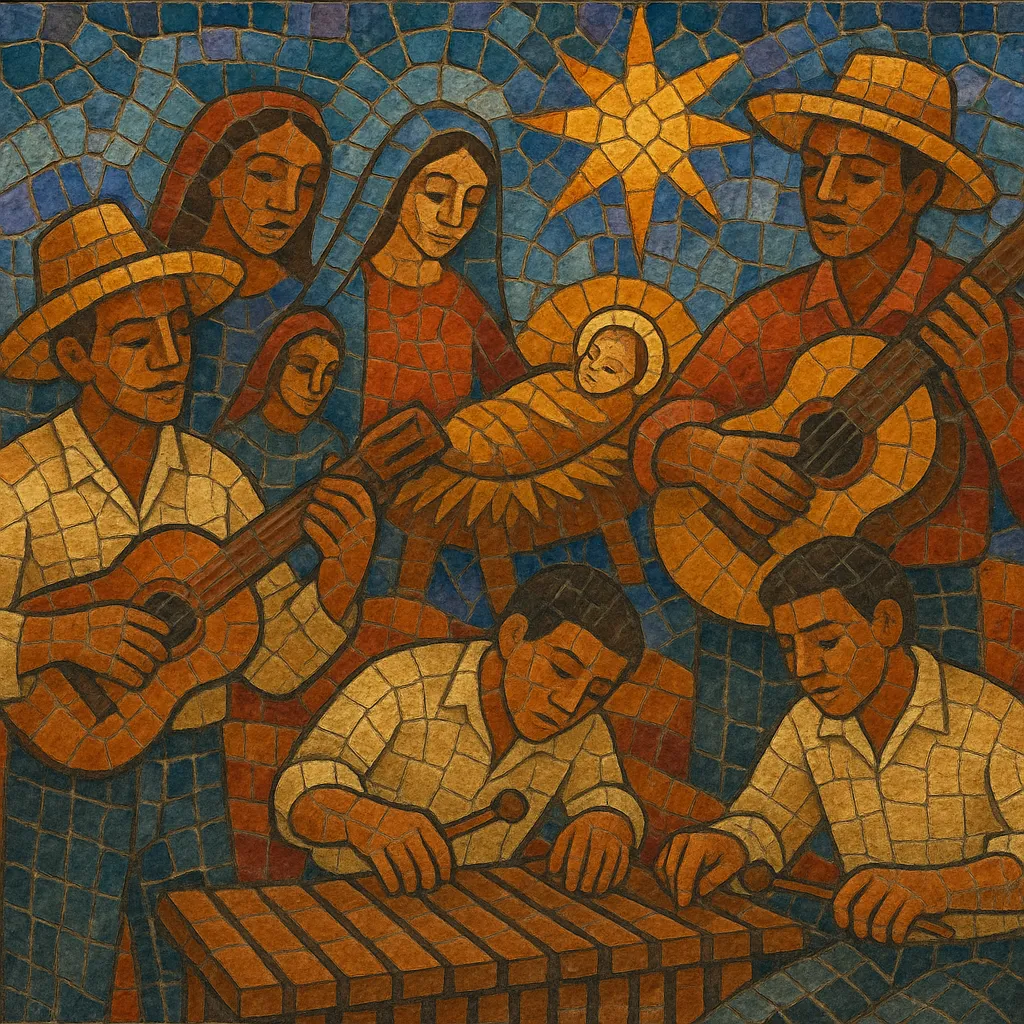
Typically set in a lively triple meter (most often 6/8), these pieces are performed during Advent and the Christmas season for processions, street gatherings, and community dances. Ensembles center on the marimba (often in family choirs of soprano/tenor and bass marimbas) supported by hand percussion (güiro, tambor) and sometimes local double‑reed chirimía.
Stylistically, Son de Pascua combines the buoyant rhythmic drive of regional “son” dance music with the seasonal melodic turns and cadences recognizable from Hispanic Christmas folk repertories. The effect is bright, celebratory, and danceable rather than liturgical, even though the seasonality links it to Christian festivities.
History
Son de Pascua grew out of late-19th- and early-20th‑century urban and highland Guatemalan marimba culture, when marimba ensembles became popular carriers of national and seasonal dance repertories. During Advent and Christmas, players adapted regional “son” dance formulas to holiday gatherings, creating agile, upbeat tunes identified with the Pascua (Christmas) period.
The genre reflects the deep imprint of Hispanic Christmas song traditions—especially the villancico and the broader aguinaldo repertoire—transposed into a local dance idiom. As marimba ensembles professionalized in the early 1900s, they codified seasonal sets of “sones” for December festivities, while community chirimía-and-drum groups continued parallel processional practices.
By the mid‑20th century, Son de Pascua had become a recognizable seasonal dance suite for municipal marimba ensembles and neighborhood groups. Radio broadcasts and state-supported concert marimbas helped standardize key pieces, making them staples of town squares and holiday markets.
Today, Son de Pascua remains a living, community-centered practice. Professional marimbas de concierto and local family bands alike program Pascua “sones” in December, often alternating with other regional sones and popular pieces. Recordings and videos circulate widely around the holidays, sustaining the style’s festive profile across Central America and in diaspora communities.