Your digging level

For this genre
0/8
🏆
Sign in, then listen to this genre to level up

Description

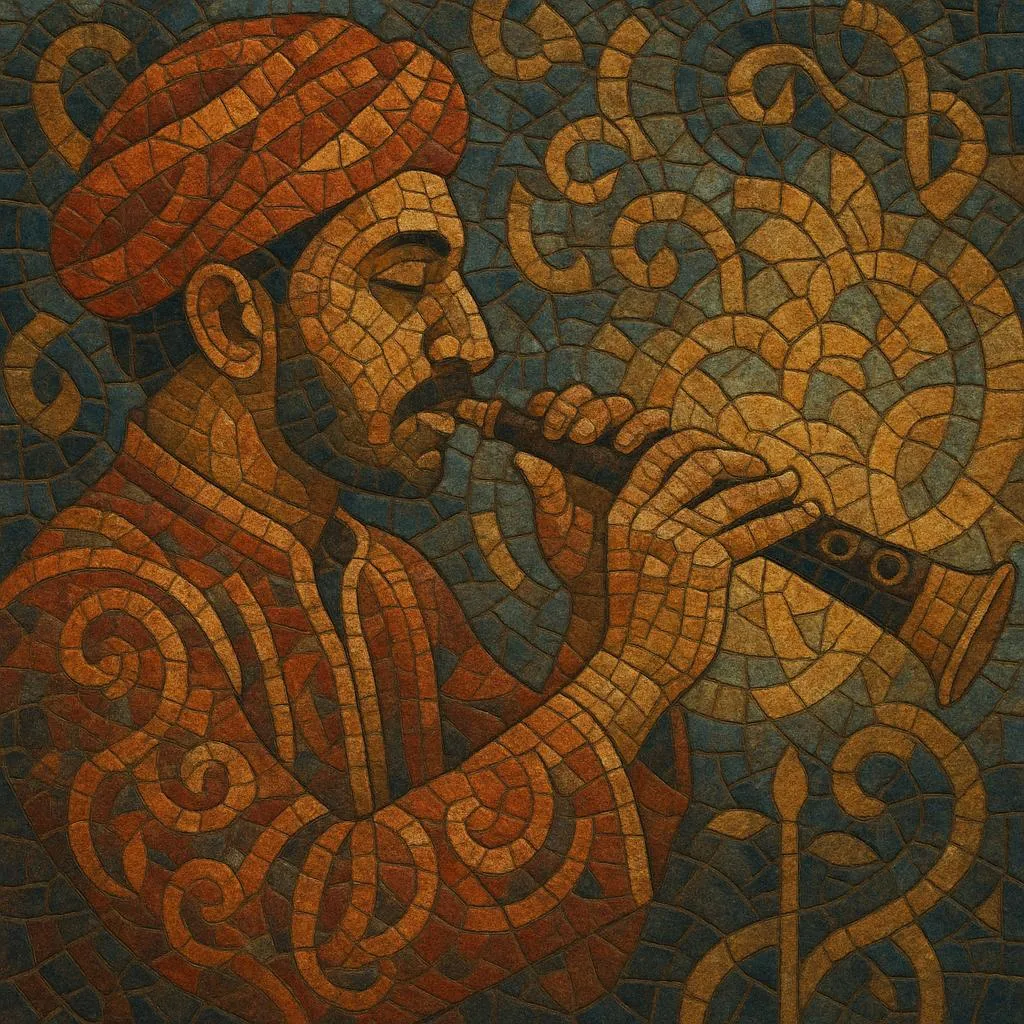
Shehnai refers to the North Indian (Hindustani) double‑reed oboe and the repertoire and performance practice built around it. Long associated with auspicious occasions, temple rituals, and royal naubat (court) ensembles, the shehnai sound is bright, penetrating, and capable of highly nuanced ornamentation.

In the 20th century the instrument was brought decisively onto the classical concert stage, where it now carries full raga expositions, light‑classical dhun pieces, and ceremonial music. Performances typically feature alap (unmetered exploration), followed by compositions (gats or bandish‑like pieces) in established talas accompanied by tabla or pakhawaj, with a sustained drone (tanpura or shruti box). The style draws on Hindustani classical grammar (meend, gamak, murki, khatka, and microtonal inflections) adapted to the instrument’s reed and conical bore.

Beyond the concert hall, the shehnai remains emblematic of celebration in North India and has left an unmistakable imprint on film and devotional music.


Sources: Spotify, Wikipedia, Discogs, Rate Your Music, MusicBrainz, and other online sources

History

Origins and early functions

The shehnai’s ancestors belong to the broader family of double‑reed shawms used across Asia. In North India it became tied to auspiciousness and public ceremony, sounding in temples, processions, and royal naubat ensembles. Its outdoor, projecting tone made it ideal for signaling and celebration long before it was treated as a solo classical voice.

From ritual to the concert stage (early–mid 20th century)

In the early 1900s, virtuoso players from Banaras (Varanasi) and other centers began adapting full Hindustani raga grammar to the instrument. They refined embouchure, breath control, and fingering to enable long meend (glides) and intricate gamaks—techniques previously thought impractical on a double reed. By the 1930s–40s, full evening concerts of shehnai were heard in music conferences and radio, establishing it as a legitimate classical solo instrument.

A landmark moment was its inclusion in nationally broadcast events after Independence, which helped move the instrument from exclusively ritual contexts to a pan‑Indian listening public. Recordings and All India Radio broadcasts further codified repertoire: serious raga presentations (alap → vilambit/drut), light‑classical dhun in folk‑derived modes, and festive pieces.

Post‑Independence expansion and media

From the 1950s onward, conservatories and radio audition systems created formal pathways for professional shehnai artists. The instrument’s celebratory connotations also made it a favorite motif in film scores whenever a scene required the sound of a wedding, homecoming, or benediction. Light‑classical and devotional labels released countless shehnai dhuns, while classical exponents continued to present deep raga recitals.

Today

Contemporary players balance strict raga performance with collaborations in film, devotional, and fusion settings. Maker traditions (reed scraping, staple design, and bore tuning) continue to be transmitted alongside performance pedagogy in gharana lineages, with the Banaras shehnai style especially influential.

How to make a track in this genre

Choose raga, tala, and setting
•   Select a raga suited to the performance context (e.g., morning ragas for temple or ceremonial openings; Kalyan/Bilaval family for auspicious moods; Bhairavi for concluding dhun). •   Pick a tala (Tintal, Ektaal, Jhaptal; for dhrupad‑ang, use Chautaal/Dhamar with pakhawaj). •   Decide whether the piece is a serious raga exposition or a lighter dhun drawing on folk/ceremonial melodies.
Instrumentation and setup
•   Lead: one or two shehnais, tuned carefully with adjustable reed and staple; maintain a well‑scraped reed for stable intonation and flexibility. •   Drone: tanpura or shruti box (A♭/B♭/C systems depending on the instrument’s pitch). •   Percussion: tabla for khayal‑like gats or pakhawaj for dhrupad‑ang presentation; add lehra/harmonium or swarmandal sparingly if desired.
Formal design
•   Alap: unmetered exploration outlining pakad (signature phrases), vadi–samvadi, and key chalan. Use meend and andolan to demonstrate raga identity. •   Vilambit gat: introduce a composed theme with tabla; develop through vistar (melodic expansion), bol‑bant (if applicable), and layakari (rhythmic play), observing raga grammar. •   Drut/ati‑drut: increase tempo with tihai‑framed cadences, tans, and sargam‑like patterns that suit shehnai articulation. •   Dhun option: craft a memorable, folk‑tinged melody in a major‑ish raga (e.g., Bilawal/Kafi/Bhopali) with buoyant thekas that evoke processional/wedding energy.
Technique and ornamentation
•   Exploit the instrument’s strengths: sustained breath phrases, flexible meend across holes, sharp murki and khatka, fast zamzama, and controlled shruti shifts. •   Balance brightness with tonal sweetness by adjusting embouchure and reed opening; use micro‑vibrato and gentle dynamics in romantic or devotional passages.
Accompaniment and ensemble balance
•   Keep tabla/pakhawaj dynamics under the lead; favor theka clarity over heavy fills so the reed timbre speaks. •   Use lehra (if present) minimally; shehnai’s timbre occupies a lot of spectral space—arrange parts to avoid masking.
Performance practice tips
•   Observe time‑of‑day raga conventions when possible; they reinforce the instrument’s ceremonial aura. •   Close long recitals with a Bhairavi dhun or other universally “auspicious” melody to honor tradition. •   In studio/film contexts, double with softer reeds or layer room mics to mellow brightness while preserving attack.

Top tracks

Locked
Share your favorite track to unlock other users’ top tracks
Influenced by
Has influenced
Challenges
Digger Battle
Let's see who can find the best track in this genre

Download our mobile app

Get the Melodigging app and start digging for new genres on the go
© 2026 Melodigging
Melodding was created as a tribute to Every Noise at Once, which inspired us to help curious minds keep digging into music's ever-evolving genres.
Buy me a coffee for Melodigging