Your digging level
Description
Schrammelmusik is an urban Viennese folk style that crystallized in the late nineteenth century around the famed Schrammel brothers, Johann and Josef.
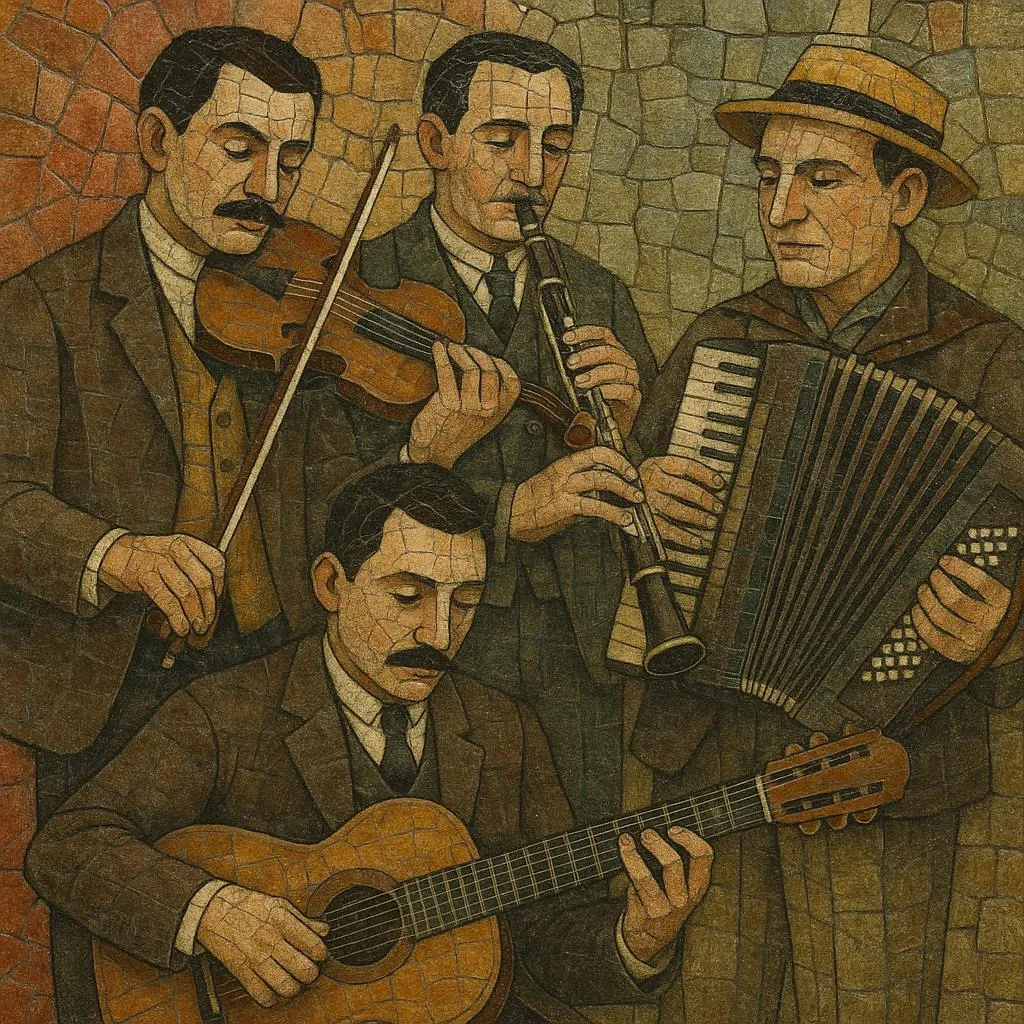
Typically performed as a quartet, the classic instrumentation combines two violins, a high, mellow G-clarinet (the so‑called "picksüßes Hölzl"), and a contraguitar (Schrammelgitarre) with extended bass strings; later variants often add zither or a small diatonic accordion (Schrammelharmonika). The repertoire merges local dance forms (Waltz, Ländler, Polka, marches) with lyrical "Wienerlied" song culture, while retaining a chamber-like elegance suited to salons and the gemütlich atmosphere of Viennese Heurigen taverns.
Musically it balances sentimental melodies, expressive slides and portamenti, supple rubato, and lilting dance pulses, often shifting between major and minor for a bittersweet, nostalgic color. The result is music that can be intimate yet virtuosic—equally at home in popular taverns and bourgeois drawing rooms—and emblematic of fin‑de‑siècle Vienna.
History
Schrammelmusik emerged in Vienna in the late 1800s, taking its name from the brothers Johann and Josef Schrammel. Around them coalesced the archetypal "Schrammelquartett": two violins, G‑clarinet, and contraguitar. Drawing on Viennese dance fashions (Waltz, Ländler, Polka) and the popular Wienerlied song tradition, the ensemble forged a refined yet approachable sound ideally suited to both Heurigen taverns and middle‑class salons.
By the 1880s–1890s, Schrammelmusik was a craze in Vienna, with numerous professional quartets and house bands playing at taverns, garden concerts, and private gatherings. The style’s sweet clarinet timbre and the anchoring bass strings of the contraguitar became sonic hallmarks. Early recordings and published arrangements helped carry the idiom beyond the capital into the broader Austrian cultural sphere.
Through the early 20th century, the repertoire expanded, often incorporating zither and, later, the diatonic "Schrammelharmonika." After periods of decline, the post‑war era saw renewed interest: dedicated ensembles preserved the core dance pieces and character songs, while arrangements appeared for concert stages and broadcast. The 1970s–1990s also brought creative revitalizations that treated Schrammel idioms with contemporary harmonic colors or new lyrical content, while remaining recognizably Viennese.
Schrammelmusik is still performed across Austria—especially in Vienna—by traditional quartets and modern groups. It remains a living emblem of Viennese identity, heard in Heurigen, folk festivals, and concert venues, and it continues to inform the accompaniment style of Wienerlied and other Viennese folk‑derived genres.