Your digging level
Description
Saraiki pop is a regional strand of Pakistani popular music that sets contemporary pop arrangements to lyrics in the Saraiki language, which is spoken in southern Punjab (Multan, Bahawalpur, Dera Ghazi Khan and surrounding districts).
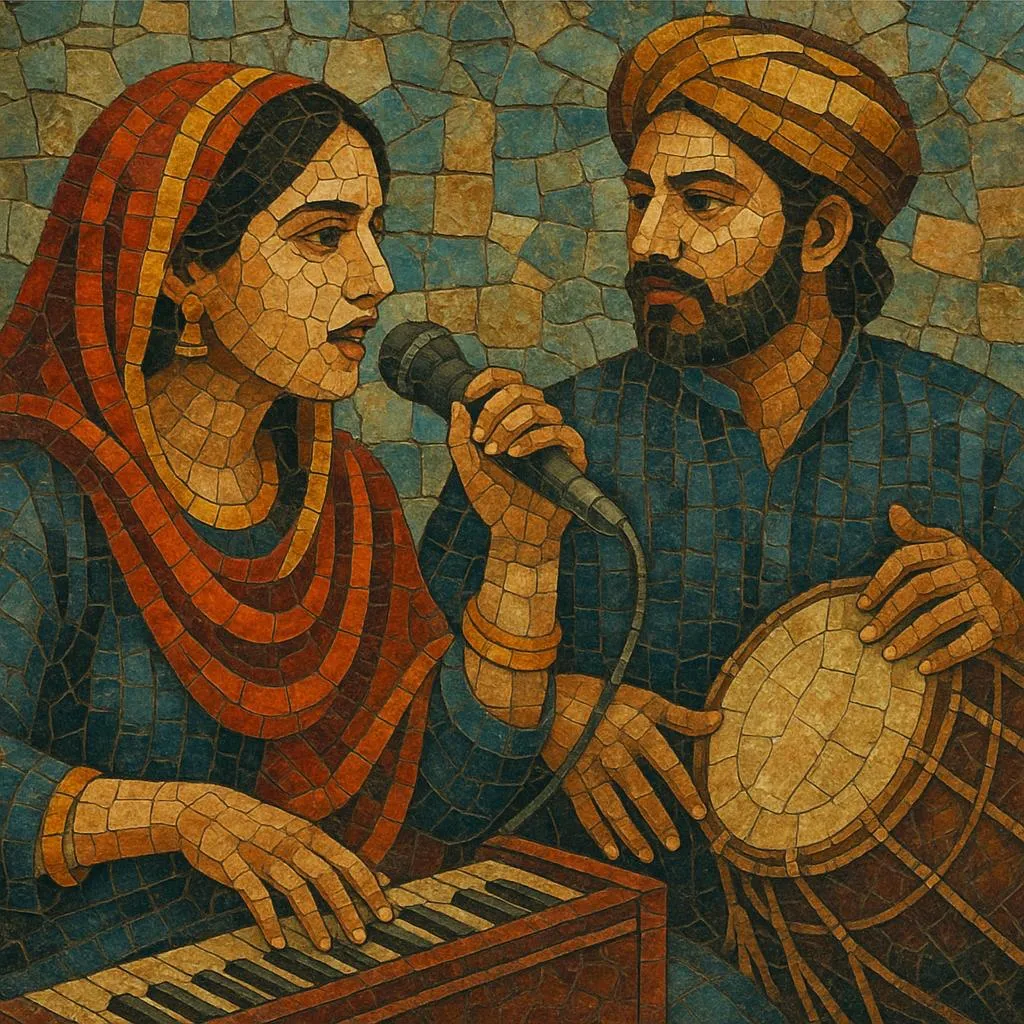
Stylistically, it blends mainstream Pakistani pop production (synths, drum machines and polished studio vocals) with folk timbres familiar to Punjab and the Saraiki belt—dhol and dholak grooves, tumbi riffs, harmonium pads, and call‑and‑response refrains. Melodic phrasing often carries rag‑influenced contours (especially Khamaj and Bhairavi flavors) and the emotive ornamentation heard in ghazal and kafi traditions, while rhythms frequently borrow bhangra/dhol patterns adapted to 4/4 pop forms.
Lyrically, Saraiki pop centers on romance, yearning (virah), rural pride, and devotional undertones, expressed in an accessible, hook‑driven format that travels easily on radio, stage shows, VCDs, and, in recent years, YouTube and TikTok.

History
Saraiki pop emerged as Pakistan’s broader pop boom reached regional languages. Inspired by Urdu and Punjabi pop acts and the popularity of stage shows and audio cassettes, performers from the Saraiki belt began recasting folk and kafi idioms in modern pop formats. The cassette and VCD eras were crucial, helping songs circulate across Punjab’s small towns and diaspora networks.
Through the 2000s, Saraiki pop established a durable circuit of wedding shows, regional TV programs, and VCD/DVD releases. Arrangements grew brighter and more beat‑forward, with dhol/dholak and tumbi layered over synth bass and drum machines. Folk‑pop crossover stars recorded in multiple languages (Punjabi/Urdu/Saraiki), further normalizing Saraiki as a pop lingua.
With YouTube, Facebook, and short‑video apps, the genre found new scale: romantic ballads and dhol‑driven singles amassed tens of millions of views, and family dynasties (e.g., the Rokhri lineage) brought intergenerational continuity. Mainstream platforms and studio sessions occasionally featured Saraiki verses, and pop‑Sufi aesthetics (in the wake of Coke Studio’s success) encouraged smoother, more atmospheric production.
Saraiki pop remains a vibrant, audience‑first music with strong regional identity and national reach. It continues to synthesize folk melodic DNA with contemporary pop and EDM touches, sustaining a pipeline of hits for weddings, truck stops, and digital playlists alike.

Best playlists