Your digging level
Description
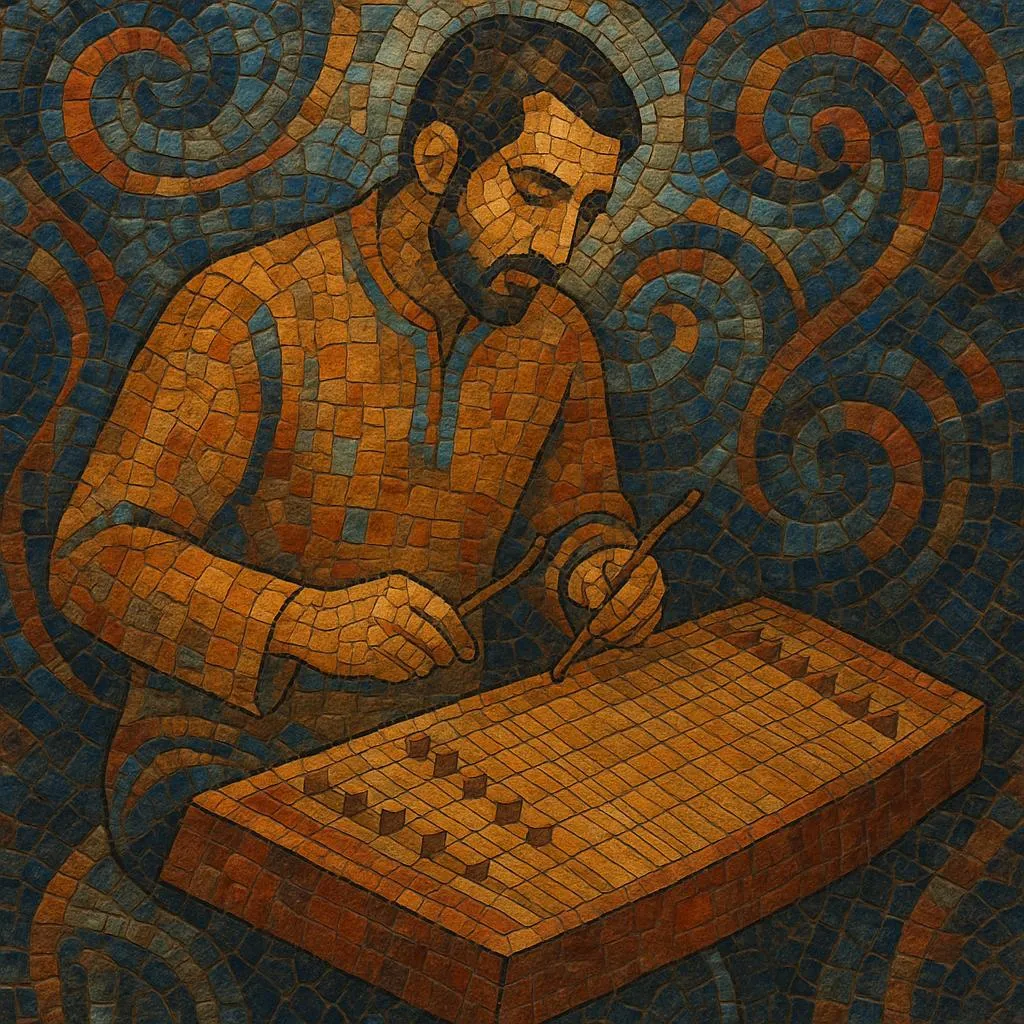
Santur refers to music centered on the santur (or santoor), a trapezoidal hammered dulcimer whose strings are struck with light wooden mallets. Originating in Persia (modern Iran), the instrument spread through Mesopotamia and the wider Middle East, later inspiring related dulcimers across Europe and Asia.
In Iranian classical music, the santur is tuned to the modal dastgāh system and features shimmering tremolos (riz), delicate grace notes, and agile, dance-like passages (especially in chahārmezrāb and reng). In Iraq and the Levant it participates in maqām traditions, while in the Indian subcontinent—especially through the Kashmiri santoor—it was adapted to the Hindustani raga system and re-engineered with more strings and different bridges for sustained melodic development.
The timbre is glassy and bell-like but warm, capable of luminous arpeggios, rippling rolls, sharply articulated rhythms, and intricate ornamentation. Modern performers also bring the santur into jazz, film music, pop, and electronic fusion.
History
The santur originated in medieval Persia and is documented in manuscripts and iconography from the Islamic Golden Age. Its design—a light, resonant soundboard with courses of metal strings over movable bridges—made it versatile for court and urban art music.
From Iran it spread across Mesopotamia (modern Iraq) and the Ottoman sphere, integrating into local classical repertoires (maqām and usul/iqa' rhythmic cycles). Related hammered dulcimers later appeared across the Mediterranean and Central/Eastern Europe, though the Persian santur retained distinct construction and modal practice.
In Iran, masters such as Faramarz Payvar and Parviz Meshkatian codified technique, expanded repertoire, and composed influential works for solo and ensemble. Figures like Hossein Malek, Majid Kiani, and the Kamkar family advanced pedagogy and performance practice. In India, Sharma’s concertizing and film collaborations (as "Shiv-Hari") made the santoor a modern concert staple; disciples and contemporaries proliferated the instrument worldwide.
Today, santur appears in world fusion, Indo-jazz, Persian pop, film/TV scoring, and electronic hybrids. Performers employ extended techniques, cross-modal experiments (dastgāh–raga–maqām), and studio processing, while preserving the instrument’s classical core in conservatories and private lineages.