Your digging level
Description
Samba rap is a Brazilian hybrid genre that combines the rhythmic, percussive foundation and cultural language of samba with the vocal delivery, social commentary, and street-oriented poetics of rap.
It typically draws from samba grooves such as partido alto, pagode-derived rhythmic cells, bloco percussion, and other Afro-Brazilian rhythmic practices, while layering spoken or semi-spoken verses influenced by hip-hop. The result is music that remains rooted in Brazilian swing and collective percussion but uses rap as a vehicle for narrative, critique, identity, and urban expression.
Lyrically, samba rap often addresses race, class, inequality, neighborhood life, Afro-Brazilian heritage, resistance, and celebration. It can range from raw and politically charged to festive and communal, depending on whether the samba element leans more toward traditional roda aesthetics, carnival-influenced percussion, or contemporary popular samba forms.
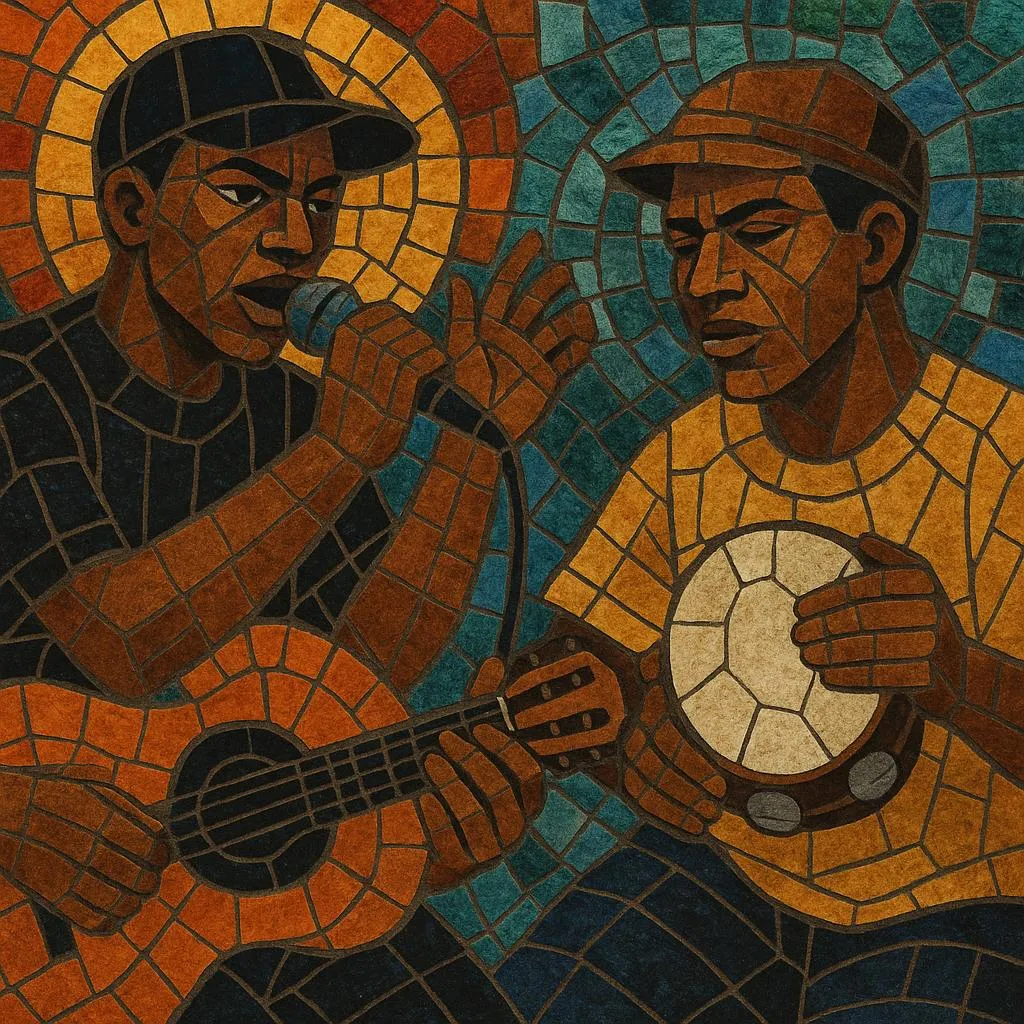
The genre is especially meaningful as a dialogue between two Black Atlantic traditions: Brazilian samba and African American hip-hop. In practice, samba rap may feature live percussion, cavaquinho, acoustic guitar, handclaps, and chorus responses alongside DJ techniques, sampled beats, or rap-style phrasing.


History
Samba rap emerged in Brazil as artists and communities began to connect the social force of hip-hop with the deep-rooted Afro-Brazilian traditions of samba. Its foundations were laid in the late 1980s and early 1990s, especially in urban centers such as São Paulo, where rap became a major language of peripheral and Black youth culture.
Rather than simply imitating U.S. rap, Brazilian musicians adapted hip-hop to local realities. Samba was an obvious and powerful source because it already carried histories of Black identity, collective performance, neighborhood culture, and resistance. The fusion allowed artists to speak in a distinctly Brazilian musical vocabulary while maintaining the directness and urgency of rap.
In the 1990s, the rise of Brazilian hip-hop encouraged broader experimentation with national rhythms. Artists, bands, and community scenes blended rap with samba percussion, pagode grooves, partido alto vocal interplay, and carnival-derived ensemble textures. Some acts approached the style through live band arrangements, while others worked with sampled samba loops or hybrid beat-making.
Samba rap also benefited from a wider Brazilian tendency toward genre crossing. MPB, samba, funk, reggae, and rap frequently interacted in urban music scenes, making samba rap less a rigid industry category than a living practice of cultural synthesis.
The genre carries strong symbolic weight because it bridges two traditions associated with Black urban experience in the Americas. Samba contributes ancestral memory, rhythmic swing, and communal celebration. Rap contributes confrontation, reportage, and verbal precision.
Because of this, samba rap often functions as both party music and political expression. It can sound festive on the surface while delivering lyrics about racism, exclusion, police violence, poverty, dignity, and survival. In many cases, the form itself is a statement of Afro-Brazilian continuity and reinvention.
Today, samba rap survives both as a recognizable hybrid label and as a broader influence within Brazilian music. It appears in live band rap, conscious hip-hop, neo-samba experiments, and artists who foreground Afro-Brazilian percussion in rap settings.
Its legacy is especially visible in Brazilian artists who treat rap not as a foreign import but as something fully integrated into local rhythmic traditions. Even when the specific label "samba rap" is not always used consistently, the style remains an important example of Brazilian musical hybridity and Black diasporic exchange.
Start with a samba groove rather than a straight boom-bap beat. Use syncopated percussion patterns with strong forward motion and swing. Good foundations include surdo pulse, tamborim figures, pandeiro texture, handclaps, and call-and-response accents.
If you want a more traditional feel, study partido alto and roda de samba phrasing. If you want a more urban hybrid feel, combine samba percussion with a hip-hop kick-and-snare framework.
Typical instruments can include:
• Surdo • Pandeiro • Tamborim • Caixa • Agogô • Cavaquinho • Acoustic guitar or violão • Bass guitar • DJ scratches or sampled loops • Drum machine or hip-hop beat programmingA strong arrangement often balances live percussion with a clear rap-friendly pocket. Do not overcrowd the low end; let the groove breathe.
Harmony may come from samba and pagode more than from U.S. rap. Use guitar or cavaquinho chord cycles with rhythmic comping. Rich major, minor, dominant, and extended chords can work well, but keep them rhythmically active.
Short sung refrains are very effective. A common strategy is:
• rapped verses • melodic or choral samba-style hook • communal backing vocals answering the leadThe verses should be delivered with rap clarity and rhythmic precision, but they should sit inside the swing of the samba groove. Avoid making the flow too rigidly quantized. A slightly elastic, conversational delivery usually works better.
You can alternate between:
• solo rap verses • shouted group responses • sung samba refrains • spoken interjections in roda or street-party styleWrite lyrics that fit the social and cultural weight of the genre. Common themes include:
• neighborhood life • Afro-Brazilian identity • inequality and resistance • celebration and community • carnival, street culture, and memory • daily struggle with dignity and humorA useful lyrical approach is to combine the observational detail of rap with the collective voice of samba.
A practical structure might be:
-
•
Percussion intro or sampled samba motif
•Hook with chorus vocals
•Rap verse
•Hook repeat
•Second verse with denser percussion or added harmony
•Breakdown with percussion call-and-response
•Final chorus
Live-feel breaks are important. Let percussion ensembles speak on their own between verses.
When performing, think collectively. Samba rap works best when it feels embodied and social, not isolated. Encourage interaction between MC, percussionists, backing singers, and audience.
The groove should feel danceable, but the message should remain central. A great samba rap performance makes people move while also making them listen.


Best playlists