

Your digging level

For this genre
0/8
🏆
Sign in, then listen to this genre to level up

Description

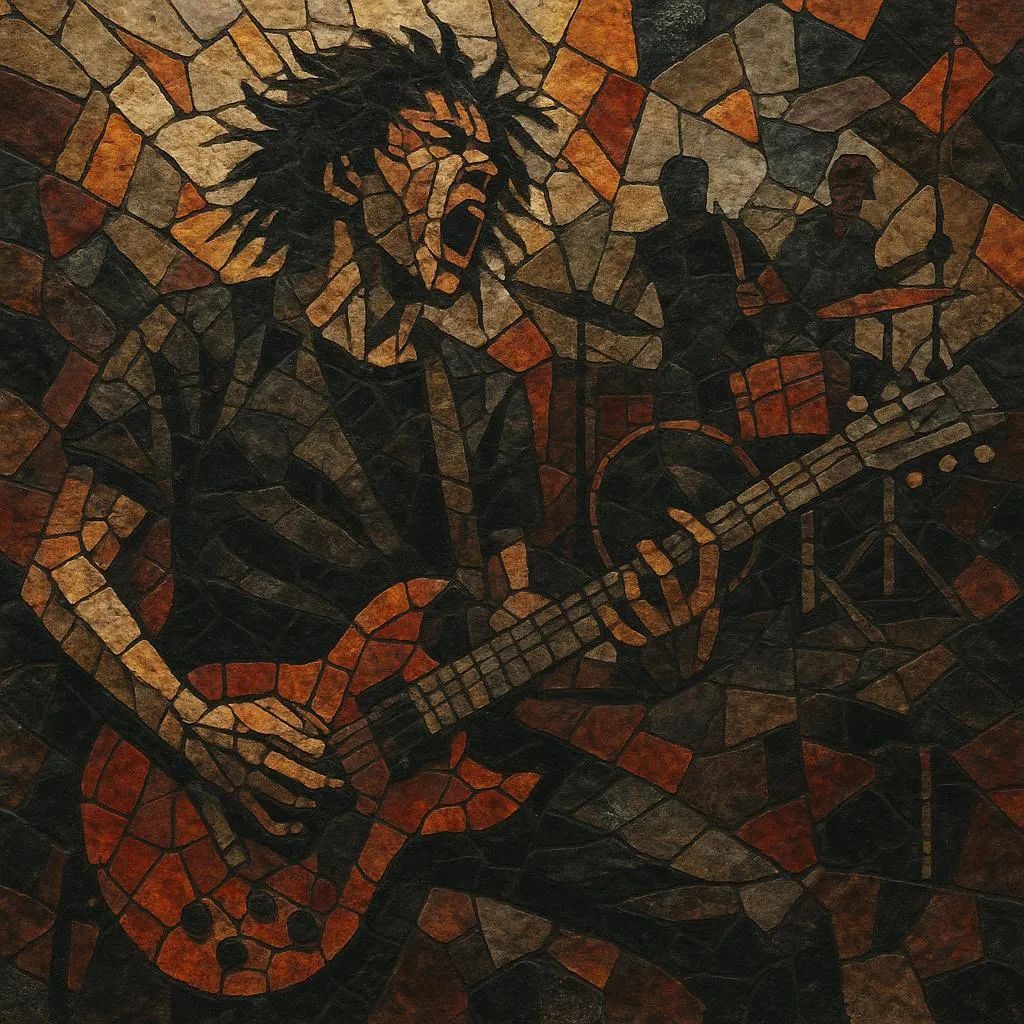
Rock noise (most commonly known as noise rock) is a strain of rock music that foregrounds distortion, feedback, dissonance, and sheer physical loudness as compositional materials.

Rather than treating noise as a flaw to be minimized, the style integrates amplifier howl, pedal-saturated textures, and abrasive timbres into riffs and grooves. Drums and bass often lock into repetitive, driving patterns while guitars scrape, drone, and squeal above them. Vocals range from barked or shouted delivery to laconic, deadpan speech-singing, and lyrics frequently skew toward the surreal, confrontational, or absurd.

The result is music that feels bodily and immediate—part groove machine, part texture laboratory—sitting at the turbulent intersection of punk urgency, avant-garde experimentation, and rock’s backline power.


Sources: Spotify, Wikipedia, Discogs, RYM, MB, user feedback and other online sources

History

Origins (late 1970s–1980s)

Noise rock crystallized after the New York no wave moment, when artists applied punk’s economy and attitude to deliberately abrasive sound design. Early groups re-tuned guitars, mic’d the room as aggressively as the instruments, and elevated feedback, overtones, and machine-like rhythms to primary roles. DIY infrastructures in the United States—small labels, art spaces, and college radio—helped the style cohere through the mid‑1980s.

Consolidation and Spread (1990s)

Through indie labels and relentless touring, the music hardened into a recognizable vocabulary: relentless rhythm sections, metallic guitar clang, and cathartic, confrontational performance. American scenes in the Midwest and South—and parallel eruptions in Japan and Europe—created a transnational network. The sound’s extremity fed into adjacent movements, shaping grunge’s abrasion, post-hardcore’s angularity, and sludge metal’s density.

Underground Resurgence and Hybridization (2000s)

A new generation blurred lines between band-based noise rock and the harsh-noise/experimental tape underground. Basement shows, boutique pedals, and small-run cassettes sustained a prolific ecosystem. The music became more timbrally adventurous without abandoning the body-shaking pulse inherited from rock and punk.

2010s–Present

Contemporary noise rock toggles between precision-engineered minimalism and maximalist wall-of-sound approaches. It cross-pollinates with math rock, post-rock, industrial rock, and shoegaze, while remaining rooted in volume, texture, and repetition. Global scenes continue to use the idiom as a vessel for local aesthetics, political bite, and experimental technique.

How to make a track in this genre

Core palette and instrumentation
•   Start with a rock trio or quartet: drum kit (tuned for punch and sustain), electric bass (often with a touch of drive), and one or two electric guitars. •   Treat the guitar as a noise generator as much as a pitch instrument: exploit feedback, pick scrapes, behind-the-bridge plucks, prepared objects, and extreme pedal chains (fuzz, distortion, ring mod, octave, envelope filter, delay, and reverb).
Rhythm and form
•   Use muscular, repetitive drum patterns—straight eighths or motorik-like pulses—to anchor textural chaos. •   Alternate locked grooves with sudden dynamic shocks, dropouts, or tempo lurches. Songs can be minimal (one or two riffs) but evolve through texture and density.
Harmony and tuning
•   Favor dissonance (seconds, tritones, clusters) and non-functional movement. Power chords can be detuned, stacked, or voiced to rub. •   Experiment with alternate tunings (e.g., dropped strings, unisons) to widen the spectrum of sympathetic resonances and feedback nodes.
Sound design and effects
•   Build deliberate feedback loops: position amps and monitors to “sing,” then ride that threshold with volume and mic placement. •   Layer parallel distortion stages (pedal + amp breakup + hot preamp) for complex saturation. High-pass or carve low mids to keep the mix intelligible despite high gain.
Vocals and lyrics
•   Delivery can be shouted, declaimed, or spoken; intelligibility is secondary to impact. •   Lyric themes often embrace the absurd, the confrontational, or fragmented imagery; repetition and mantra-like lines amplify intensity.
Recording and mixing
•   Close-mic for punch but always capture room sound; blend room mics to preserve scale and danger. •   Preserve transient impact on drums; allow guitars to occupy a broad midrange. Avoid over-editing: slight bleed and grit are aesthetic assets.
Performance tips
•   Volume is part of the instrument: rehearse at realistic stage SPL to learn how feedback behaves. •   Use physical gestures (muting, pedal “riding,” amp face-offs) as live compositional controls. Embrace risk and controlled instability.

Top tracks

Locked
Share your favorite track to unlock other users’ top tracks

Upcoming concerts

in this genre
Influenced by
Has influenced

Download our mobile app

Get the Melodigging app and start digging for new genres on the go
© 2026 Melodigging
Melodding was created as a tribute to Every Noise at Once, which inspired us to help curious minds keep digging into music's ever-evolving genres.
Buy me a coffee for Melodigging
