Your digging level
Description
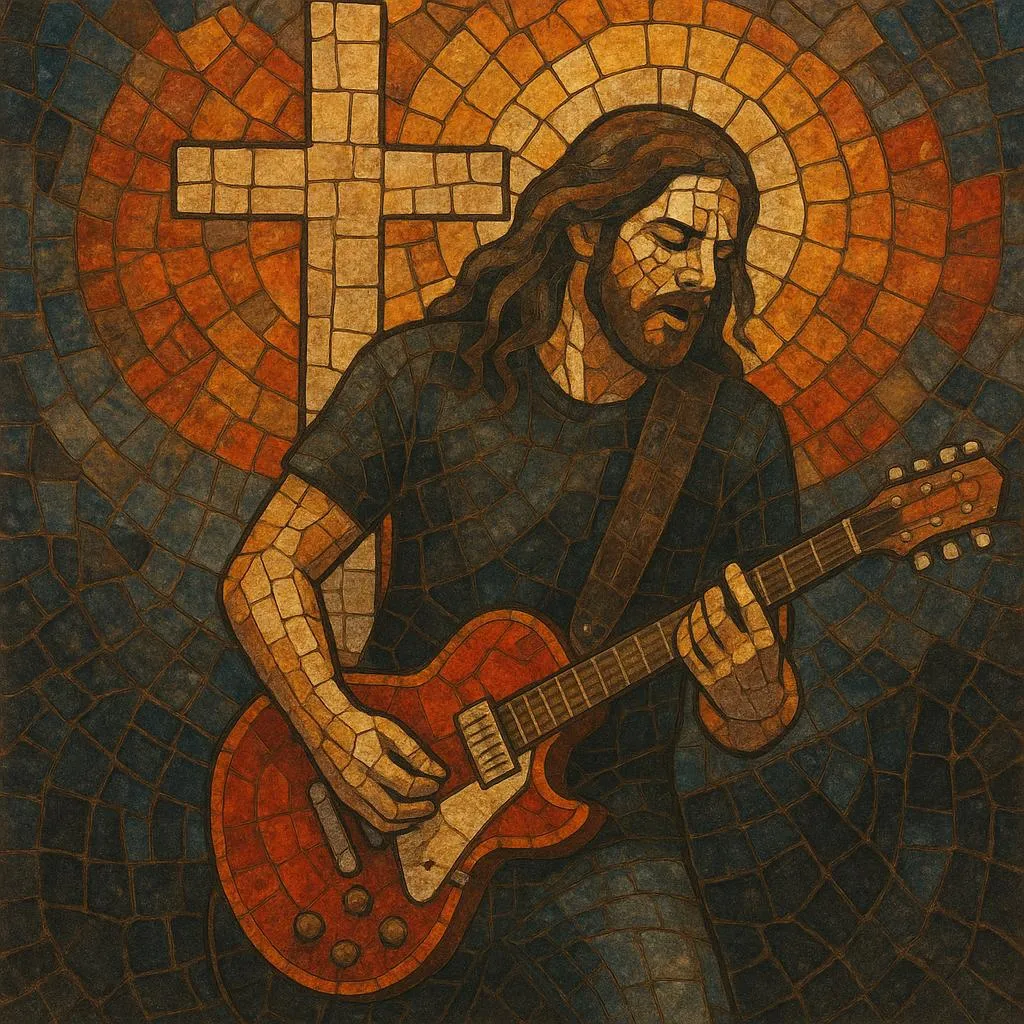
Rock cristiano (Christian rock) is a branch of rock music whose lyrics are explicitly informed by Christian faith, Scripture, and spiritual experience. Musically it draws from the same spectrum as mainstream rock—from folk-tinged soft rock to arena-ready hard rock and alternative—while centering messages of hope, redemption, social concern, and personal testimony.
Although its earliest seeds appeared in the late 1960s Jesus Movement in the United States, the style quickly developed into a global, multilingual phenomenon. In Spanish-speaking contexts, “rock cristiano” became a vibrant scene of bands and ministries across Latin America and Spain, often bridging church worship spaces and mainstream venues.
History
The roots of rock cristiano lie in the late-1960s Jesus Movement in the United States, where young converts began setting testimonies and biblical themes to contemporary rock styles. Early pioneers like Larry Norman popularized the idea that rock’s sound could carry Christian messages, helping lay foundations for modern Christian rock. By the mid-1970s, dedicated labels (e.g., Myrrh, Word) and touring circuits supported a nascent industry.
The 1980s saw professional production standards, FM radio play, and arena tours. Bands such as Petra and Stryper brought stadium-scale guitar rock and metal aesthetics to Christian audiences while nudging into mainstream consciousness. Parallel scenes began to flourish globally, including the first waves of Spanish-language rock cristiano in Latin America.
Grunge and alternative currents reshaped Christian rock’s sonic palette. DC Talk, Jars of Clay, and Newsboys blended alternative, pop-rock, and thoughtful lyricism, while P.O.D. and others fused rap-rock and nu-metal. In Spanish-speaking countries, bands like Rescate (Argentina) and later ROJO (Mexico) helped anchor a robust regional movement, with festivals, radio shows, and church networks amplifying the scene.
Acts like Switchfoot and Skillet crossed over to mainstream charts without shedding spiritual DNA. Simultaneously, modern worship music adopted rock instrumentation and production, blurring lines between concert stages and congregational settings. Spanish-language rock cristiano diversified across Latin America, with regional scenes in Mexico, Argentina, Colombia, Chile, and Spain contributing distinct accents.
Streaming platforms, social media, and independent production sustain a wide spectrum—from heavy rock and metal to indie, pop-rock, and worship-inflected sounds. Rock cristiano remains a transnational conversation, with English- and Spanish-speaking artists sharing bills, playlists, and collaborations while addressing contemporary faith, justice, and identity.