Your digging level

For this genre
0/8
🏆
Sign in, then listen to this genre to level up

Description

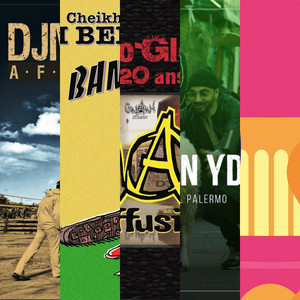
Reggae Maghreb is a North African take on Jamaican reggae and dub that blends skanking off‑beats and deep basslines with Maghrebi rhythms, timbres, and languages.

Typical arrangements mix the one‑drop or steppers reggae feel with chaâbi 6/8 hand‑drum patterns, raï’s urban groove, and Gnawa trance elements (guembri bass lute and metal qraqeb castanets). Vocals often move between Darija Arabic, Tamazight (Amazigh/Berber) and French, with melismatic ornamentation and call‑and‑response refrains.

Lyrically, the style foregrounds social commentary—identity, migration, inequality, youth unemployment, freedom of expression—while keeping a danceable, communal sound shaped by diasporic circulation between Algiers, Oran, Casablanca, Paris/Grenoble, and Marseille.


Sources: Spotify, Wikipedia, Discogs, RYM, MB, user feedback and other online sources

History

Origins and early hybrids (late 1980s–1990s)

A reggae sensibility began circulating in the Maghreb through cassettes, radio, and touring artists, resonating with local traditions of socially engaged song. By the early 1990s, bands in Algeria and the broader diaspora (especially in France) fused reggae/dub frameworks with raï’s streetwise aesthetics, chaâbi’s celebratory grooves, and Gnawa trance textures. This period established the core sound: off‑beat guitar skanks, heavy dubwise bass, Arabic/Tamazight/French vocals, and North African percussion.

Consolidation and festival era (2000s)

During the 2000s, mixed‑bill festivals in Morocco and Algeria, alongside venues in France and Belgium, nurtured a trans‑Maghrebi scene. Studio production increasingly adopted classic dub techniques (spring reverbs, tape echoes, drop‑outs), while live shows integrated guembri and qraqeb with trap set, electric bass, guitar, and keyboards. Thematically, acts addressed everyday urban life, diaspora identity, and reformist politics.

2010s to present: crossovers and global reach

In the 2010s, Reggae Maghreb broadened through collaborations with world‑jazz, rock, hip‑hop, and electronic producers. The genre’s bilingual/tri‑lingual songwriting and groove‑forward production made it a fixture in North African and European circuits, inspiring younger artists to pull reggae feels into rap, indie rock, and club‑oriented hybrids while keeping the scene’s socially conscious core.

How to make a track in this genre

Rhythm & Groove
•   Start with a reggae one‑drop or steppers pattern at ~70–90 BPM, but weave in North African feels: try overlaying a 6/8 chaâbi hand‑drum cycle against the 4/4 reggae backbeat for polyrhythmic lift. •   Skank the guitar or keys on the off‑beats (2 and 4), keeping chords short and percussive. Let the bass be melodic, syncopated, and dub‑forward.
Instrumentation & Timbre
•   Core: drum kit, electric bass, rhythm guitar/keys (skank), lead vocals, backing vocals. •   Maghrebi color: add guembri (sintir) for earthy, percussive bass; qraqeb (metal castanets) for trance drive; bendir/derbouka (darbuka) for chaâbi/raï grooves; violin/oud where appropriate. •   Use dub techniques: spring reverb, tape delay (e.g., on snare hits, skank stabs, and vocal phrases), filter sweeps, and drop‑outs to create space.
Harmony & Melody
•   Keep reggae‑typical progressions (I–V–vi–IV, I–IV–V, or minor i–VII–VI). Enrich with Maghrebi/Arab maqam flavors (e.g., Hijaz, Nahawand) via melodic turns or modal riffs. •   Vocal lines may include melisma; alternate between a laid‑back reggae delivery and North African folk ornamentation. Call‑and‑response choruses work well live.
Lyrics & Themes
•   Mix Darija Arabic, Tamazight, and French naturally; switch languages to emphasize narrative turns or refrains. •   Address social realities (migration, identity, dignity, corruption, everyday love and hardship) while keeping an uplifting communal tone.
Arrangement Tips
•   Begin with guembri + qraqeb intro to set a trancey pocket, then drop the one‑drop with bass and skank. •   Leave space for dub breakdowns: mute instruments selectively, echo vocal tags, and reintroduce percussion layers for dynamic arcs.

Top tracks

Locked
Share your favorite track to unlock other users’ top tracks

Upcoming concerts

in this genre
Influenced by

Download our mobile app

Get the Melodigging app and start digging for new genres on the go
© 2026 Melodigging
Melodding was created as a tribute to Every Noise at Once, which inspired us to help curious minds keep digging into music's ever-evolving genres.
Buy me a coffee for Melodigging