Your digging level for this genre

0/8
🏆
Sign in, then listen to this genre to level up

Description

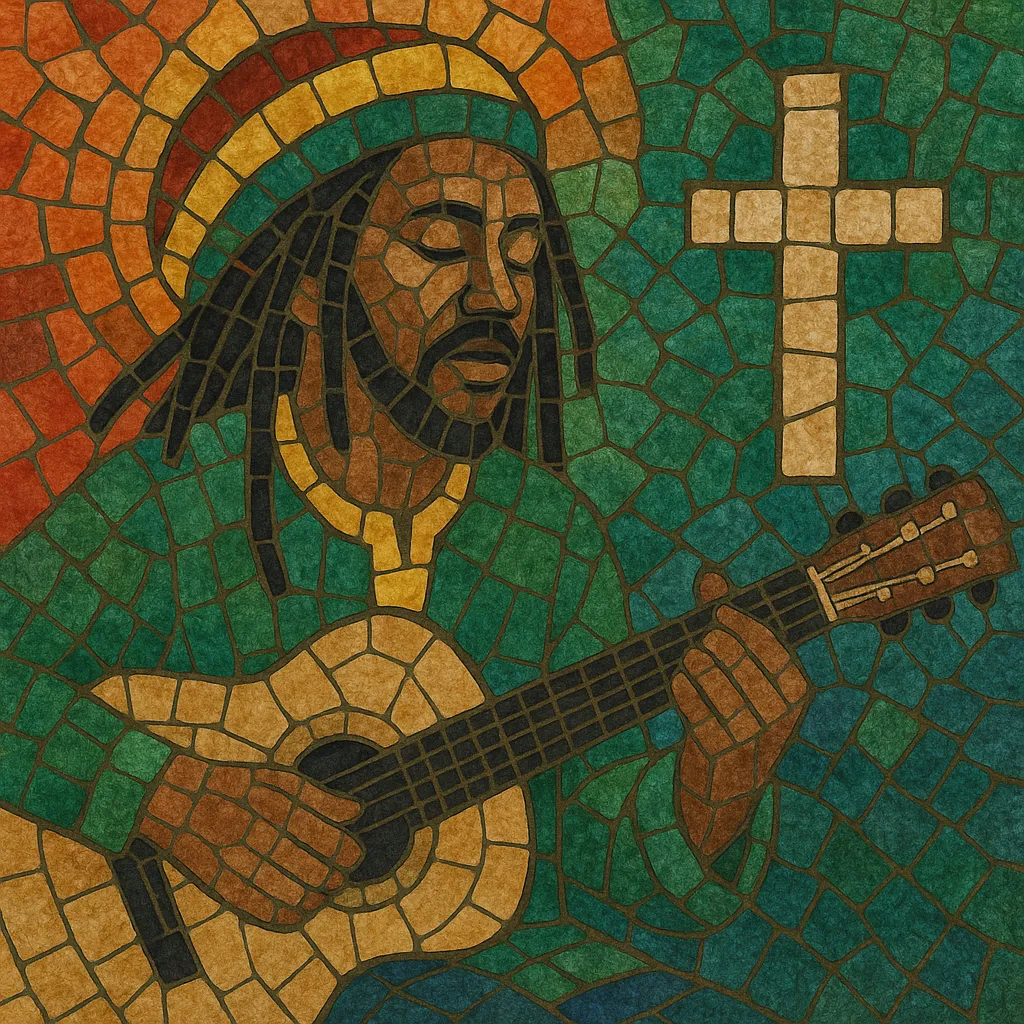
Reggae cristão is a Portuguese-language strand of Christian reggae that blends the laid-back grooves of Jamaican reggae with evangelical Christian themes.

It is characterized by one‑drop drum patterns, deep melodic bass lines, off‑beat “skank” guitar or keys, and worship-centered lyrics that emphasize praise, testimony, and hope. The style often adapts congregational choruses and gospel harmonies to reggae riddims, making it equally suited to church services, youth gatherings, and community events.

While musically rooted in classic roots reggae and, at times, dancehall, its message is explicitly Christocentric, favoring uplifting, devotional, and socially conscious content delivered in Portuguese (and occasionally bilingual Portuguese–English recordings).

History

Origins

Reggae cristão emerged in Brazil in the 1990s as local churches and independent musicians began to embrace Jamaican reggae’s rhythms as a vehicle for Christian testimony. Brazil already had a vibrant reggae culture—especially in the northeast—and an expanding contemporary Christian music market. This environment encouraged artists to set gospel messages to familiar reggae grooves and to translate (or reinterpret) global worship songs into Portuguese.

Development and Localization

Throughout the 2000s, the scene grew via church festivals, youth ministries, and independent labels. Musicians drew from roots reggae’s warm, organic sound and occasionally from dancehall’s more rhythmic energy, but maintained praise-and-worship oriented lyrics. Production gradually professionalized, adding horn sections, tighter rhythm sections, and modern mixing while retaining the one‑drop feel and melodic bass.

Wider Connections

Brazilian artists were inspired by—and sometimes collaborated with—international Christian reggae figures, helping the style circulate across Portuguese-speaking communities. Streaming platforms later amplified the genre’s reach, placing Portuguese-language worship reggae alongside Jamaican and Caribbean gospel reggae catalogs.

Today

Reggae cristão remains a niche but steady strand of Brazil’s gospel panorama, used both for congregational worship in contemporary services and for outreach events. It exemplifies how reggae’s rhythmic language can carry explicitly Christian content without losing the genre’s signature relaxed, positive vibe.

How to make a track in this genre

Core Groove and Tempo
•   Aim for 70–90 BPM with a classic one‑drop drum pattern (kick and snare accenting beat 3), tight hi‑hats, and occasional percussion (shakers, tambourine). •   Keep the bass prominent, warm, and melodic—outline chord tones with tasteful passing notes and occasional syncopation.
Harmony and Keys
•   Use diatonic progressions common to worship music (e.g., I–V–vi–IV, IV–V–I, or ii–V–I). Major keys convey uplift; occasional modal mixture (minor vignettes) can add reflection before a hopeful lift. •   Pad-like keys or organ bubbles support the off‑beat skank and fill space between vocals.
Rhythm Guitar and Keys
•   Play the off‑beat skank on guitar or keys (muted, short chords on the “and” of each beat). •   Add a Hammond/organ bubble pattern to thicken the groove and reinforce forward motion.
Arrangement and Texture
•   Layer gentle horns (trumpet/trombone/sax) for hooks, countermelodies, or call‑and‑response with vocals. •   Consider brief Nyabinghi‑style percussion intros for a devotional atmosphere before the full band enters.
Lyrics and Vocals
•   Center lyrics on praise, testimony, hope, and scripture in Portuguese (or bilingual Portuguese–English). Keep choruses simple and congregational. •   Use call‑and‑response and harmonized backing vocals to encourage participation.
Production Aesthetics
•   Favor warm tones (amp sims or mic’d amps), tape-style delays on vocals or guitar skanks, and spring/plate reverb for depth. •   Keep the low end clean and supportive; sidechain keys/pads lightly to preserve bass clarity.
Variations
•   For a modern edge, incorporate subtle dancehall accents (syncopated hats, additional percussion) while maintaining worship-forward lyrics. •   Acoustic sets can translate easily: cajón or light kit, acoustic guitar skank, bass, and simple keys.

Top tracks

Locked
Share your favorite track to unlock other users’ top tracks
Influenced by
Has influenced
No genres found
Challenges
Digger Battle
Let's see who can find the best track in this genre
© 2025 Melodigging
Melodding was created as a tribute to Every Noise at Once, which inspired us to help curious minds keep digging into music's ever-evolving genres.
Buy me a coffee for Melodigging