Your digging level
Description
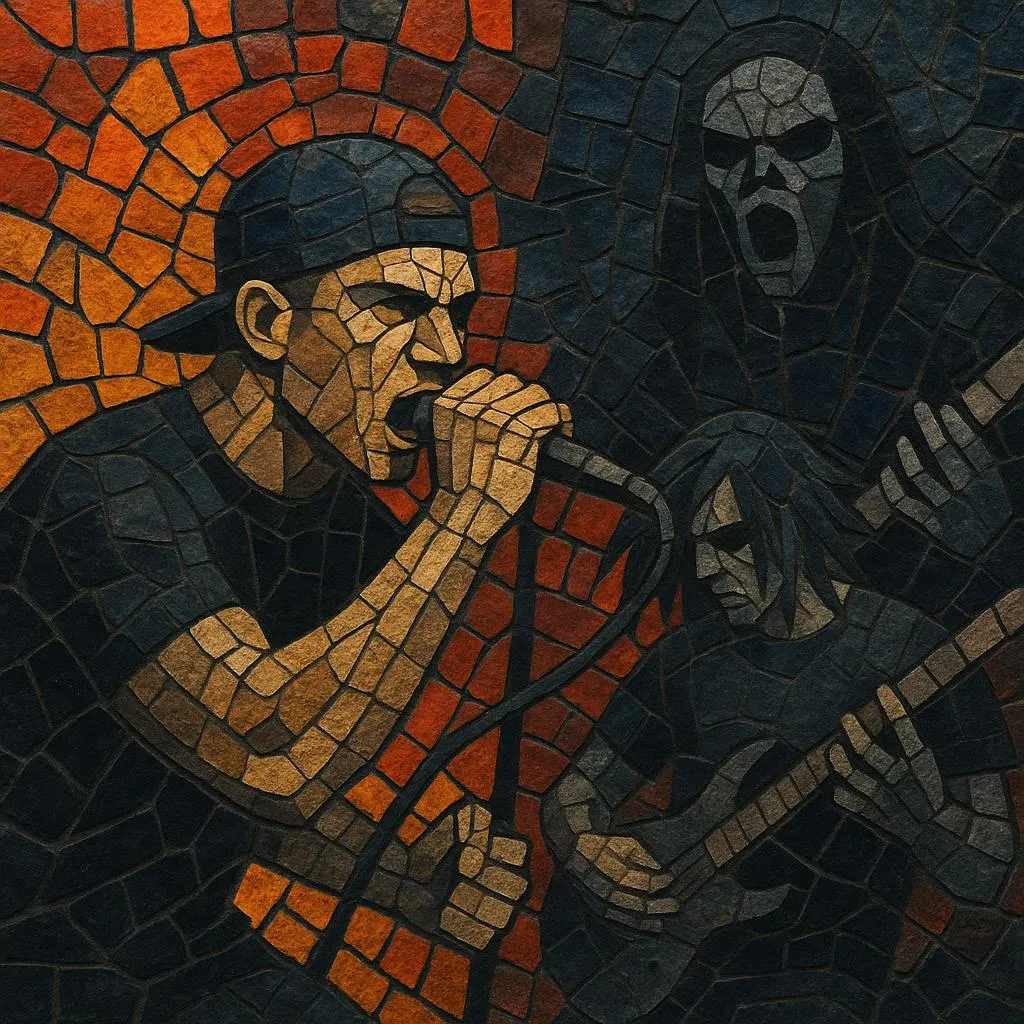
Rap metalcore is a hybrid style that fuses the rhythmic, lyrical flow of hip hop with the high-gain guitars, breakdowns, and screamed/sung hooks of metalcore. Compared to 1990s rap metal and nu metal, it keeps metalcore’s tighter, modern low-tuned riffing, double-time drumming, and cathartic breakdown structures, while foregrounding MC-style verses, rhyme schemes, and hip‑hop cadences.
Production often blends live drums with programmed elements (808 subs, trap hats) and layers percussive, djent-leaning guitar chugs under rapped verses, then explodes into screamed or anthemic sung choruses. Lyrical themes span personal struggle, social commentary, resilience, and identity, delivered with a mix of rap’s directness and metalcore’s emotive intensity.


History
Rap metalcore’s roots trace to rap metal and nu metal in the 1990s (e.g., Rage Against the Machine, Limp Bizkit, Linkin Park), and to metalcore’s rise in the 2000s. As metalcore refined low‑tuned chugs, breakdowns, and harsh/sung dynamics, some bands and vocalists began experimenting with hip‑hop flows over modern metal rhythm guitars.
In the early–mid 2010s, a cohort of bands formalized the approach: UK outfit Hacktivist brought grime/rap cadences to djent/metalcore riffing; in the U.S., acts such as From Ashes to New, Dangerkids, Sylar, BackWordz, and Fire From the Gods mixed MC verses with metalcore song architecture and big, sung hooks. Parallel scenes in Australia (e.g., Ocean Grove) added alternative and nu‑metal textures.
As streaming and social platforms lowered genre walls, production borrowed trap drums (808s, triplet hats) and modern mix aesthetics, while keeping metalcore’s breakdown DNA. The style overlapped with adjacent hybrids—trap metal, electronicore, rap rock—and benefited from playlists that grouped heavy music with hip‑hop crossovers. Tours and festival slots further normalized rap vocals in heavy lineups.
Late 2010s–2020s saw international adoption and language‑specific variants (Spanish-language scenes, U.S. and European collectives, and crossover hardcore bills). The style influenced artists on both sides: heavy bands adopting bars and hip‑hop producers sampling or emulating metalcore heft.
Rap metalcore now sits as a contemporary branch of metalcore’s family tree—more rhythm-forward than classic metalcore and more breakdown-centric than 1990s rap metal—bridging listeners between heavy music and hip hop.