Your digging level
Description
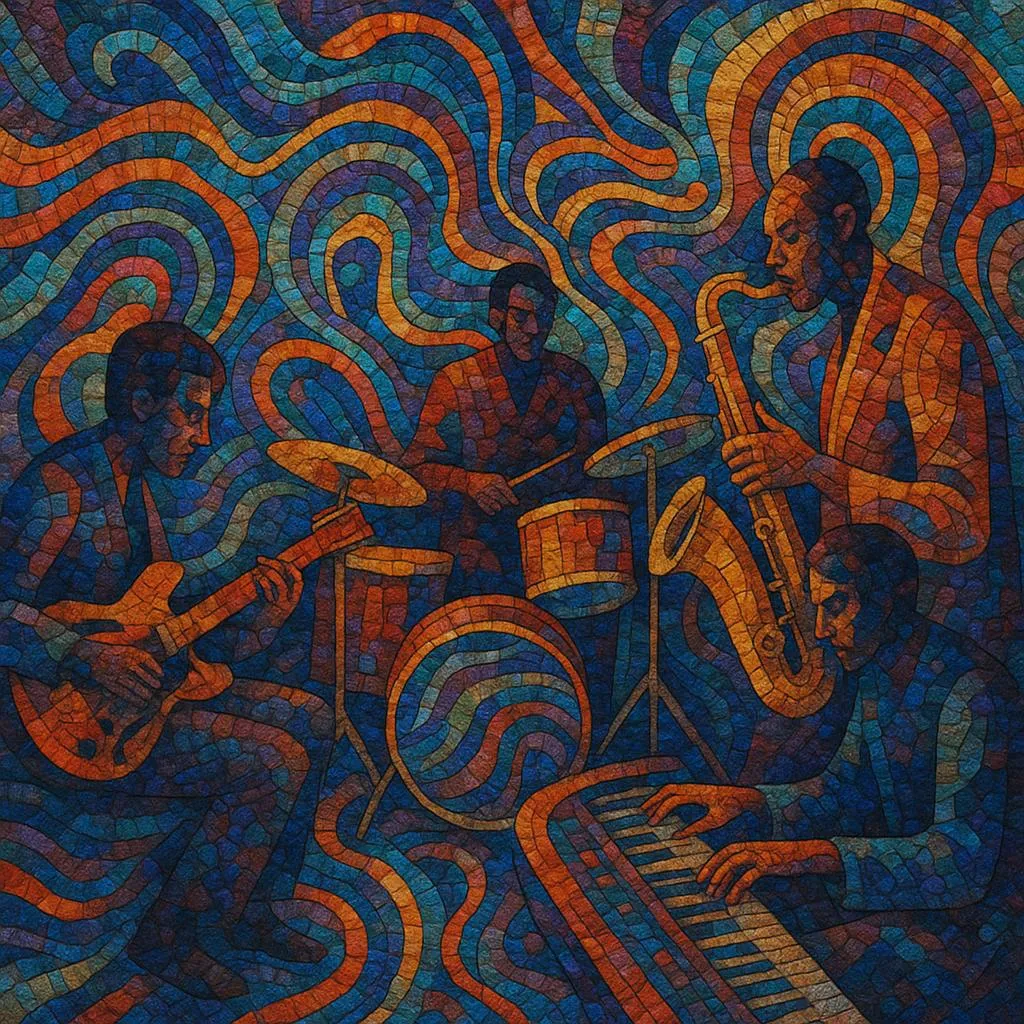
Psychedelic jazz fusion blends the exploratory harmony and improvisation of jazz with the mind-bending textures, studio experimentation, and long-form journeys of psychedelic music. It favors modal frameworks, extended vamps, and trance-like grooves, often embellished with analog synths, tape echoes, ring modulation, and spatial effects.
Rhythm sections lock into hypnotic funk- or rock-inflected ostinatos while horns, guitars, and keyboards stretch out with modal or pentatonic improvisations. The production aesthetic is as important as the composition: saturated tape tones, phasing, reverb-drenched soundscapes, and collage-like arrangements evoke altered states and cosmic themes.
The result is a sound that can be simultaneously earthy and otherworldly—deeply grooving yet floating, exploratory yet cohesive—bridging clubs, concert halls, and late-night studio laboratories.
History
Psychedelic jazz fusion emerged at the intersection of late-1960s jazz experimentation and the psychedelic rock movement. Jazz artists were already stretching forms with modal harmony and electrified instrumentation, while rock and soul groups embraced studio effects and long, immersive jams. The cross-pollination set the stage for a sound that valued groove, timbre, and sonic space as compositional elements.
Through the 1970s, artists expanded ensembles with electric keyboards, effects-laden guitars, and synthesizers, folding funk backbeats, odd meters, and Afro-Latin percussion into modal frameworks. Producers and engineers played a creative role—using tape edits, phasing, delay, and re-amping—to sculpt extended pieces that felt both live and cinematic. European scenes (notably in Germany and the UK) added krautrock’s motorik hypnosis and Canterbury’s jazz-rock sophistication.
While mainstream jazz fusion moved toward slicker, radio-friendly formats, psychedelic-leaning hybrids persisted in underground circles and on crate-digger labels. Spiritual jazz revivals, rare-groove compilations, and DJ culture kept the sound’s raw, exploratory edge alive, emphasizing deep rhythm sections, modal soloing, and analog warmth.
A new generation re-centered the psychedelic aspect—embracing vintage synths, tape coloration, and global rhythmic vocabularies—while incorporating beat culture and electronic production. Contemporary acts draw from spiritual jazz, Afrobeat, broken beat, and electronic psychedelia, resulting in festival-ready sets and studio albums that foreground trance-like grooves, expansive improvisation, and textural storytelling.