Your digging level
Description
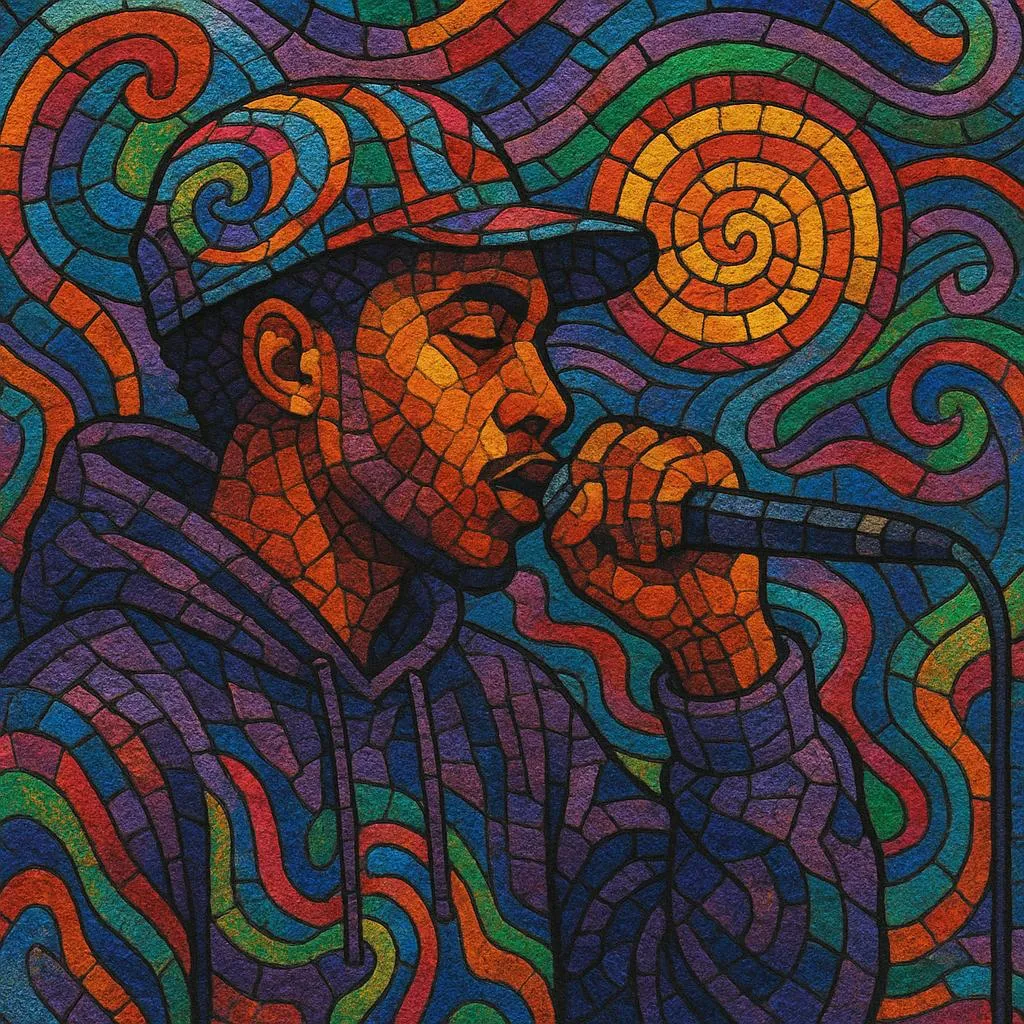
Psychedelic hip hop is a subgenre of hip-hop that blends rap with psychedelic music aesthetics.
It emphasizes altered, dreamlike, or surreal atmospheres through hazy production, unusual samples, and hypnotic repetition.
Common sonic traits include swirling synths, tape-like saturation, phasing/flanging effects, chopped or time-stretched samples, and basslines that feel elastic or “warped.”
Lyrically, it often leans toward introspection, abstract imagery, and mind-expansion themes rather than strictly narrative street reportage.

History
Psychedelic tendencies existed in hip-hop early on through sample-heavy experimentation and surreal lyricism, but the style cohered more clearly in the 1990s.
West Coast G-funk and the broader "acid"/psychedelic rock sampling tradition helped normalize woozy synth textures and mind-bending sonic references.
At the same time, alternative and experimental rap scenes pushed abstract narratives and non-traditional sound design that aligned with psychedelic sensibilities.
In the 2000s, independent rap and experimental electronic production techniques made psychedelic hip hop more diverse.
Artists increasingly used digital manipulation (time-stretching, granular textures, heavy modulation) and drew from psychedelic soul, prog-leaning rock samples, and IDM-adjacent sound palettes.
The 2010s saw a major rise in visibility as psychedelic textures became common in both alternative rap and some mainstream releases.
Cloud-rap-adjacent haze, neo-psychedelic influences, and improved home-studio tools helped the sound travel widely.
Today the style spans from laid-back, hazy “headphone rap” to energetic, maximalist, synth-heavy psychedelic trap hybrids.
It remains unified less by one rhythm template than by a consistent psychedelic approach to texture, space, and perception.
Use dusty or shimmering samples (psychedelic soul, prog-leaning rock loops, obscure film/TV fragments) and/or warm analog-style synths.
Layer modulation effects (phaser, flanger, chorus) and automate filters to create movement that feels hallucinatory.
Add texture with vinyl noise, tape saturation, spring reverb, reversed tails, and pitched ambience beds.
Start from hip-hop fundamentals: a strong kick/snare pocket with head-nod swing, then make it hypnotic via repetition and subtle variation.
Use off-kilter percussion (shakers, bongos, rim clicks) and occasional “stutter” edits or fills to suggest disorientation without losing groove.
Tempos commonly range from ~70–95 BPM (laid-back) or ~120–150 BPM if leaning into trap hybrids.
Favor modal or loop-based harmony: minor pentatonic, Dorian, or ambiguous chords that feel unresolved.
Create melodic motifs that repeat with evolving timbre (filter sweeps, pitch drift, vibrato) rather than constant new melodies.
Use bass that is round and rubbery; try sliding notes, subtle detune, and sidechain movement for a floating feel.
Build in "trance" arcs: long intros with ambience, gradual element layering, and breakdowns where effects and space take the lead.
Use transitions like reverse cymbals, tape stops, pitch drops, and reverb throws to enhance the psychedelic narrative.
Deliver rap with a relaxed or slightly detached cadence; occasional double-tracking or wide stereo ad-libs can enhance immersion.
Write with vivid imagery, surreal metaphors, introspection, and altered-state motifs; avoid overly literal storytelling unless it serves a dream logic.
Prioritize depth: send key elements to different reverbs/delays to create a 3D space.
Control muddiness by carving low-mids on pads/samples while keeping the kick and bass authoritative.
Use modulation and saturation sparingly but consistently so the track feels “bent” without becoming unfocused.