Your digging level
Description
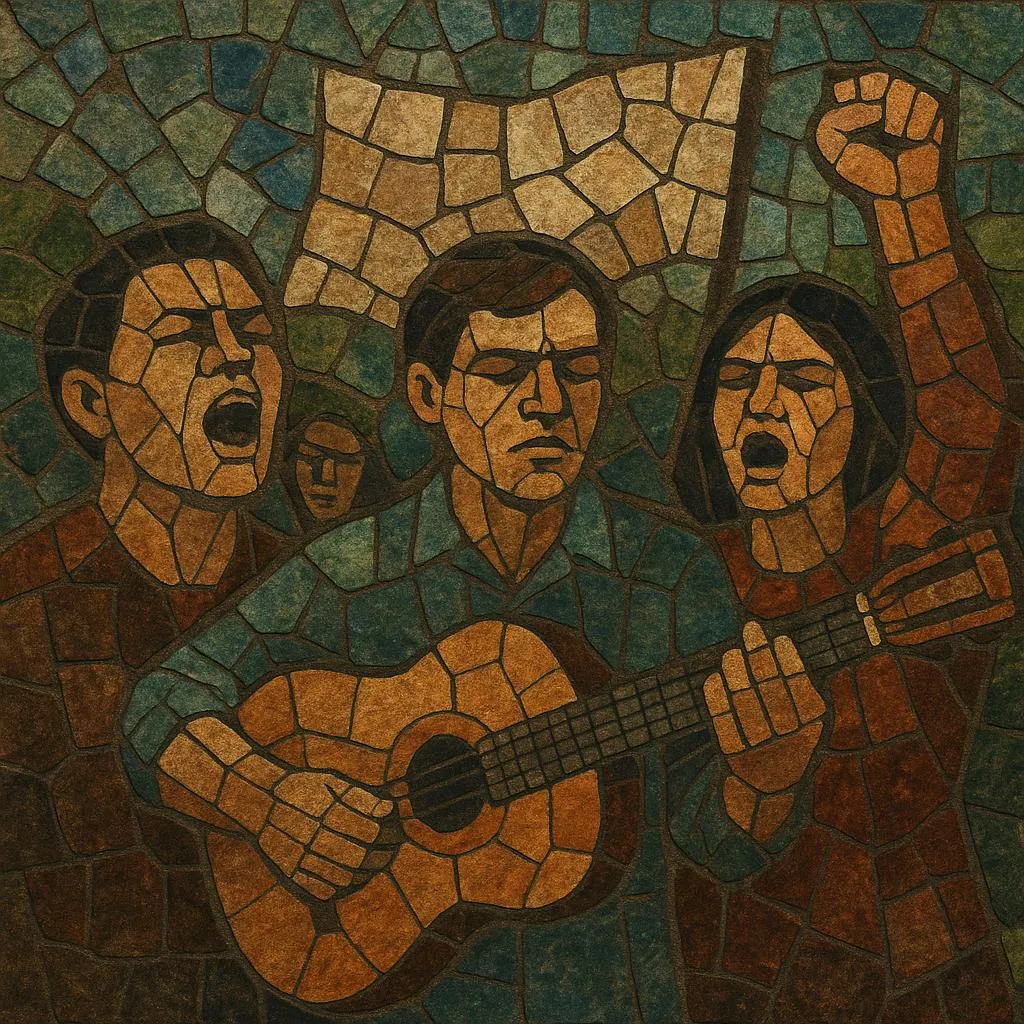
Protest folk is a branch of folk music created to carry social and political messages—about labor, civil rights, peace, and justice—through direct, memorable songs.
It relies on accessible melodies, clear storytelling, and communal sing‑along choruses. The songs often repurpose traditional tunes or hymn-like progressions so that large crowds can learn them quickly and sing them together at meetings, picket lines, and marches.
While rooted in earlier ballads and union songs, protest folk reached wide audiences during the mid‑20th century and remains a living practice wherever music is used to mobilize, educate, or bear witness.
History
Protest folk grows out of older ballad traditions, work songs, spirituals, and union-organizing culture in the United States. During the Great Depression and Dust Bowl years, songwriters and organizers used plainspoken lyrics set to familiar folk melodies to rally workers, narrate hardship, and demand reforms. The format—simple chords, strong choruses, and portable acoustic instruments—made the music ideal for picket lines and community halls.
The postwar folk revival brought protest folk to coffeehouses, college campuses, festivals, and mass media. Musicians connected traditional repertoire to contemporary campaigns—civil rights, nuclear disarmament, and anti‑war movements—writing new verses and new songs that were easy to learn and share. Call‑and‑response choruses and congregational singing linked the genre to church-based organizing, while topical ballads documented current events with journalistic detail.
As movements diversified (women’s rights, environmentalism, labor resurgence), protest folk adapted its themes and venues—from union halls to community theaters and independent labels. The singer‑songwriter wave absorbed protest folk’s narrative and ethical focus, while folk‑rock amplified it with band arrangements. The genre became both a repertory (time‑tested anthems) and a living practice (new songs for new struggles).
Protest folk remains a toolkit for grassroots action worldwide: teach-ins and vigils, street demonstrations, and digital campaigns. Its forms—topical verses, re‑purposed melodies, and participatory refrains—continue to circulate alongside newer activist styles, influencing how communities sing together in public life.