Your digging level
Description
Polifonia occitana is a form of Occitan-language polyphonic singing rooted in the traditional vocal practices of southern France and nearby Occitan-speaking cultural areas.
It centers on the use of multiple simultaneously sung vocal lines, often arranged in close, resonant harmony, and is strongly connected to regional identity, oral transmission, and community performance.
The genre draws on older rural and ceremonial singing traditions while also being shaped by 20th-century folk revival, archival work, and staged reinterpretation. Repertoires may include traditional songs, sacred pieces, regional poetry settings, and revival compositions in Occitan.
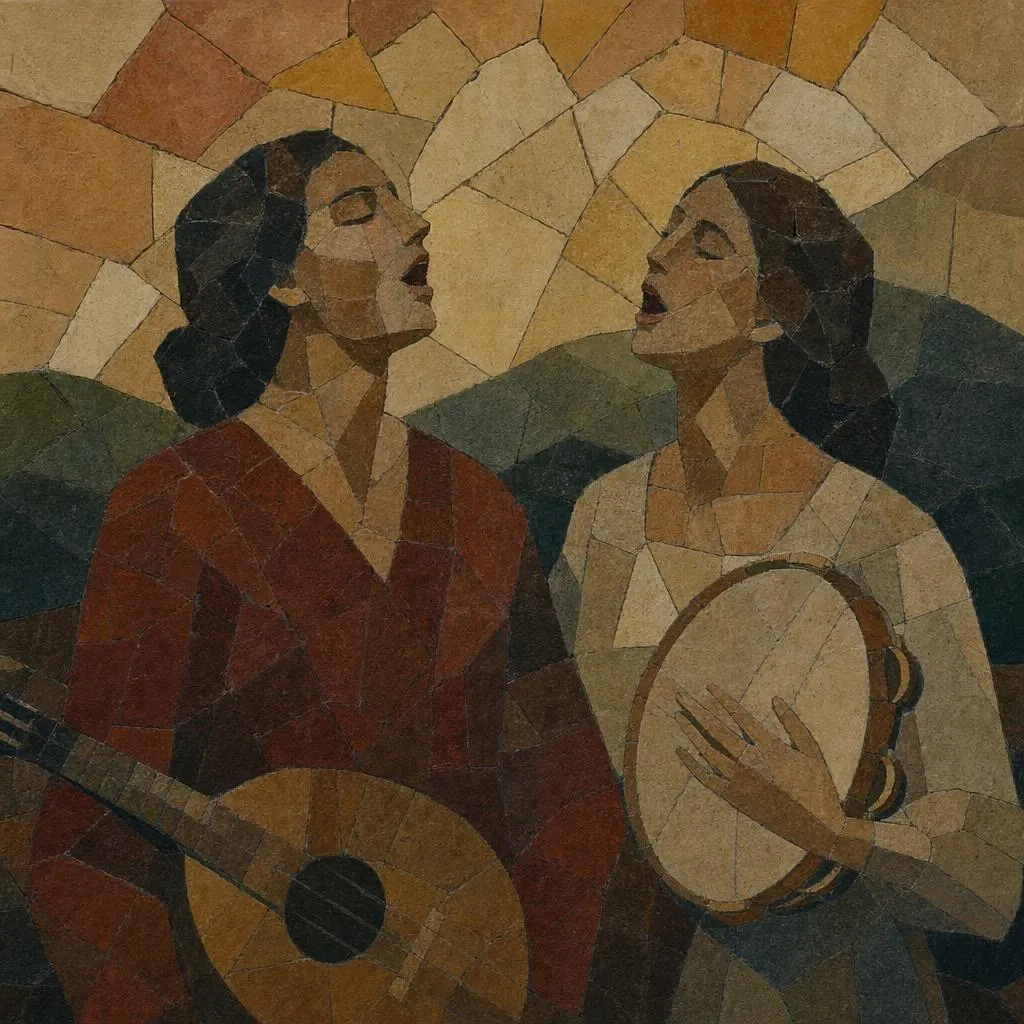
Its sound is usually unaccompanied or very lightly accompanied, with attention to blend, drone-like support, modal melody, and the expressive interplay between lead and accompanying voices. The result is a texture that can feel both earthy and refined, communal and intimate.
History
Polifonia occitana emerged from the broader vocal traditions of the Occitan-speaking world, especially in southern France. While polyphonic practices in the region have older roots in village singing, liturgical exchange, and local multipart traditions, the genre as a named and recognized category belongs mainly to the modern era of documentation and revival.
During the 20th century, especially from the folk revival period onward, musicians, researchers, and cultural activists began collecting, reconstructing, and performing Occitan vocal repertories with renewed emphasis on language and regional heritage. This process helped define polifonia occitana as a distinct artistic and ethnomusicological field.
Revival ensembles adapted archival songs, oral repertories, and regional harmonization practices into concert and festival settings. In doing so, they preserved traditional features such as modal melodies, heterophonic flexibility, and communal vocal blend, while also refining arrangements for contemporary audiences.
The genre became closely associated with the defense and celebration of Occitan identity. It often appears in contexts linked to regional language activism, folk festivals, sacred or seasonal ceremonies, and intercultural projects involving Mediterranean and European vocal traditions.
Because Occitan culture extends across several historical regions rather than a single narrow local style, polifonia occitana includes multiple subregional colors. Some performances sound rustic and processional, while others are more chamber-like and carefully arranged.
Today, polifonia occitana exists both as a heritage practice and as a living creative form. Some artists pursue historically informed reconstructions of field-collected material, while others compose new Occitan polyphonic works inspired by traditional sonorities.
The genre continues to evolve through collaboration with early music, folk, sacred song, and other regional polyphonic traditions, but its core remains the collective singing of Occitan texts through interwoven vocal lines.
Write for two to four or more voices, with a strong emphasis on ensemble blend rather than solo virtuosity.
Use a principal melodic line and support it with parallel, contrary, or drone-based accompanying voices. The harmony should feel organic and voice-led rather than overly academic.
Build melodies from modal or folk-like scales instead of relying only on modern major-minor pop harmony.
Favor memorable, singable phrases with narrow to moderate range, as if the piece could be learned by ear in a communal setting.
Use open intervals, drones, suspended tones, pedal notes, and compact triadic or modal clusters.
Avoid excessively dense chromatic harmony unless you are intentionally blending tradition with modern composition. A slightly rough or rustic vertical sound is often more authentic than polished classical voice leading.
Keep the rhythm flexible and text-driven.
Many pieces work well in free rhythm, slow pulse, or gently regular dance-like meters depending on the source material. Let the natural accent of the Occitan text shape the phrasing.
Use Occitan lyrics whenever possible. Themes may include rural life, love, memory, devotion, seasonal rituals, landscape, migration, and regional identity.
Text setting should preserve intelligibility. Repetition, refrain structures, and responsorial gestures are useful.
Perform a cappella or with very light accompaniment such as frame drum, drone instrument, flute, or traditional folk instruments used sparingly.
Prioritize breath unity, resonance, and the acoustic interaction between voices. The performance should feel communal, embodied, and rooted in place.
If recording, avoid overly glossy studio treatment.
A natural acoustic space, audible room resonance, and close attention to vocal timbre will better reflect the style than heavy compression or synthetic layering.