Your digging level
Description
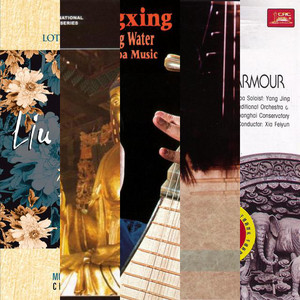
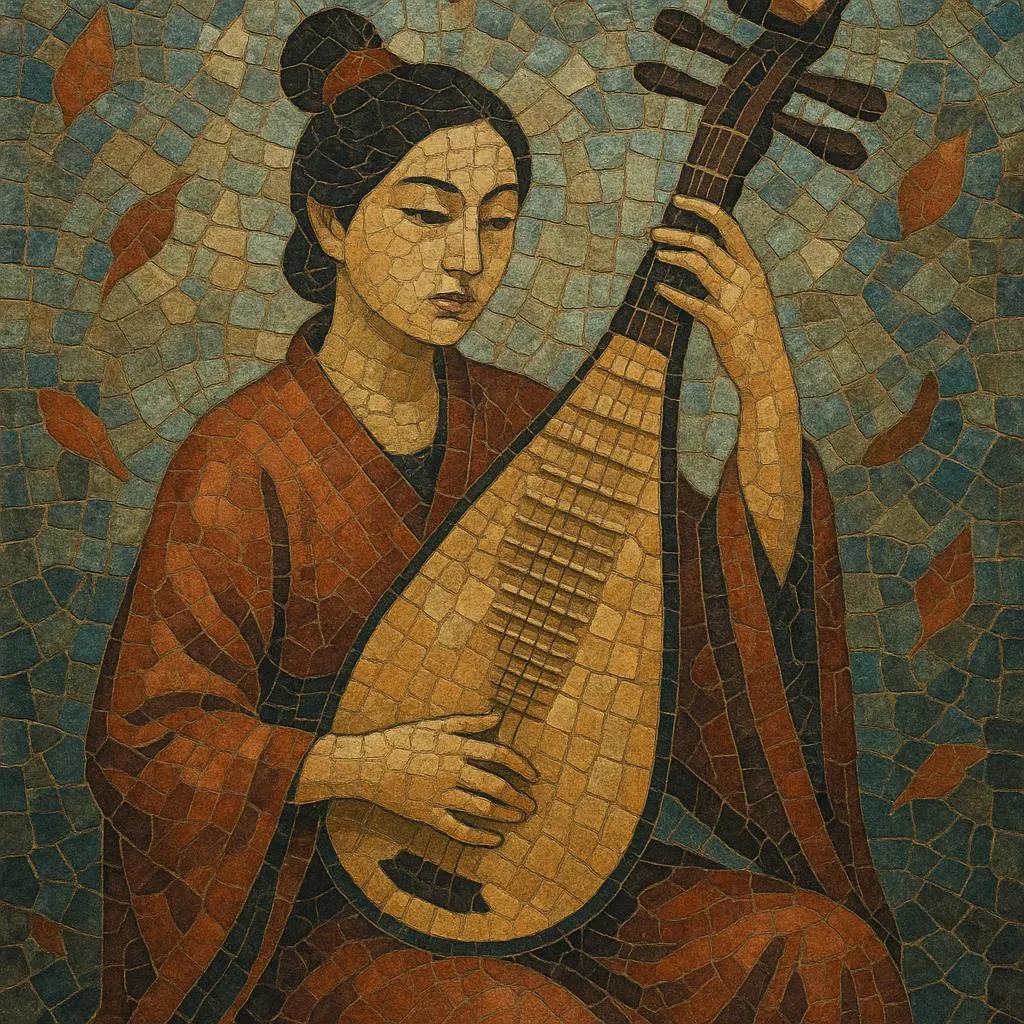
Pipa denotes both the Chinese pear‑shaped, four‑string, plucked lute and the repertory and performance practice centered on it.
Held vertically and played with artificial fingernails, the pipa produces brilliant attacks, cascading tremolos, and extremely agile figurations. Its idiom features vivid programmatic narratives (civil/lyrical “wen” pieces and martial/virtuosic “wu” pieces), modal pentatonic pitch organization, and a rich vocabulary of right‑hand strokes (pi, pa, tiao, mo, gou, lun) and left‑hand ornaments (slides, bends, vibrato, harmonics). Repertoires developed in courts and urban ensembles, and later in regional schools, before being expanded in the 20th century by conservatory composers and global soloists.
History
The pipa’s ancestors entered China along Silk Road routes during the Han era, but the instrument and its repertory crystallized in the Tang dynasty (600s–900s), when court entertainment and Buddhist/Daoist contexts fostered a virtuosic solo idiom. Plucked‑lute performance became emblematic of elite musical culture.
From the late imperial period onward, the pipa thrived both as a solo instrument and inside regional ensembles. It became integral to Jiangnan silk‑and‑bamboo (sizhu) and to operatic accompaniment. Distinct regional schools (e.g., Pudong, Pinghu, Wuxi) codified fingerings, tempi, and ornamentation, preserving and differentiating classic narratives and lyrical sets.
Republican and PRC conservatories standardized technique, notation (jianpu and staff), and pedagogy. Composer‑performers expanded the solo repertoire, introduced large‑ensemble concertos, and adapted historical materials into through‑composed concert works. Recording and broadcasting popularized canonical pieces and new concert literature.
International soloists brought the pipa to global classical stages, jazz/improvised settings, and film/television scoring. Contemporary works explore extended techniques, amplification, electronics, and intercultural chamber configurations, while traditional schools continue to transmit classic styles.