

Your digging level
Description
Philippine rondalla is a plucked-string ensemble tradition that flourished in the Philippines during the late Spanish colonial era and early American period.
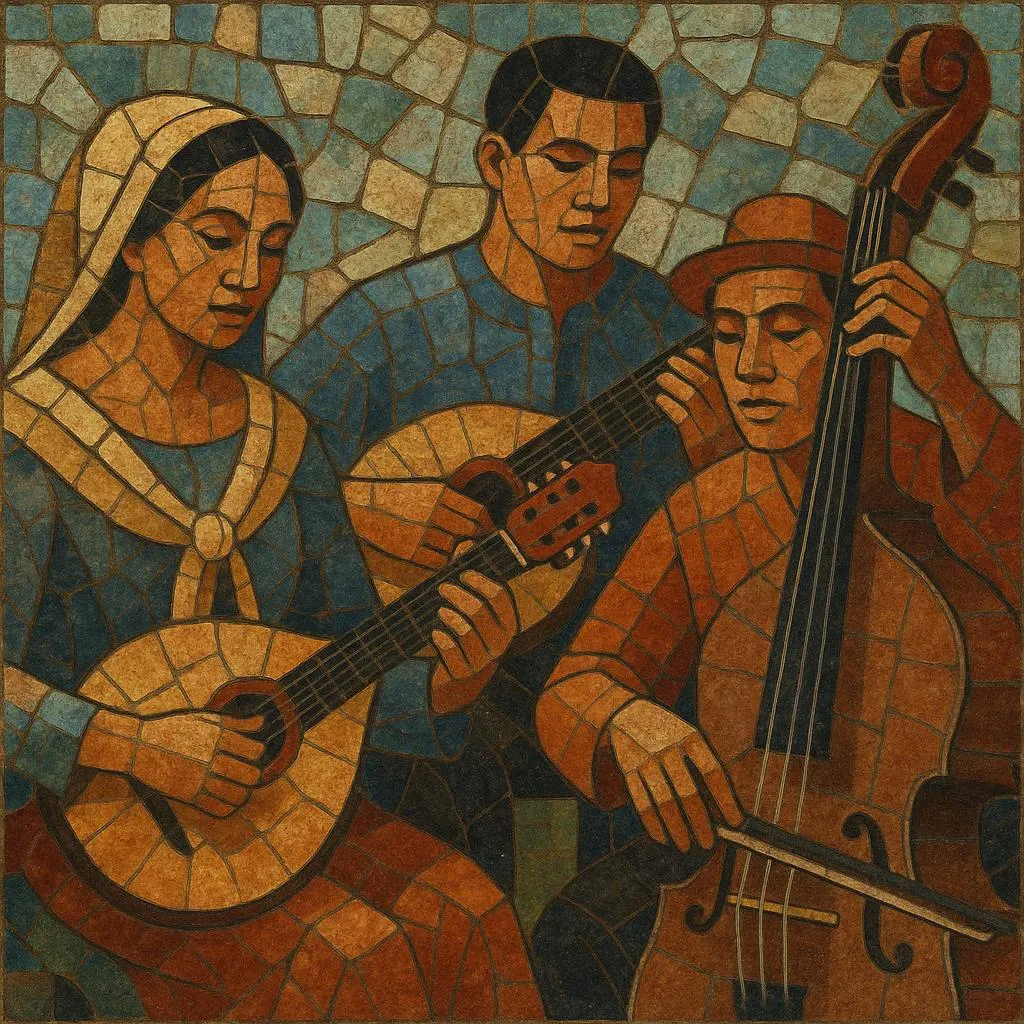
Typical instrumentation includes the 14-string bandurria (melody), octavina and laúd (inner voices), classical guitar (harmony and rhythmic support), and the bajo de uñas or double bass (bass line). The ensemble performs folk dances (e.g., tinikling, cariñosa), serenade repertories (harana, kundiman), dance forms (vals, danza, habanera), and virtuosic medleys and overtures. Its sound is shaped by tremolo and rapid arpeggiation on plectrum instruments, clear diatonic harmony, and buoyant dance rhythms.
While rooted in the Iberian rondalla, Filipino musicians localized the format by reshaping instrument tunings (especially the multi-course bandurria), building a distinct orchestration, and assimilating indigenous and Filipino art-song repertories. Philippine rondalla today thrives in schools, community ensembles, and diaspora groups, and remains a signature national plucked-ensemble style.
History
Rondalla derives from the Spanish tradition of plucked instruments used for serenades and social dances. During Spanish colonial rule, plucked-string consorts and serenading practices spread through towns and mission schools, along with dance forms such as vals, danza, and habanera.
By the 1890s, Filipino makers and musicians had localized the ensemble. A uniquely Filipino 14-string bandurria became the principal melodic instrument; the octavina and laúd carried inner harmonies; guitars provided rhythm; and the bajo de uñas or double bass grounded the ensemble. Repertoire expanded to include harana and kundiman alongside European dance forms.
The American-period school system and civic music programs incorporated rondalla, leading to youth ensembles, municipal groups, and university rondallas. Recording artists and arrangers popularized the style on radio and records, and rondalla often accompanied folk-dance troupes on international tours. The period also saw an increase in notated arrangements and virtuosic medleys.
Rondalla remains a centerpiece of cultural festivals, competitions, and conservatory programs in the Philippines. Community and youth rondallas proliferate across provinces (e.g., Rizal, Laguna, Cebu, Bohol) and in Filipino diaspora communities worldwide. Modern arrangements embrace medleys, film themes, and collaborative projects with choir, bamboo instruments, or small percussion while retaining the signature tremolo-rich plucked sound.
