Your digging level

For this genre
0/8
🏆
Sign in, then listen to this genre to level up

Description

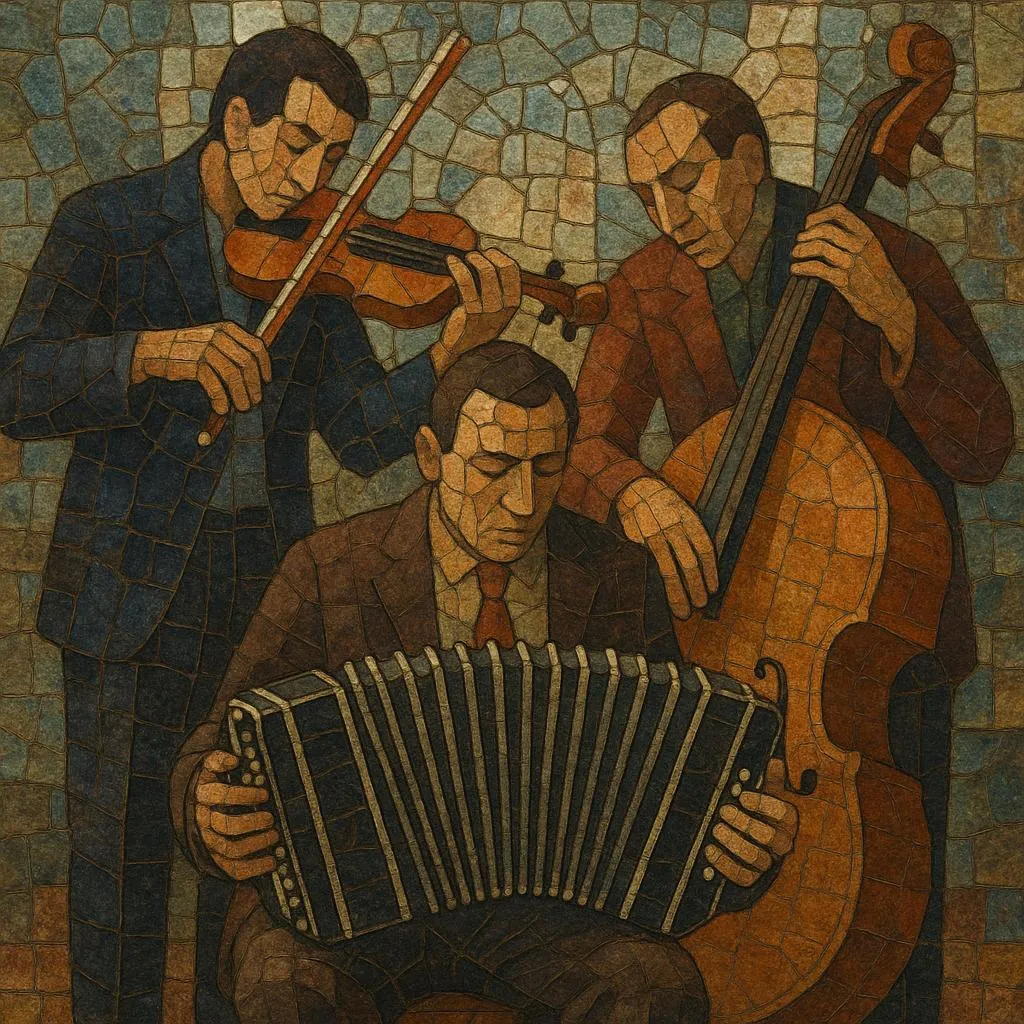
Orquesta típica is the classic Argentine tango dance orchestra format that crystallized in Buenos Aires (and neighboring Montevideo) in the early 20th century. It standardized the instrumentation and arranging language for tango, milonga, and vals criollo, turning neighborhood dance music into a sophisticated urban art.

A typical lineup includes multiple bandoneons (often 2–4), a string section (usually 3–5 violins plus occasional viola/cello), piano, and double bass. The ensemble sound relies on tight sectional writing, antiphonal exchanges between bandoneons and strings, and a rhythm team (piano and bass) that articulates the tango compás using marcato, síncopa, arrastre, and rubato. From the late 1930s, a vocalist (the estribillista/cantor) commonly joins for the refrain.

Stylistically, orquesta típica arrangements blend incisive rhythmic drive with lyrical melodicism and dramatic dynamic shape. Different orchestras cultivate distinct feels: the percussive, staccato swing of D’Arienzo/Biagi; the elegant legato and lush harmonies of Di Sarli/Fresedo; Pugliese’s weighty yumba and expressive rubati; and Troilo’s lyrical, bandoneon-forward poise.


Sources: Spotify, Wikipedia, Discogs, RYM, MB, user feedback and other online sources

History

Origins (1900s–1920s)

The ensemble grew out of early tango groups (trios and quartets of guitar, flute, and violin) active in Buenos Aires’ barrios and Montevideo. Around 1911, Vicente Greco’s “Orquesta Típica Criolla” helped establish a template that replaced flute and guitar with bandoneon and piano, adding double bass for depth. Pioneers like Roberto Firpo and Francisco Canaro codified the danceable compás, sectional writing, and touring dance-hall formats.

Consolidation and Innovation (1920s–1930s)

Julio De Caro’s group refined the modern orquesta típica: multiple bandoneons and violins, richer harmony, and contrapuntal inner voices. The so‑called Guardia Nueva period brought sophisticated arrangements, expressive rubato, and concert aspirations while remaining rooted in social dance.

The Golden Age (late 1930s–1950s)

Ballrooms and radio fueled tango’s boom. Orchestras developed signature grooves: Juan D’Arienzo’s propulsive beat re‑centered tango on the dance floor; Carlos Di Sarli and Osvaldo Fresedo emphasized sleek legato lines; Aníbal Troilo balanced lyricism and swing; Osvaldo Pugliese cultivated dramatic rubato and the heavy yumba pulse. Vocal refrains became standard, and the “variación” (a virtuosic bandoneon coda) capped many charts.

Diversification and Challenges (1950s–1980s)

Popular taste shifted and large dance orchestras faced economic and cultural headwinds. Astor Piazzolla, who had served in Troilo’s orquesta, redirected tango toward concert modernism (octets, chamber groups), though the típica language remained a reference point. Many orchestras scaled down or dissolved, while others adapted to cabaret and broadcasting contexts.

Revival and Globalization (1990s–present)

A worldwide tango dance revival and new generations of musicians rekindled interest in the orquesta típica. Contemporary ensembles reconstruct classic styles for milongas and stage while also exploring new writing, hybrid grooves, and amplified timbres. The format remains the canonical sound of social tango, anchoring both traditional milongas and modern productions.

How to make a track in this genre

Core Instrumentation
•   Bandoneons (2–4) for lead lines, countermelodies, and the climactic variación. •   Strings (3–5 violins; add viola/cello for depth) for melodic statements, pads, and rhythmic figures (staccato hooks, tremolos). •   Piano for compás, marcato en cuatro, síncopa patterns, and ornamental fills; double bass for pizzicato bass lines and emphatic downbeats/arrastres. •   Optional voice (estribillista) for refrains in Golden‑Age idiom.
Rhythm and Groove
•   Meter: traditionally felt in 2/4 or 4/4 (“2×4” tango feel). Dance tempos typically 60–70 BPM in 4/4 (or ~120–132 in 2/4); milonga is faster and bouncier; vals criollo uses 3/4 with flowing cross‑accents. •   Use marcato (four even quarter‑notes), síncopa (anticipations and tied offbeats), and arrastre (scooped pickups) to create propulsion. Pugliese‑style yumba emphasizes beat 1+3 with a heavy, breathing rubato.
Harmony and Melody
•   Predominantly functional harmony (minor keys common), enriched with chromatic approach tones, secondary dominants, and modal inflections. Avoid overly dense extensions—clarity helps dancers. •   Melodic lines are highly singable, often with sighing appoggiaturas, portamenti, and expressive rubato. Trade melodies antiphonally between bandoneons and violins.
Arranging Form
•   Typical arc: Intro (riff or vamp) → A (tutti melody) → B (bandoneon or string feature) → Interlude/Bridge → Vocal refrain (if used) → Instrumental chorus → Variación (virtuosic bandoneon passage) → Short coda. •   Coloristic devices: pizzicato strings, violin tremolo swells, bandoneon bellows shakes, piano octaves and glissandi, dramatic fermatas to cue dancer breaks (cortes y quebradas).
Style Dialects
•   For a D’Arienzo/Biagi vibe: brighter tempo, crisp staccato, strong marcato/síncopa, short phrases for dance energy. •   For a Di Sarli/Fresedo feel: smoother legato lines, elegant counterlines, warm string pads, restrained syncopation. •   For a Pugliese touch: weighty yumba pulse, dramatic dynamic swells, elastic rubato, and a showpiece variación.
Lyrics (if adding cantor)
•   Themes of urban romance, nostalgia, the barrio, fate, and bittersweet memory. Favor concise refrains (estribillos) that sit over a clear compás and allow dancers to breathe.
Recording/Performance Tips
•   Balance bandoneons and violins as co‑leads; keep piano/bass tight and articulate for floor feel. •   Use sectional miking to preserve antiphonal effects; leave headroom for climactic variación.

Top tracks

Locked
Share your favorite track to unlock other users’ top tracks

Upcoming concerts

in this genre
Influenced by
Has influenced

Download our mobile app

Get the Melodigging app and start digging for new genres on the go
© 2026 Melodigging
Melodding was created as a tribute to Every Noise at Once, which inspired us to help curious minds keep digging into music's ever-evolving genres.
Buy me a coffee for Melodigging