

Your digging level
Description
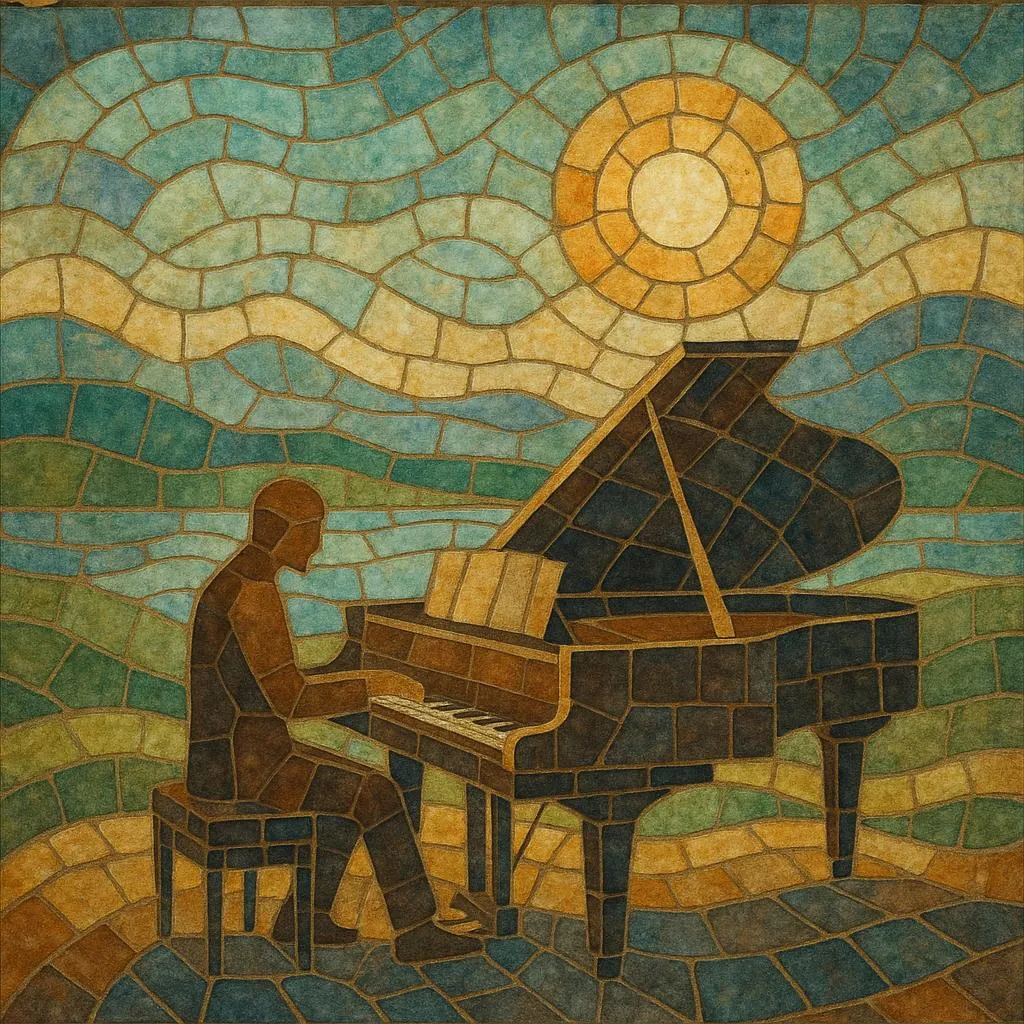
New age piano is a gentle, melody‑forward substyle of new age music centered on solo (or sparsely accompanied) acoustic piano. It favors warm tone, simple diatonic harmonies, slow to medium tempos, and a strong sense of space.
Rather than showcasing virtuosic display, new age piano prioritizes mood, imagery, and reflective listening—often evoking seasons, landscapes, or inner stillness. Pieces typically use repeating left‑hand patterns (broken chords or rolling arpeggios) under clear, singable right‑hand melodies, with liberal sustain and subtle dynamic shading. Production tends to be intimate and reverb‑kissed, inviting relaxation, meditation, and focused study.

History
The roots of new age piano lie in the broader new age movement and the post‑1960s appetite for contemplative, non‑aggressive music. Pianists drew on minimalism’s repetitive clarity, Romantic and Impressionist piano color, and folk‑like songcraft. In California, the Windham Hill aesthetic (quiet, naturalistic, audiophile‑minded) helped set the template. George Winston’s albums—especially "Autumn" (1980) and "December" (1982)—demonstrated that understated, seasonal, solo piano could be both artistically coherent and commercially viable.
Through labels such as Windham Hill, Narada, and Private Music, the sound spread widely in North America and then internationally. Artists including David Lanz, Michael Jones, Peter Kater, and Jim Brickman refined a lyrical, accessible approach that fit bookstores, wellness centers, and radio formats like "quiet music" or "smooth" blocks. High‑fidelity solo recordings, nature‑themed cover art, and liner‑note reflections on inspiration reinforced the genre’s contemplative identity.
The 2000s brought a global wave of pianists with adjacent sensibilities: Kevin Kern (U.S.), Ludovico Einaudi (Italy), Yiruma (Korea), and Brian Crain (U.S.) reached large audiences through film syncs, streaming playlists, and YouTube. While some of these composers are variously tagged as neoclassical or minimalist, their melodic directness, slow harmonic rhythm, and atmospheric production resonated with new age piano’s core values.
Playlists for relaxation, sleep, study, and mindfulness vaulted new age piano back to everyday prominence. Independent composers release steady flows of short, mood‑specific pieces, often optimized for solo listening or background focus. The style now overlaps with "neoclassical new age," "lo‑fi" and "study" ecosystems, yet it retains its hallmark: unhurried, emotive piano pieces that privilege calm over spectacle.



Best playlists


