

Your digging level
Description
Neo-bop is a modern jazz movement that emerged in the early 1980s and reaffirmed the values of acoustic, small-group, improvisation-centered jazz rooted in bebop, hard bop, modal jazz, and post-bop traditions.
It developed as a reaction against the electric textures, rock and funk influence of jazz fusion, and also against the more open, non-tonal, and avant-garde tendencies of free jazz. In its place, neo-bop favored swing-based rhythm, strong instrumental technique, formal clarity, historically informed improvisation, and a renewed emphasis on the jazz canon.
The style is often associated with conservatory training, repertory awareness, and a return to the sound of acoustic piano trios, quartets, and quintets featuring saxophone or trumpet front lines. While often criticized for traditionalism, neo-bop also helped restore mainstream visibility to acoustic jazz and reconnected younger musicians and audiences with earlier modern jazz language.
History
Neo-bop emerged in the United States during the early 1980s. It arose at a moment when jazz fusion had become commercially prominent and when free jazz and avant-garde practices had already transformed the boundaries of jazz improvisation. Many younger musicians and critics began to advocate for a return to acoustic instrumentation, swing feel, blues vocabulary, and the compositional and improvisational discipline associated with mid-20th-century jazz.
The movement was shaped by a conscious revivalist impulse. Rather than abandoning modern jazz language, neo-bop updated bebop, hard bop, modal jazz, and post-bop within a contemporary setting. It was therefore not simply a nostalgic recreation, but a reaffirmation of mainstream modern jazz values.
Trumpeter Wynton Marsalis became one of the most visible public figures associated with this movement, and his prominence helped define neo-bop in the public imagination. Around him formed a generation of highly trained players who emphasized acoustic ensembles, repertory knowledge, and technical fluency.
Neo-bop was strengthened by jazz education programs, conservatories, Lincoln Center institutions, repertory ensembles, and a growing critical discourse around the preservation of jazz tradition. This institutional support made the style especially influential in shaping how jazz was taught and presented from the 1980s onward.
As a result, neo-bop became closely associated with academic jazz culture. This gave the movement stability and prestige, but it also led some critics to argue that it could become overly canon-driven or conservative.
By the late 1980s and 1990s, neo-bop had become one of the dominant forms of acoustic mainstream jazz. Artists connected to the movement often expanded beyond strict bop language, incorporating broader post-bop harmony, contemporary composition, and individualized phrasing while still remaining grounded in the acoustic jazz tradition.
Its long-term legacy is substantial: neo-bop helped restore commercial and artistic visibility to acoustic jazz, influenced jazz education worldwide, and provided an entry point for many later mainstream and contemporary jazz musicians.
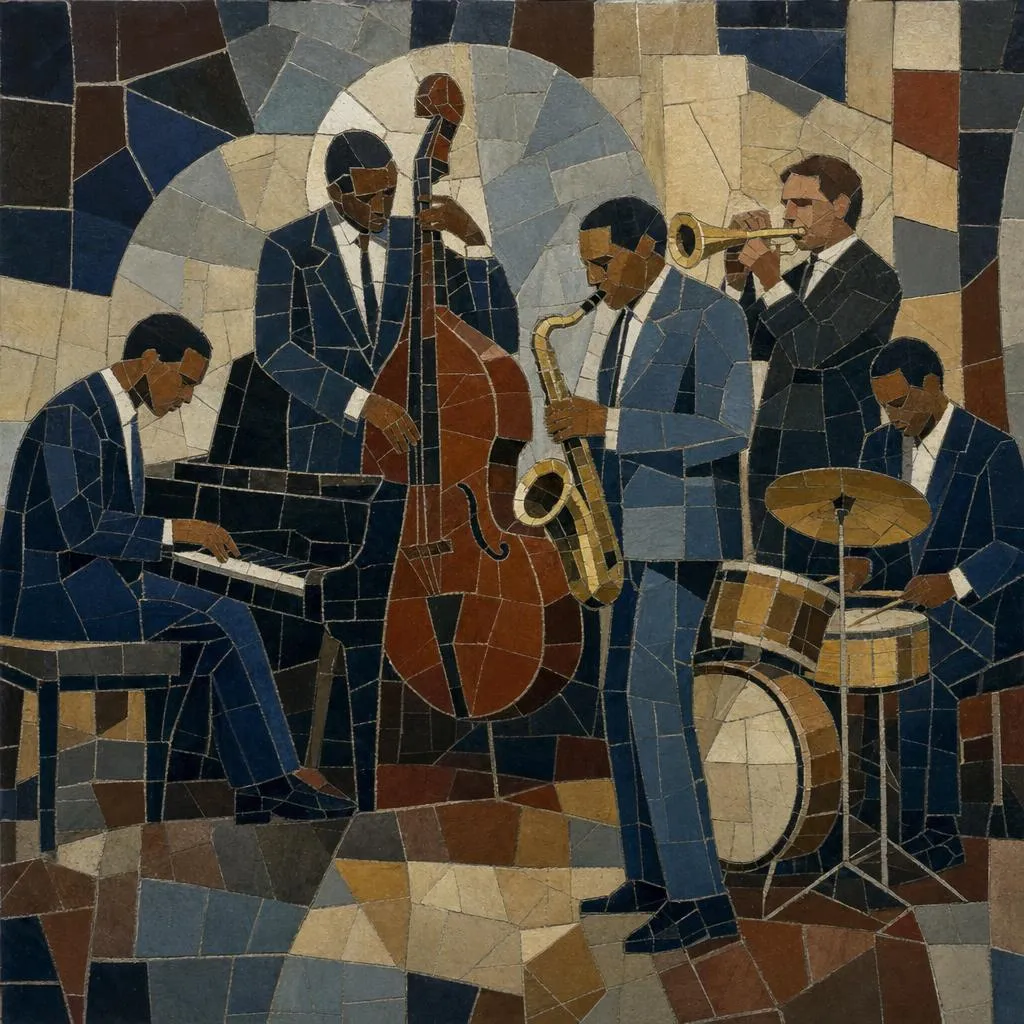
Use an acoustic jazz ensemble as the foundation. The most idiomatic formats are piano trio, quartet, or quintet with combinations such as trumpet, tenor saxophone, piano, double bass, and drum kit.
Prioritize clear instrumental roles: horns state melodies and improvise, piano provides comping and harmonic color, bass walks or outlines harmonic motion, and drums drive swing and interact dynamically with soloists.
Build the music around swing feel most of the time, though medium-up tempos, ballads, waltzes, and occasional Latin-influenced grooves can also work.
The rhythm section should feel elastic and interactive rather than mechanically fixed. Drummers should shape time through ride cymbal, hi-hat, and comping accents, while bassists maintain strong pulse and harmonic grounding.
Base compositions on song forms common to bop and post-bop: 12-bar blues, 32-bar AABA, rhythm changes, and original sectional forms.
Use rich jazz harmony: ii-V-I progressions, blues inflections, turnarounds, tritone substitutions, modal sections, chromatic approach chords, and extended chord colors such as 9ths, 11ths, and 13ths.
Compositions often begin with a memorable head, move into improvised solos over the form, and return to the head at the end.
Write melodies with strong phrasing, syncopation, and a balance between singable lines and instrumental angularity. Neo-bop heads often reflect bebop vocabulary but can be cleaner and more formally shaped than classic bebop tunes.
In improvisation, emphasize motivic development, voice-leading through chord changes, blues language, rhythmic variation, and command of bebop and post-bop phrasing. Strong technique matters, but musical storytelling is just as important.
Keep the sound polished, acoustic, and historically aware. Study bebop, hard bop, modal jazz, and post-bop masters, but avoid sounding like a museum piece.
Neo-bop works best when it combines tradition with personal voice: respect the language of the jazz canon, but compose and improvise with modern clarity, conviction, and originality.

Best playlists


