Your digging level
Description
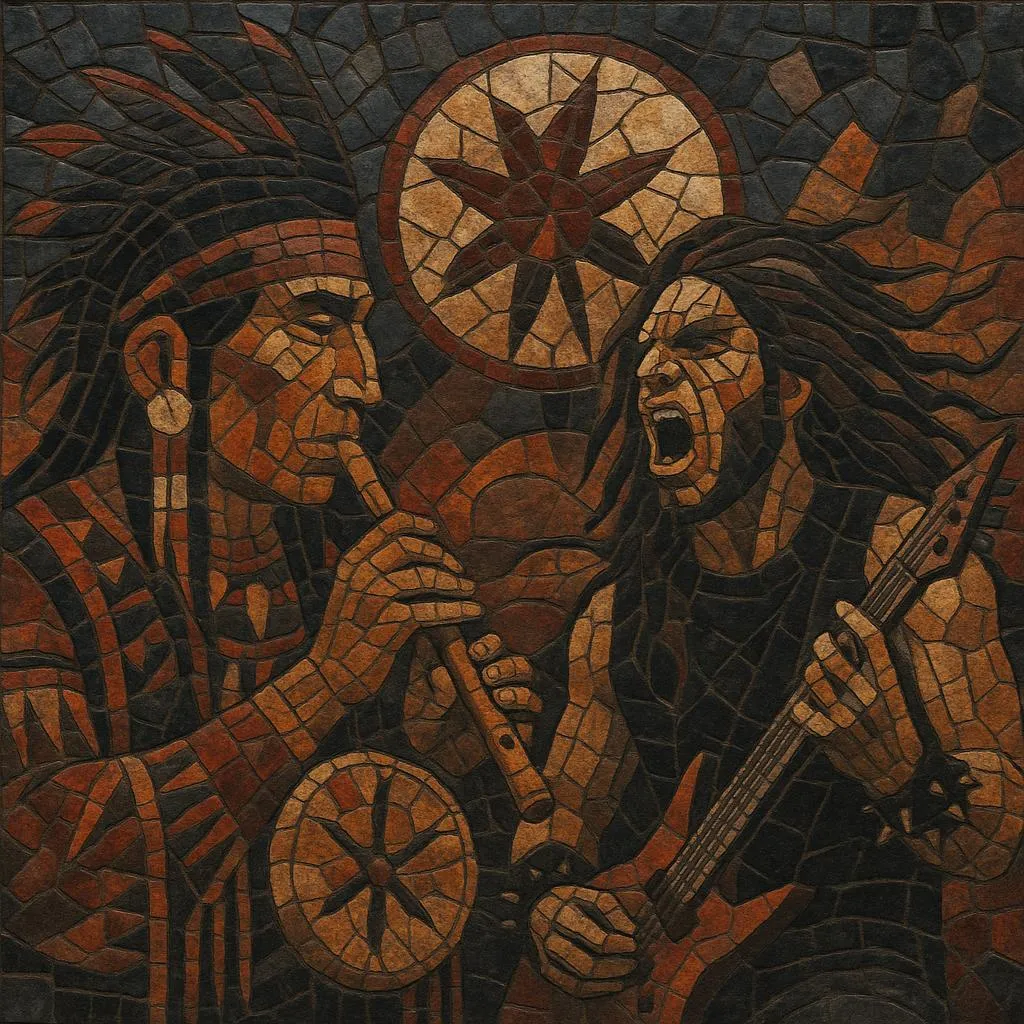
Native American metal is a fusion of heavy metal and the musical, linguistic, and storytelling traditions of the Indigenous peoples of North America. It blends the sonic aggression of metal subgenres (thrash, death, black, doom, groove, metalcore, and nu metal) with Native vocal styles, drumming, and flutes, as well as themes centered on land, resistance, ceremony, and cultural survival.
Artists often incorporate hand drums and powwow-inspired rhythms, cedar or Native flutes, rattles, chants and vocables, and lyrics in Indigenous languages (e.g., Diné Bizaad/Navajo, Lakota, Cree, Ojibwe, Nahuatl), alongside distorted guitars, blast beats, and harsh or clean vocals. The result ranges from epic and atmospheric to raw and intense, while remaining grounded in Indigenous histories and contemporary struggles.


History
Across the 1990s, Indigenous North American musicians began adopting metal’s heaviness as a vehicle for cultural expression, protest, and survival stories. While metal bands had long referenced Native imagery, the shift in this decade was that Indigenous artists themselves were steering the sound—bridging community drumming and chant with riff-driven song forms.
In the 2000s, more Indigenous-led projects emerged, drawing from thrash, black metal, death metal, and folk metal. Independent labels, college radio, and online forums helped connect geographically dispersed Native artists and listeners. During this period, the integration of Native flutes, hand drums, and vocables with extreme-metal techniques became a clear aesthetic throughline, and bilingual or fully Indigenous-language lyrics grew more visible.
The 2010s saw a marked rise in Indigenous metal’s global visibility. Artists pushed deeper into black and death metal aesthetics while placing Indigenous cosmologies, historical memory, Missing and Murdered Indigenous Women (MMIW), tribal sovereignty, and land defense at the lyrical core. Festivals and digital platforms enabled intercultural exchange across U.S., Canadian, and Mexican Indigenous communities, solidifying a pan-Indigenous metal identity while honoring local specificity.
In the 2020s, Native American metal gained critical attention for both musical quality and cultural impact. Projects spanning atmospheric black metal to death-doom to groove-forward metalcore have foregrounded Indigenous languages, ceremony-informed performance, and ethical storytelling. The genre continues to grow through grassroots scenes, community-led labels, and collaborations that center consent and respect when referencing ceremonial elements.