Your digging level
Description
Música paraibana is the umbrella term for popular and traditional music made in the state of Paraíba, in Brazil’s Northeast. It blends the syncopated dance grooves of forró (baião, xote, coco, embolada) with Afro‑Indigenous rhythms, Portuguese song forms, and modern Brazilian popular music (MPB, rock, reggae, pop).
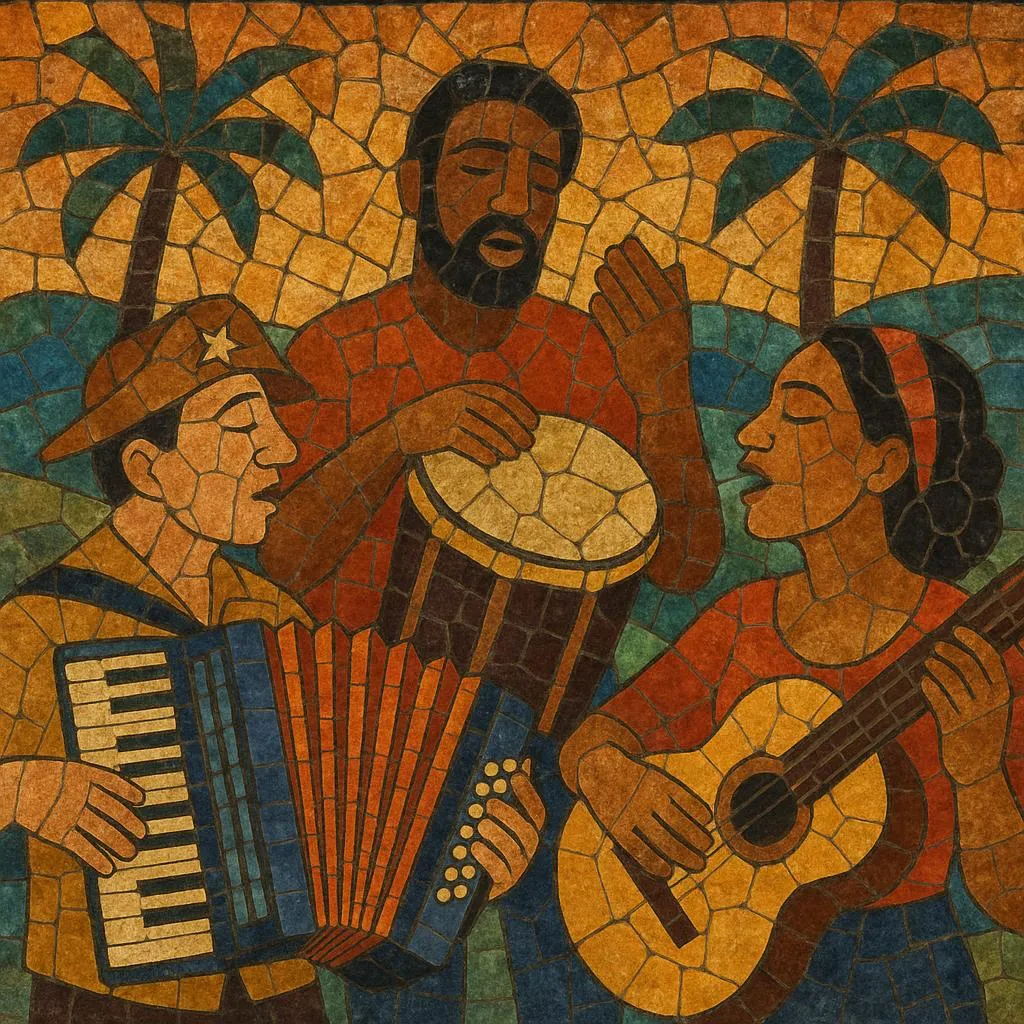
Its hallmark timbres include accordion (sanfona), zabumba (bass drum), triangle, pandeiro, and voice in call‑and‑response. Melodies often sit in major or modal (Mixolydian/Dorian) flavors, and lyrics oscillate between romance, humor, social commentary, and vivid images of the sertão (backlands), the coast, and the massive June festivities (Festa/São João) centered in cities like Campina Grande and João Pessoa.
From mid‑century innovators (notably Jackson do Pandeiro) to MPB crossovers and contemporary fusions with indie, electronica, and piseiro, música paraibana is both fiercely regional and stylistically adventurous—made for dancing, storytelling, and celebrating local identity.
History
Paraíba’s musical DNA descends from Northeastern folk forms—baião, xote, coco, embolada, ciranda—shaped by Afro‑Indigenous rhythms and Portuguese verse traditions. Street poetry and repentismo (repente) fostered quick‑witted vocal delivery, while rural dances cemented the accordion–zabumba–triangle ensemble as a social soundtrack.
The 1950s are a turning point, with Paraíba’s Jackson do Pandeiro projecting local grooves to national audiences through radio and records. His syncopated phrasing, percussive pandeiro style, and playful lyric timing became a template for modern forró and a reference for generations of Brazilian musicians. Parallel exchanges with samba and early MPB broadened the palette without losing regional character.
A wave of Paraíba artists—Zé Ramalho, Elba Ramalho, Sivuca—bridged backlands poetry and urban arrangement, placing regional rhythms inside rock, folk, and sophisticated MPB orchestrations. Chico César further renewed the scene in the 1990s with socially conscious songwriting and melodic immediacy. Paraíba’s São João festivals grew into emblematic national stages for forró and its variants.
Contemporary música paraibana thrives on fusion: indie bands and electronic producers weave zabumba and triangle into pop/rock frameworks; forró eletrônico and piseiro aesthetics supercharge dance floors; and artists revisit coco/embolada with modern production. Cross‑state dialogues with Pernambuco’s mangue beat and broader Brazilian rock/pop fuel constant reinvention, while local institutions and festivals nurture an intergenerational ecosystem that keeps tradition and experimentation side by side.
Start with the classic forró trio: accordion (sanfona), zabumba, and triangle. Add pandeiro or guitar/violão for color; rabeca or bass can reinforce modern arrangements.
•Use baião and xote as rhythmic foundations:
•Baião: around 110–135 BPM; zabumba plays a low hit on beat 1, a damped (abafado) off‑beat accent (often on the “and” of 2), and an open tone around beat 3; triangle marks steady 16ths with subtle accents.
•Xote: slower (80–100 BPM), lilting 2/4 feel, great for romantic themes. Coco/embolada feels are faster, with more hand‑percussion drive.