Your digging level

For this genre
0/8
🏆
Sign in, then listen to this genre to level up

Description

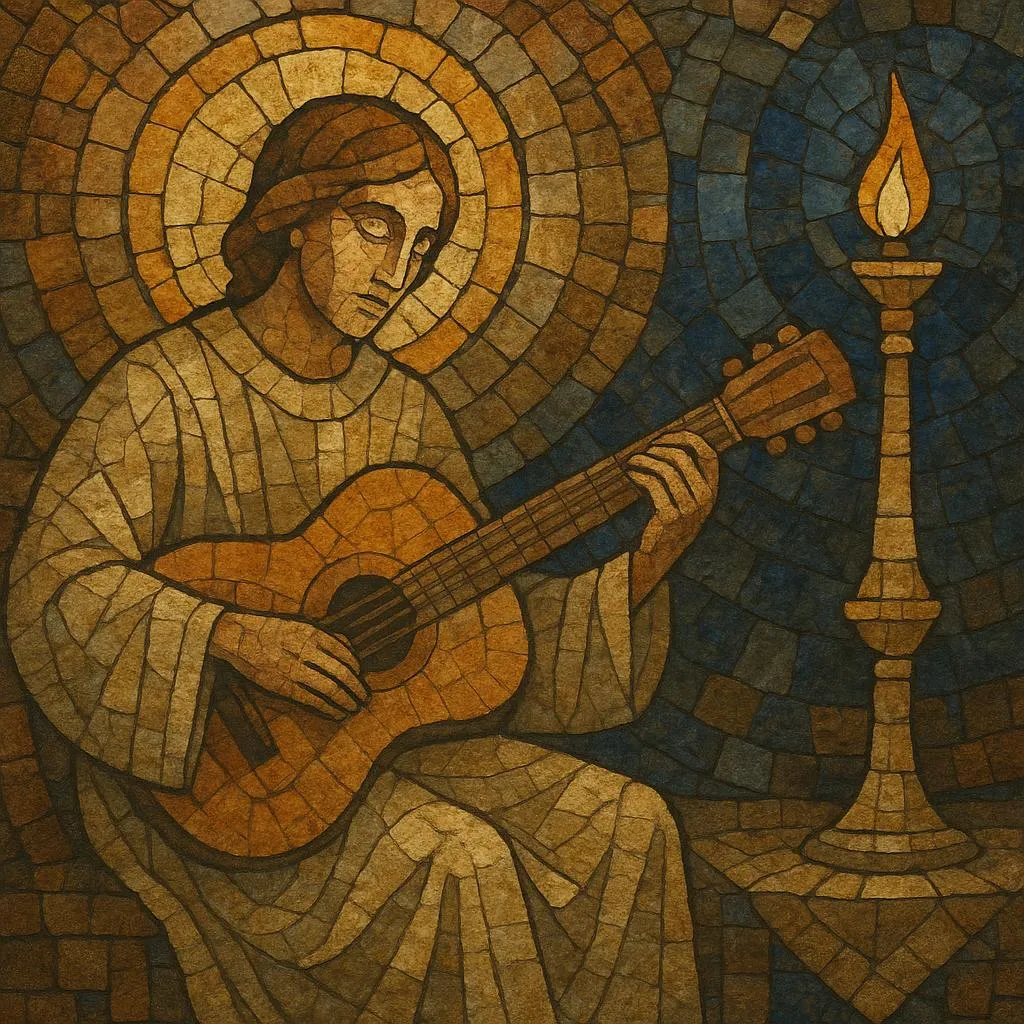
Musica instrumental cristiana (Christian instrumental music) is devotional music that expresses Christian faith without lyrics, centering the listener on prayer, meditation, and worship through melody, harmony, and texture alone.

Typical arrangements adapt hymns, modern praise & worship songs, and original spiritual themes for solo piano, acoustic or classical guitar, small strings, or gentle ensembles with pads and light percussion. Production tends to be warm, intimate, and reverberant to encourage contemplation.

Beyond personal devotion, this repertoire is widely used in church services (preludes, offertories, communion), small group gatherings, and daily listening for reflection or study. It bridges the church and the home by providing a reverent sound space free of lyrical distraction.


Sources: Spotify, Wikipedia, Discogs, Rate Your Music, MusicBrainz, and other online sources

History

Early Roots (Pre-1970s)

Churches and believers have long performed wordless versions of hymns—organ voluntaries, piano offertories, and chamber transcriptions. These practices laid the liturgical and stylistic groundwork for a distinct instrumental devotional stream.

Emergence with CCM (1970s–1980s)

With the rise of contemporary Christian music (CCM) in the United States, labels and church music ministries began issuing instrumental arrangements of hymns and new praise choruses. Affordable home pianos, cassette culture, and church media libraries helped this music circulate widely for personal devotion and service use.

Expansion and Diversification (1990s–2000s)

Dedicated instrumental worship albums—from solo piano and acoustic guitar to string quartets and soft contemporary ensembles—became common. Arrangers blended classical reverence with easy listening warmth and new age ambience, creating serene sound worlds suited to prayer and reflection.

Streaming Era and Global Reach (2010s–present)

Digital platforms and playlist culture amplified the genre’s reach, spawning vast catalogs of piano worship, guitar hymnals, cinematic worship beds, and lo-fi devotional sets. Spanish-language audiences embraced instrumental worship across the Americas, and the style now serves congregational settings, study, relaxation, and guided prayer worldwide.

How to make a track in this genre

Repertoire and Melody
•   Start with hymn tunes or modern worship melodies; keep the melodic line recognizable so listeners can mentally "sing" the text. •   Use expressive phrasing, rubato, and dynamics to supply the narrative that lyrics would otherwise provide.
Harmony and Voicing
•   Harmonize with church-friendly tonal language: I–IV–V progressions, gentle modal mixture, and occasional suspended chords for openness. •   Voice-lead smoothly; avoid dense extensions unless the mood is cinematic or ambient.
Instrumentation and Texture
•   Solo piano or acoustic/classical guitar are the core timbres. Add light strings, soft pads, and subtle bass for depth. •   Keep percussion minimal—brushes, shakers, or soft toms—to preserve a prayerful space.
Rhythm and Tempo
•   Favor slow to moderate tempos (50–80 BPM) with spacious timing; allow breaths between phrases. •   Use arpeggios, broken chords, or ostinatos to sustain flow without crowding the melody.
Production and Space
•   Record intimately with warm tone; add tasteful reverb to create a sanctuary-like ambience. •   Leave headroom and avoid harsh transients; the goal is restful, non-intrusive presence.
Arrangement Tips
•   Plan arcs: simple opening, meditative development (modulation or textural lift), and a calm resolution. •   Include selah moments—brief rests or drones—so the music supports reflection and prayer.

Top tracks

Locked
Share your favorite track to unlock other users’ top tracks
Influenced by
Has influenced
Challenges
Digger Battle
Let's see who can find the best track in this genre

Download our mobile app

Get the Melodigging app and start digging for new genres on the go
© 2026 Melodigging
Melodding was created as a tribute to Every Noise at Once, which inspired us to help curious minds keep digging into music's ever-evolving genres.
Buy me a coffee for Melodigging