Your digging level
Description
Música blumenauense refers to the music scene and stylistic blend associated with Blumenau, a city in Santa Catarina, Brazil, famous for its German-Brazilian heritage and the Oktoberfest of Blumenau.
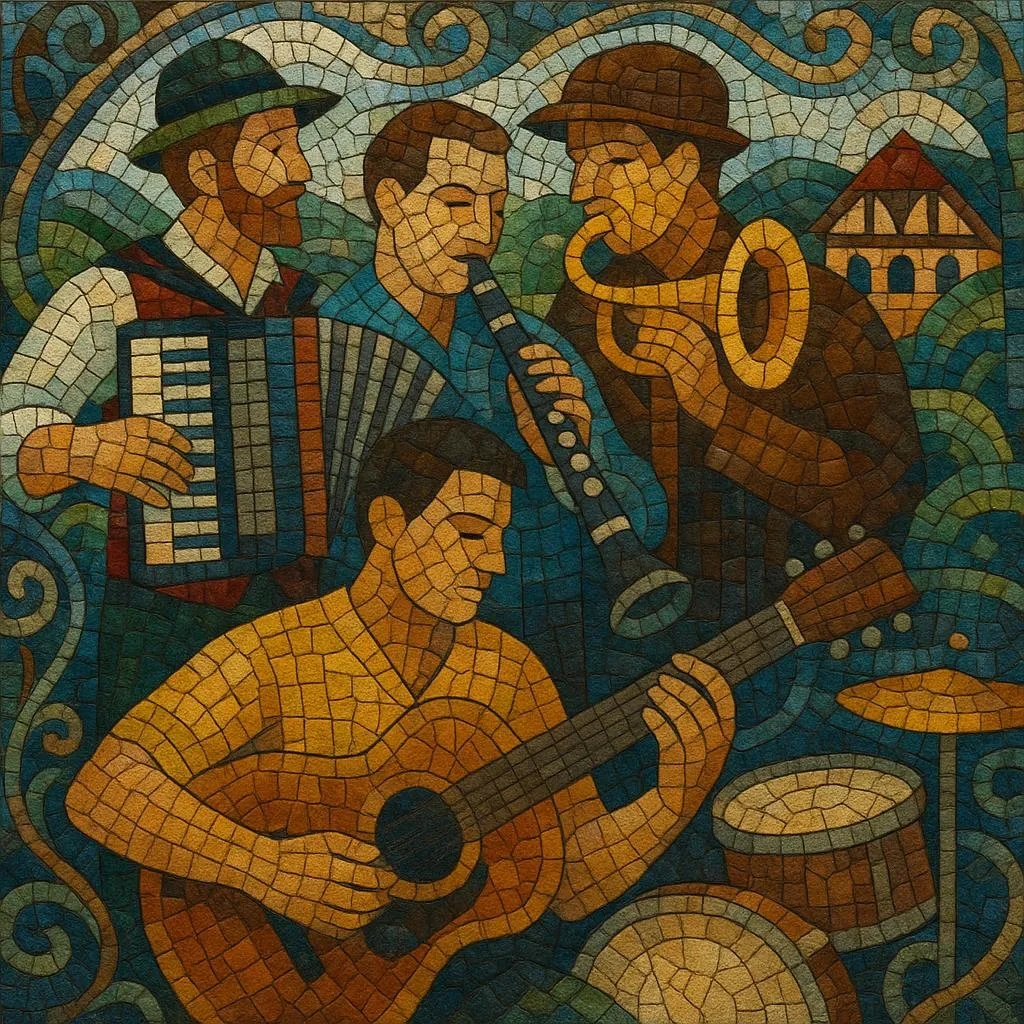
At its core, the style mixes Central European "volkstümliche" dance rhythms (polka, waltz, marches and schlager melodies) with Brazilian popular idioms (MPB, samba, and Brazilian rock/pop). Typical ensembles pair accordion, clarinet, brass (trumpet/trombone/tuba), and drums with electric guitar, bass, and keyboards. The result is festive, sing‑along music tailored for dance halls and festival tents, often delivered in Portuguese with German phrases and themes tied to local culture, beer halls, and communal celebration.
Beyond the party sound, Blumenau also hosts choirs and chamber groups that reflect the city’s strong choral/orchestral tradition, giving the scene a distinct mix of folk-dance exuberance and concert-music refinement.
History
German-speaking immigrants settled in Blumenau (founded in 1850), bringing with them dance-band traditions (volkstümliche Musik), choral singing, and brass/accordion ensembles. Throughout the 20th century, local bands played polkas, waltzes, and marches at community functions, shaping a regional sound that blended Central European repertoire with Brazilian sensibilities.
The modern identity of "música blumenauense" coalesced in the 1980s with the launch of the Oktoberfest de Blumenau (1984). Festival stages formalized a house style: upbeat, danceable oompah rhythms, crowd call‑and‑response, sing‑along refrains, and bilingual (Portuguese/German) banter. Amplified rhythm sections and pop/rock touches modernized the traditional bandinha format while keeping the core dance meters (2/4 polka, 3/4 waltz) intact.
As the festival grew in national visibility, the local scene diversified. Dance bands incorporated elements of Brazilian pop/rock and samba swing, while choirs and the city’s chamber orchestra sustained a parallel art‑music tradition. Recording projects, regional tours, and radio/TV appearances helped spread the Blumenau sound across southern Brazil’s fest circuits.
Contemporary "música blumenauense" remains anchored in live performance—parades, beer gardens, and tent shows—where musicians tailor arrangements to dance floors and communal singing. Alongside festival bands, choirs and classical ensembles underscore Blumenau’s long‑standing choral/orchestral culture, making the city’s musical identity both festive and musically well‑rounded.

Best playlists