

Your digging level

For this genre
0/8
🏆
Sign in, then listen to this genre to level up

Description

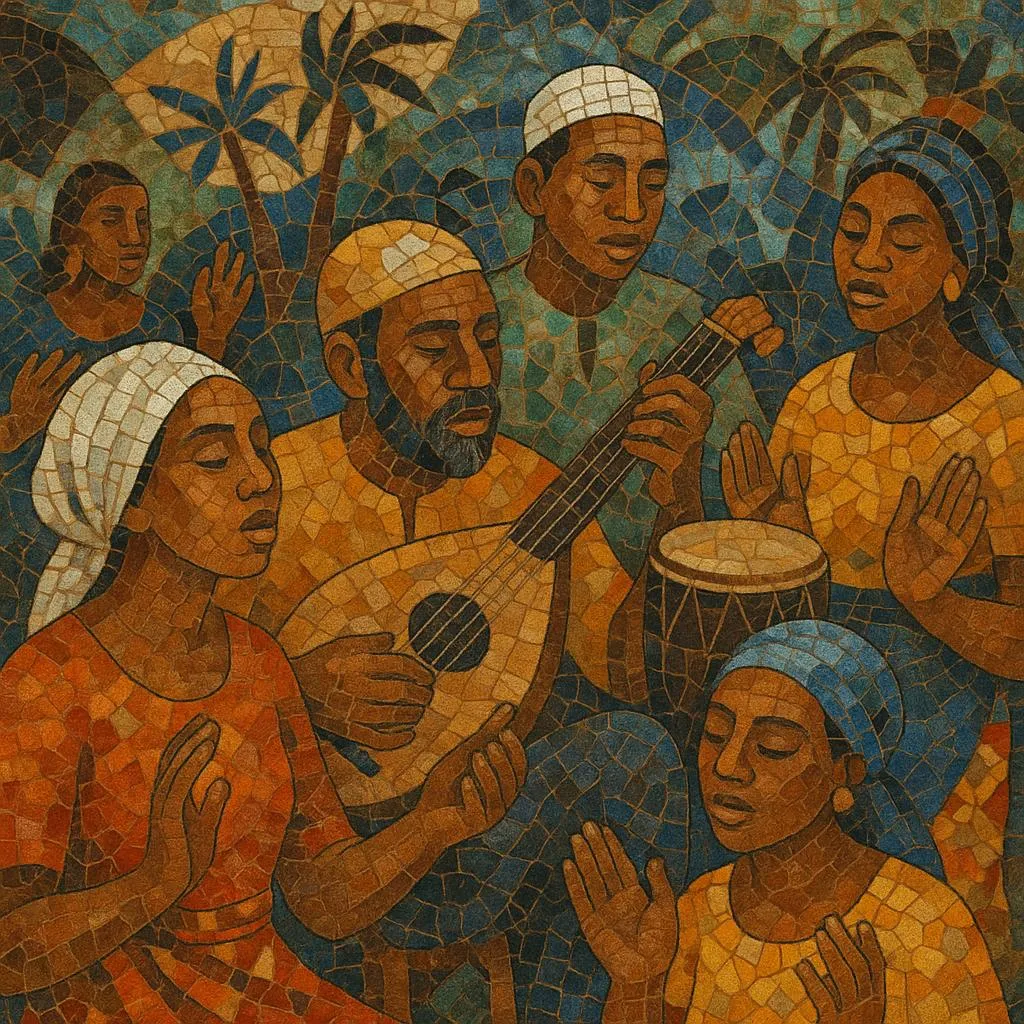
Mahoraise music (music of Mayotte) is the island’s richly syncretic sound world, shaped by centuries of trade and migration across the Mozambique Channel. It blends Swahili‑coastal grooves, Arab‑Islamic melodic practice, Malagasy rhythms, and later French and global pop touches.

Core expressions include the locally beloved m’godro dance rhythm, women’s choral‑percussion traditions (such as debaa and m’biwi), intimate lute songs on the gaboussi (gabusi), and coastal dance styles related to chakacha. In the late 20th century, Mahoran artists also folded in guitar bands, keyboards, and even blues inflections, creating contemporary m’godro‑pop and stage styles that remain rooted in communal singing and call‑and‑response.


Sources: Spotify, Wikipedia, Discogs, RYM, MB, user feedback and other online sources

History

Early roots (19th century and earlier)

Mayotte sits at a maritime crossroads linking East Africa, the Comoros, Madagascar, and the Arabian Peninsula. Through these routes, Arab‑Islamic devotional singing and modal ornamentation mingled with Swahili‑coastal dance musics and Malagasy rhythmic languages. Local women’s ensemble traditions (debaa, m’biwi) and gaboussi (short‑neck lute) song repertoires formed the ceremonial and social bedrock of Mahoran music.

Colonial era to mid‑20th century

French colonial presence brought new instruments (guitar, violin, accordion) and listening contexts (radio, school, church ensembles), while continued contact with the Comoros and Zanzibar introduced taarab’s poetic songcraft and orchestral colors. Mahoran performers adapted these elements without displacing communal singing, call‑and‑response refrains, and hand‑drum cycles.

Modernization and recorded music (1970s–1990s)

With cassettes and later CDs, local dance genres (especially m’godro) moved from village festivities to amplified stages and studios. Artists began to fuse m’godro’s swaying 6/8–12/8 pulse with electric guitars, bass, and keyboards, and to incorporate coastal chakacha and Malagasy‑adjacent salegy energy. Blues and chanson shades also appeared in studio productions and guitar styles.

Contemporary scene (2000s–today)

Today’s Mahoran music spans traditional debaa gatherings and gaboussi song circles to festival‑ready m’godro‑rock and blues‑tinged bands. Lyrics frequently alternate among Shimaore (Comorian dialect), Kibushi (Malagasy‑related dialect), and French, reflecting everyday multilingual life. While popular artists tour the Indian Ocean and France, community practices—women’s choruses, wedding troupes, and Islamic devotional song—continue to renew the island’s musical identity.

How to make a track in this genre

Core feel and rhythm
•   Start with a swaying, danceable compound meter: m’godro commonly feels like 6/8 or 12/8 with off‑beat handclaps and interlocking drum patterns. Keep the groove cyclical and propulsive, suitable for communal dancing. •   For chakacha‑related pieces, emphasize hip‑swaying percussion with light shakers and frame drums, maintaining a fast, undulating coastal groove.
Melody, modality, and vocals
•   Use call‑and‑response: a lead vocalist (or small group) delivers lines that the chorus answers, often in unison. •   Melodic contours favor Arab‑influenced ornaments (grace notes, melismas) and modal movement more than functional harmony. Keep cadences vocal and breath‑shaped. •   Alternate languages naturally used on Mayotte—Shimaore, Kibushi, and French—to shape phrasing and rhyme.
Instrumentation
•   Traditional palette: gaboussi (gabusi lute), hand drums (ngoma variants), m’biwi clappers, frame drums, and kayamb/flat shakers. Women’s chorus and unison parts are central in debaa/m’biwi contexts. •   Contemporary additions: acoustic/electric guitar (often with clean or lightly overdriven tone), bass, kit drums, accordion/violin (taarab colors), and keyboards. A restrained blues vocabulary on guitar can complement m’godro’s lilt.
Harmony and form
•   Keep harmony sparse—drone or I–IV–V vamps support modal melodies. Avoid dense chord changes; let rhythm and voice lead the narrative. •   Structure songs around cyclical grooves with sectional builds: verse (lead lines), refrain (full chorus), instrumental breaks (gaboussi or guitar), and call‑and‑response codas.
Production tips
•   Prioritize body feel: percussion and handclaps sit forward in the mix, with warm low‑mid guitars and present lead vocals. •   Preserve community energy—layer group vocals and responsive crowd elements to evoke live dance settings.

Top tracks

Locked
Share your favorite track to unlock other users’ top tracks

Upcoming concerts

in this genre
Influenced by

Download our mobile app

Get the Melodigging app and start digging for new genres on the go
© 2026 Melodigging
Melodding was created as a tribute to Every Noise at Once, which inspired us to help curious minds keep digging into music's ever-evolving genres.
Buy me a coffee for Melodigging
