

Your digging level
Description
Music of Acadia refers to the traditional and contemporary musical practices of Acadian communities in Atlantic Canada (primarily New Brunswick, Nova Scotia, and Prince Edward Island).
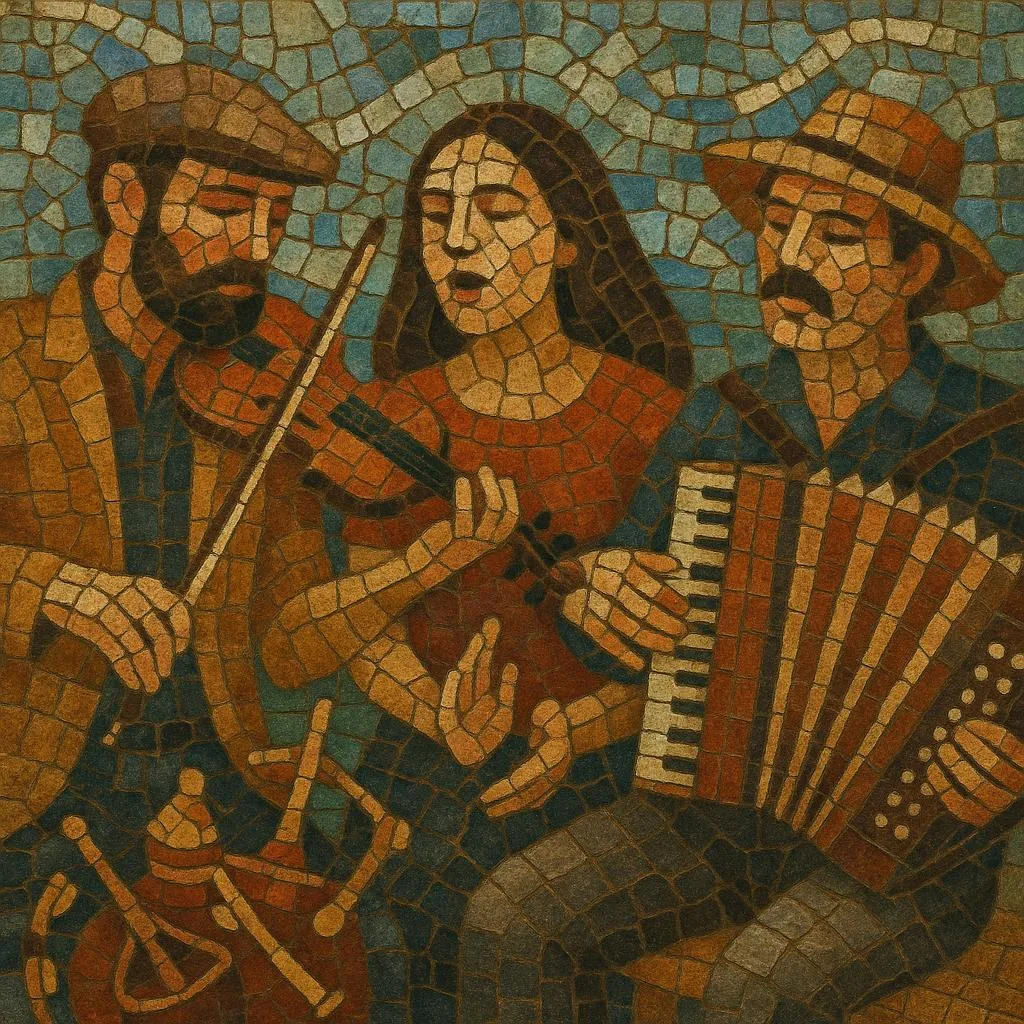
It blends French-language song traditions with Celtic fiddle dance music, Indigenous influences, and later North American country and popular styles. Core sounds include fiddle-led reels and jigs, call-and-response “chansons à répondre,” foot percussion (podorythmie), handclaps, spoons, and button accordion, often supporting community dances (square sets, quadrilles) and kitchen parties. Lyrically, themes range from everyday rural life and seafaring to love, resilience, and collective memory—especially the Acadian Expulsion (Le Grand Dérangement).
History
Acadian music grew from French settlers who established communities in the 1600s in what is now Atlantic Canada. Early repertoire mixed French ballads and dance forms with local social contexts, while exchanges with neighboring Mi’kmaq communities and later-arriving Irish and Scottish settlers introduced new rhythms, instruments, and dance sets.
The 1755–1764 Expulsion scattered Acadians; many resettled across the Maritimes and kept their songs, fiddle tunes, and communal dances alive in home gatherings and parish events. The tradition adapted to local conditions, absorbing Celtic fiddle idioms and step-dance practices, while preserving French-language songs and call-and-response styles.
Field collectors and broadcasters began to document Acadian repertoire in the early–mid 20th century. By the 1960s–1970s folk revival, Acadian artists brought regional sounds onto stages and records, modernizing arrangements while foregrounding language and identity. This period established the fiddle, accordion, and “chanson à répondre” as emblematic markers in public consciousness.
From the 1990s onward, festivals (including the Congrès mondial acadien) amplified visibility. Contemporary bands and singer-songwriters fused tradition with folk-rock, country, and indie-pop, and even hip hop, while dance musicians continued the living social tradition at community gatherings. Today, the music spans intimate balladry to dance-driven sets, maintaining Acadian French and regional dialects as a cultural anchor.

