Your digging level

For this genre
0/8
🏆
Sign in, then listen to this genre to level up

Description

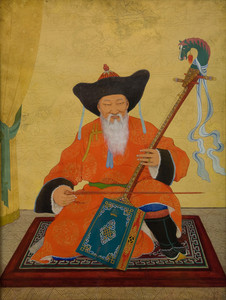
Morin khuur refers to the repertoire and performance practice centered on Mongolia’s iconic horse‑head fiddle. Although technically an instrument, it also denotes a deeply rooted musical idiom whose sound, ornaments, and imagery (evoking wind, steppe, and horses) define a recognizable style across folk song, epic narration, dance music, and modern fusion.

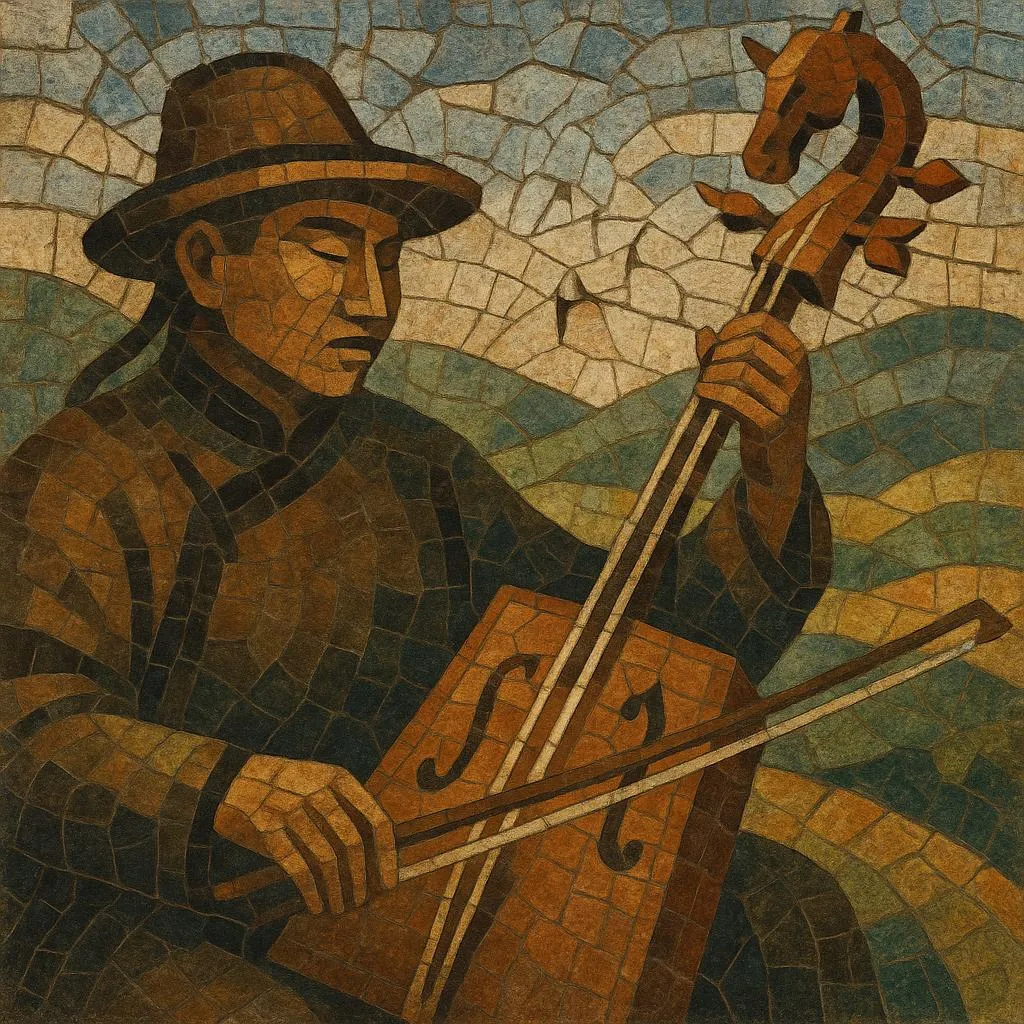
The instrument has two strings of horsehair and a bow held under‑hand; its fretless, boxy body and sculpted horse head make it both a sonic and national symbol. Players favor pentatonic modes, sliding intonation, portamento, and a rich timbral palette that can imitate horse whinnies and gallops. In 2003 (incorporated into the Representative List in 2008), UNESCO recognized Mongolian morin khuur music as a Masterpiece of the Oral and Intangible Heritage of Humanity, underscoring its cultural centrality.


Sources: Spotify, Wikipedia, Discogs, RYM, MB, user feedback and other online sources

History

Origins and symbolism

Legends place the morin khuur’s origin in the medieval Mongol era (13th century), with mythic tales of a herder crafting a fiddle in memory of his beloved horse. From early on it served as a vehicle for pastoral life, ritual, and storytelling, reflecting the horse‑centered worldview of the steppe.

Roles across folk and court contexts

For centuries the morin khuur accompanied long song (urtyn duu), epics, praise songs, and dance, while also appearing in ceremonial and shamanic settings. Its timbre and flexible intonation allowed singers and storytellers to extend phrases, paint landscapes, and mimic animal sounds.

20th‑century standardization and expansion

In the mid‑20th century, conservatories and state ensembles in Ulaanbaatar standardized technique, pedagogy, and instrument construction (including extended fingerboards and more stable tuning systems). This enabled not only solo virtuosity but also multi‑part morin khuur choirs and orchestras, enlarging the concert repertoire with composed works while preserving folk functions.

UNESCO recognition and globalization

Proclaimed by UNESCO as a Masterpiece of the Oral and Intangible Heritage of Humanity (2003; integrated into the Representative List in 2008), morin khuur music received international visibility. Touring ensembles, recordings, and collaborations with jazz, classical, rock, and metal broadened its audience without severing ties to the long‑song and epic traditions.

Contemporary scene

Today, the morin khuur thrives in traditional, academic, and crossover settings—featured in state ensembles, folk collectives, and globally popular bands. Builders continue to refine acoustics; educators codify regional styles; and artists bridge centuries by placing ancient ornamentation into modern harmonies and grooves.

How to make a track in this genre

Instruments and setup
•   Use a traditional two‑string morin khuur with horsehair strings and bow. Hold the bow under‑hand and exploit variable bow pressure for timbral nuance. •   Standard contemporary tunings center around a fifth (e.g., D–A), but regional and piece‑specific tunings vary. Explore scordatura for color.
Scales, harmony, and drones
•   Favor anhemitonic pentatonic scales common to Mongolian folk practice; modal centers can shift fluidly under sustained drones. •   Harmony is typically modal and drone‑based; when arranging for ensemble, add open fifths, parallel fourths/fifths, or simple triads to preserve transparency.
Melody and ornamentation
•   Emphasize slides (portamento), grace‑note flicks, oscillations, and expressive vibrato. Imitative gestures—horse whinnies, wind, hoofbeats—are idiomatic. •   Phrase freely; stretch time to mirror breath and text in long song accompaniment. Cadences often taper with a sighing descent.
Rhythm and groove
•   Dance and epic pieces can evoke hoof‑beat ostinati (e.g., dotted or triplet gallop figures). Alternate sustained lines with percussive bow accents. •   In fusion contexts, lock the morin khuur’s rhythmic cells with frame drum or trap beats while keeping melodic slides forefront.
Form and arrangement
•   For traditional vocals, shadow the melody a third/fourth below or weave heterophony above a tonic drone. •   In ensemble writing, distribute roles: one part sustains drone; one outlines modal degrees; a lead voice carries ornamented melody; occasional call‑and‑response with throat singing (khöömii) is effective.
Studio and performance tips
•   Close‑mic near the f‑holes for warmth and add a room mic for bow air and resonance. Moderate compression preserves dynamic swells. •   Reverb with early reflections evokes steppe spaciousness; avoid heavy modulation that masks slides and timbral detail.

Top tracks

Locked
Share your favorite track to unlock other users’ top tracks

Upcoming concerts

in this genre
Influenced by
Has influenced

Download our mobile app

Get the Melodigging app and start digging for new genres on the go
© 2026 Melodigging
Melodding was created as a tribute to Every Noise at Once, which inspired us to help curious minds keep digging into music's ever-evolving genres.
Buy me a coffee for Melodigging