Your digging level
Description
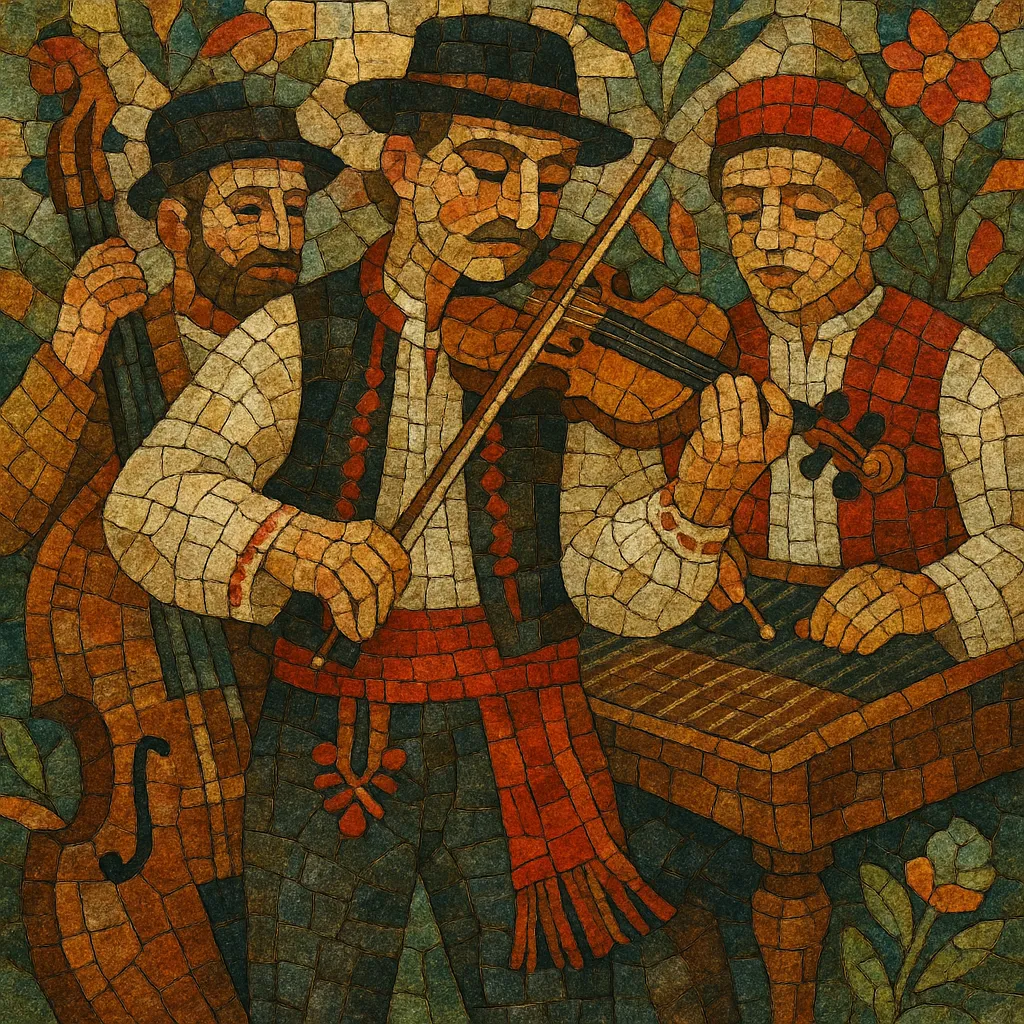
Moravian folk is the regional folk tradition of Moravia, the eastern part of today’s Czech Republic. It is marked by richly ornamented melodies, distinctive regional dialects, and the hallmark cimbalom band sound (cimbálová muzika) built from lead violin (primáš), accompanying viola (kontráš), double bass, cimbalom, and often clarinet or accordion.
Across subregions such as Slovácko (Moravian Slovakia), Valašsko (Wallachia), Haná, and Lašsko (Lachia), the style ranges from lyrical wine‑cellar songs and wedding repertoire to vigorous men’s dances. Signature dance forms include the UNESCO‑listed Slovácko verbuňk (a recruiter’s solo dance) and the Wallachian odzemek. Modal inflections (notably Dorian and Mixolydian), heterophonic textures, and drones (from bagpipes or strings) give the music a vivid, earthy color.
Performances are highly participatory and communal, with call‑and‑response refrains and strophic song forms tied to the rural calendar—harvests, vintages, and rites of passage—while polished ensemble traditions grew around radio orchestras and state folk ensembles in the 20th century.
History
Moravian folk draws on centuries of rural song, dance, and ritual from Moravia’s villages, with region‑specific idioms in Slovácko, Valašsko, Haná, and Lašsko. Modal melodies, bagpipe traditions, and seasonal/customary songs formed a deep oral repertoire transmitted within families and communities.
During the Czech National Revival, collectors such as František Sušil (who published large song collections from the 1830s) documented Moravian materials in print. By the late 19th century, composers—including Leoš Janáček—systematically collected and stylized Moravian tunes and speech‑melody patterns, integrating them into art music and helping canonize regional styles.
In the interwar and post‑war eras, the cimbalom band became the emblem of Moravian sound. Radio Brno’s Brněnský rozhlasový orchestr lidových nástrojů (BROLN) and professional/state ensembles presented staged, orchestrated versions of village repertoire, while local cimbalom bands and choir traditions thrived. The Strážnice International Folklore Festival (founded mid‑20th century) emerged as a key showcase.
After 1989, Moravian folk experienced renewed grassroots energy, alongside fusion projects that blended folk with classical, jazz, and world‑music elements. The Slovácko verbuňk was inscribed by UNESCO in 2005, highlighting Moravia’s ongoing living heritage. Today, village bands, conservatory‑trained musicians, and crossover artists sustain both traditional and innovative strands.