Your digging level
Description
Cimbalová muzika is a Central European folk-ensemble tradition centered on the cimbalom (a large hammered dulcimer), most strongly associated with Moravia and adjacent parts of today’s Czech Republic and Slovakia.
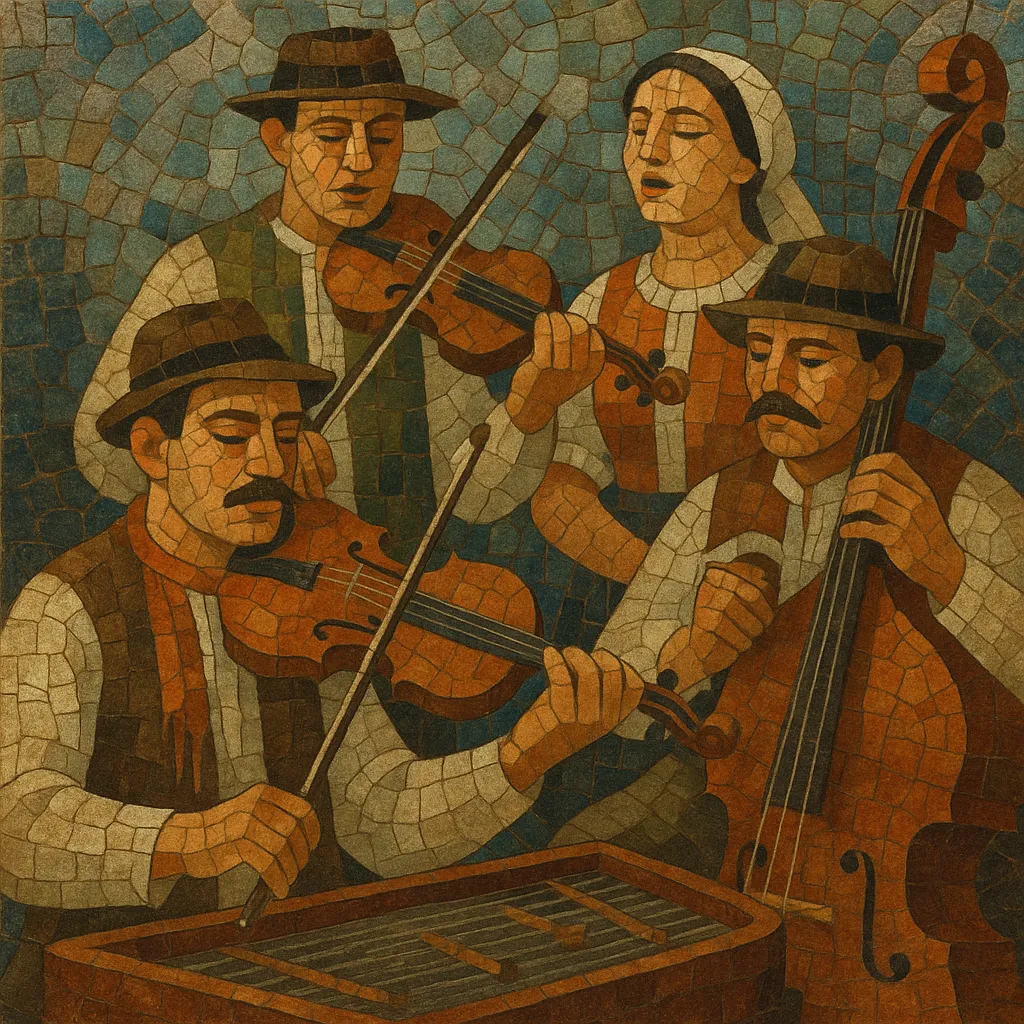
Typical bands feature a lead violin (primáš), accompanying viola/kontra (often providing percussive off‑beat chords), double bass, the cimbalom for harmonic and rhythmic foundation, and often clarinet and voice. Repertoires span lively dance tunes (skočná, verbuňk, odzemek), lyrical táhlé songs, ceremonial pieces, and local variants of song-forms from the Carpathian basin.
The style is marked by rich ornamentation, rubato introductions, drone-like fifths, modal inflections, and springy duple or lilting triple meters. The modern concert cimbalom (standardized in Budapest in the 1870s) enabled portable, virtuosic ensemble playing that became emblematic of Moravian and Slovak folk performance.
History
The hammered dulcimer has older European roots, but the modern concert cimbalom was standardized by instrument makers in Budapest in the 1870s. Its greater volume, range, and durability helped small village bands in Moravia and western Slovakia coalesce into the recognizable “cimbálová muzika” format: lead fiddle, kontra/viola, double bass, and cimbalom, sometimes with clarinet and singers. These bands accompanied dances, fairs, and life‑cycle rituals, blending local Moravian and Slovak melodies with broader Carpathian idioms shaped by Hungarian and Romani performance practice.
In the early 20th century, cimbalom bands circulated through inns and regional festivities, while collectors documented their repertoires. After World War II, folklore ensembles and cultural institutions (festivals like Strážnice; ensembles such as SĽUK in Slovakia) professionalized and staged the tradition, refining arrangements and widening audiences through radio and records. Despite stylization, core techniques—ornamented violin lines, syncopated kontra chords, and rolling cimbalom arpeggios—remained intact.
A late‑20th‑century folk revival encouraged historically informed playing alongside creative crossovers. Bands renewed village repertoires, revived song dialects, and collaborated with choir traditions and regional dance groups. The post‑1989 cultural opening brought touring, recordings, and pedagogies that trained new generations of cimbalom players and primáši.
Cimbalová muzika thrives at festivals, dance houses, and conservatories. Modern ensembles balance traditional dance sets with original compositions, chamber‑folk arrangements, and collaborations across jazz, world fusion, and contemporary classical. The cimbalom’s distinctive timbre has become a versatile signature of Central European identity on international stages.