

Your digging level
Description
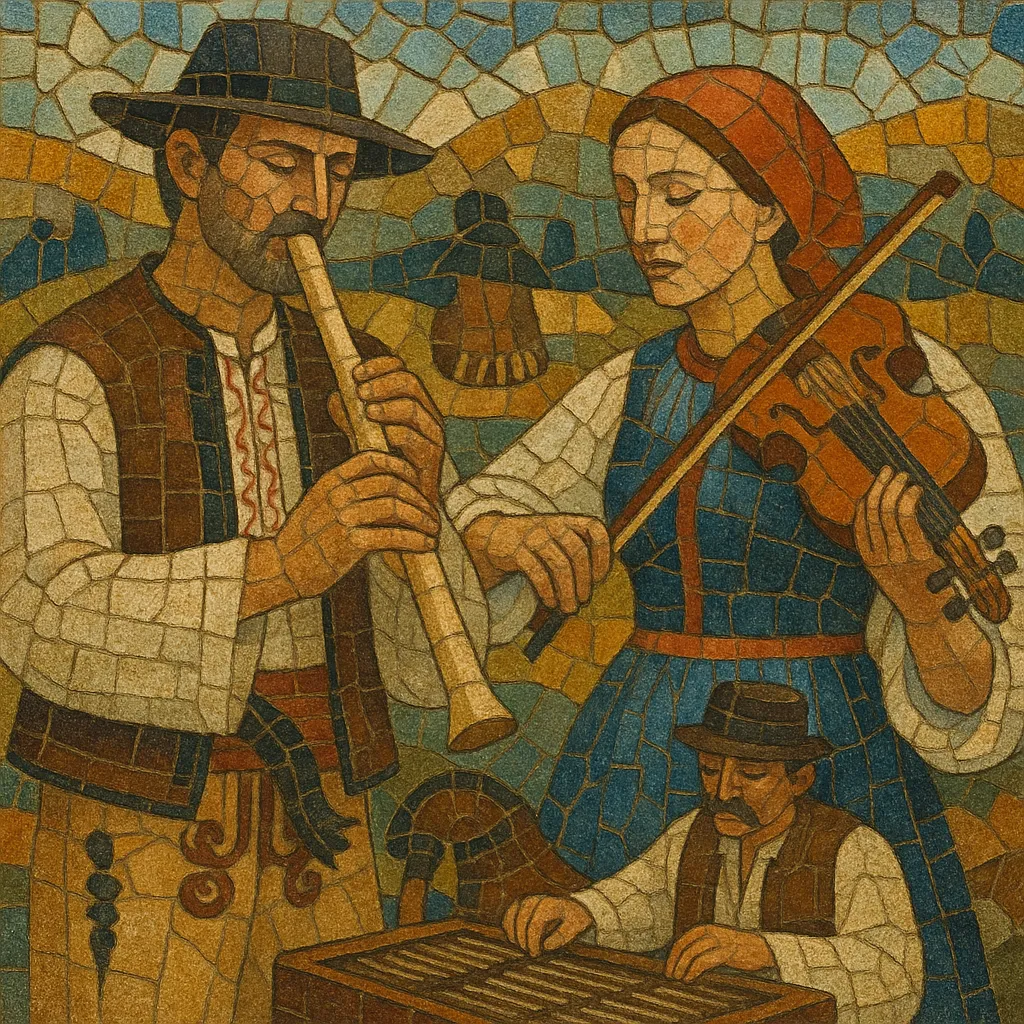
Slovak folk is the traditional music of Slovakia, shaped by pastoral life in the Carpathian mountains and by close contact with neighboring Central and Eastern European cultures. It features distinctive shepherd instruments like the fujara (a long overtone flute) and the koncovka (an end-blown overtone flute), village string bands with fiddles and cimbalom, bagpipes (gajdy), and rich regional vocal styles.
Melodies often use modal scales (especially Dorian, Aeolian, and Mixolydian), drones, and heterophonic or lightly ornamented unison singing. Dance rhythms such as polka, karička, and čardáš are common, ranging from buoyant duple meters to flowing triple-time songs. The repertoire spans lively dance tunes, love songs, shepherd calls, work songs, ritual pieces, and epic ballads, preserving local dialects and storytelling traditions.
History
Folk music in the territory of present-day Slovakia crystallized over centuries of rural life, shepherding, and village ritual, with song types and instruments spreading along Carpathian trade and migration routes. By the 19th century, collectors and national revivalists began to write down songs, linking local traditions to emerging Slovak cultural identity. Regional styles—such as the Terchová string tradition and Podpoľanie shepherd music—took on recognizable forms.
At the turn of the 20th century, fieldworkers and composers—including Béla Bartók and Zoltán Kodály in then-Upper Hungary—documented thousands of Slovak melodies, scales, and rhythms, revealing deep connections to neighboring Czech, Polish, Hungarian, Ukrainian, and Romani traditions. Slovak collectors and artists such as Karol Plicka and Viliam Figuš-Bystrý further codified the repertoire, while local village bands (ľudové hudby) standardized lineups of fiddles, viola, cimbalom, and bass.
After World War II, state-supported ensembles professionalized and popularized the music. Lúčnica (founded 1948) and SĽUK (founded 1949) toured internationally, presenting staged folk music and dance with polished orchestration and choreography, and festivals such as Východná (from 1953) became national showcases.
Following 1989, a roots revival emphasized historically informed performance, village masters, and regional nuance alongside contemporary folk and world-music fusions. The fujara and its music were recognized by UNESCO (2005/2008), and the musical tradition of Terchová was also inscribed, underscoring the genre’s global cultural value. Today, Slovak folk thrives in community ensembles, conservatories, festivals, and modern bands that blend traditional repertoire with new arrangements and cross-border Carpathian influences.
How to make a track in this genre
Use a village string band (fiddle/primáš, viola or kontra, double bass) often joined by cimbalom, clarinet, and accordion. Add regional color with fujara, koncovka, and gajdy (bagpipes). Maintain a steady drone or pedal tone (often the tonic or dominant) to support modal melodies.
Write tunes in modal scales—Dorian, Aeolian, and Mixolydian are common—frequently within a modest ambitus. Employ ornaments such as grace notes, slides, and appoggiaturas, and allow voices or instruments to create heterophony by varying a shared melodic line. Shepherd pieces (for fujara/koncovka) should highlight overtone series sonorities and echo-calls.
Base rhythms on regional dances: lively polkas (2/4), čardáš with flexible tempo and rubato transitions, circle-dance karička patterns, and flowing triple-time songs. Keep grooves earthy and danceable, with strong off-beat bowing or cimbalom patterns and occasional accelerando/ritardando to match dance figures.
Favor drone-based textures, parallel thirds or sixths, and sparse chordal support. Avoid dense chromatic harmony; let modal color and rhythmic lift carry the music. Cimbalom and guitar/accordion can outline I–VII or I–bVII progressions common to Mixolydian tunes.
Write strophic verses with refrains, drawing on pastoral life, seasons, love, humor, and local legends. Use call-and-response and communal choruses. Structure sets as medleys that modulate by mode or region, with instrumental breaks for fiddle or cimbalom solos. Encourage spontaneous embellishment and dance cues from the primáš (lead fiddler).


