Your digging level

For this genre
0/8
🏆
Sign in, then listen to this genre to level up

Description

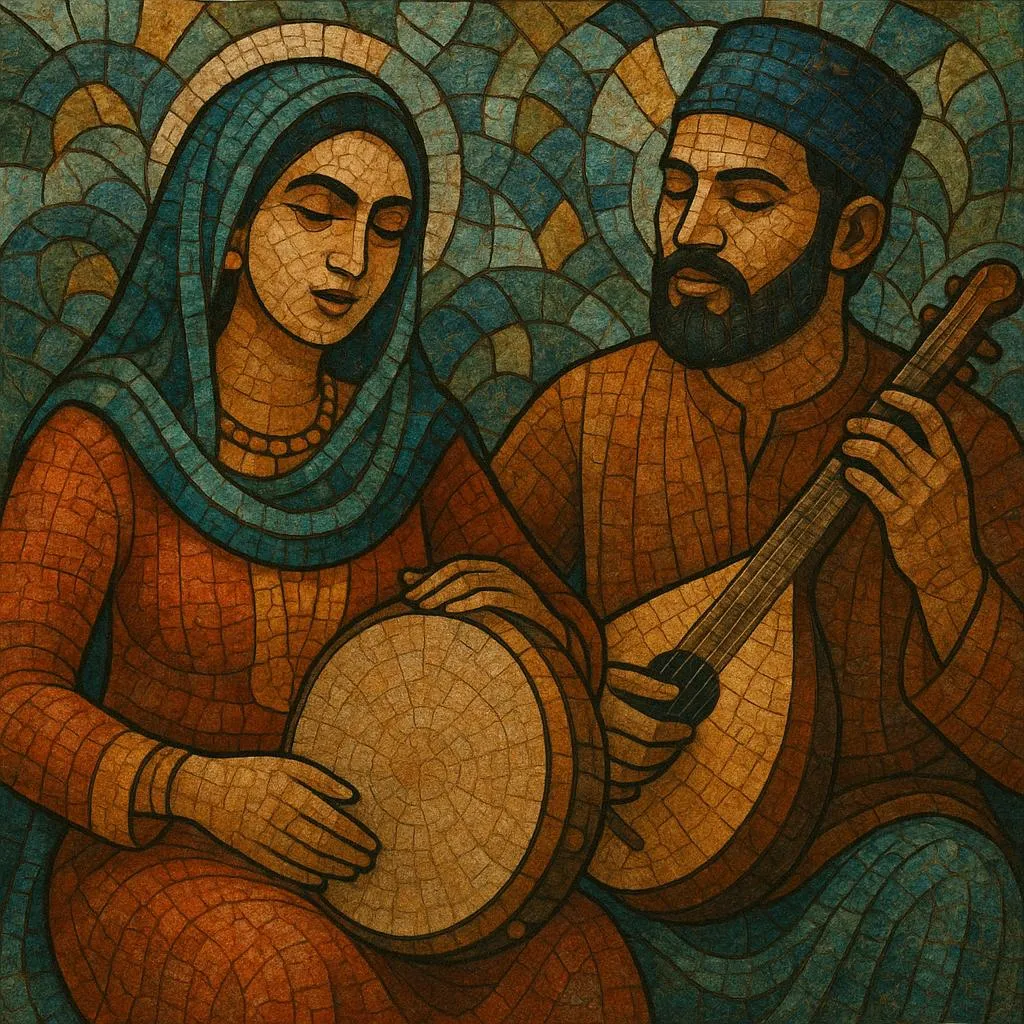
Mappila song (Mappila Pattu) is a Muslim folklore song tradition of the Mappila community in the Malabar region of Kerala, India. It is typically rendered in Arabi-Malayalam—a Malayalam vernacular written historically in an Arabic-derived script—and set to a melodic framework known as ishal.

The style blends Arabic, Persian, and South Indian musical elements with Kerala’s local poetic meters and performance practices. Its lyrics span devotional praise, historical ballads, love poetry, maritime life, social satire, and wedding festivities, preserving a distinct Mappila identity while remaining closely linked to broader Keralite culture.


Sources: Spotify, Wikipedia, Discogs, Rate Your Music, MusicBrainz, and other online sources

History

Origins (7th–17th centuries)

Arab traders and settlers established enduring links with the Malabar Coast from the early centuries CE. Over time, the Mappila Muslim community developed a literary-musical corpus in Arabi-Malayalam, fusing Arabic vocabulary with Malayalam grammar. By the 17th century, hallmark devotional “Mala” songs (e.g., saints’ panegyrics) and early narrative ballads had crystallized, using ishal (melodic frameworks) and local rhythmic cycles.

18th–19th centuries: Expansion of forms

Mappila song expanded beyond devotional texts into genres such as padappattu (battle/narrative ballads), romantic and didactic poetry, and community songs for rites of passage. Poets like Qadi Muhammad, Pulikkottil Hyder, and Mahakavi Moyinkutty Vaidyar elevated the form with sophisticated imagery and hybrid melodic threads drawn from Arabic melodic sense, Carnatic ragas, and Kerala folk meters.

20th century: Print, recording, and public performance

The print era and gramophone recordings disseminated Mappila songs widely. Parallel to mosque festivals and wedding functions (oppana, duffmuttu), the style entered stage programs and radio, and later Malayalam cinema repertoires, while retaining core features—Arabi-Malayalam diction, ishal-guided melodies, and characteristic percussion.

Contemporary era

From the late 20th century onward, Mappila song embraced amplified bands, harmonium/keyboard harmonies, and studio production. Contemporary performers adapt classic texts and compose new ones, occasionally blending with pop, hip hop, and film idioms. Despite modernization, community performance contexts, devotional themes, and the ishal–tala backbone remain central.


How to make a track in this genre

Melodic framework (Ishal)
•   Select an ishal (the song’s melodic skeleton). Traditional ishals evoke Arabic modal flavor while accommodating South Indian scalar motion. Map your tune to a narrow-to-moderate ambitus with fluid, melismatic vocal lines. •   Borrow or allude to Carnatic ragas sparingly; retain the characteristic Mappila lilt and ornamental turns.
Rhythm and groove
•   Common feels include lilting 6/8 and steady 4/4, suitable for oppana (wedding dance) and duffmuttu (frame-drum ensembles). •   Percussion staples: duff (frame drum), handclaps, ganjira; modern renditions add tabla, cajón, or drum kit. Keep grooves buoyant and danceable without overpowering the vocal.
Language and lyric craft
•   Write in Arabi-Malayalam diction (Malayalam syntax with Arabic and Persian loanwords), or modern Malayalam retaining Mappila idiom. •   Themes: devotional praise (mala texts), love and longing, seafaring and trade, historical/heroic ballads, moral counsel, and festive banter. •   Rhyme and refrain: Use clear quatrains with a recurring refrain; call-and-response works well in group settings.
Harmony and arrangement
•   Traditionally monodic with drone/harmonium support; contemporary versions use simple I–IV–V or i–VII–VI pop harmony under the ishal. •   Instruments: voice (lead + chorus), duff/ganjira, harmonium, strings (violin), and optional guitar/keyboard/bass for modern texture.
Vocal style and performance
•   Emphasize ornamented phrasing, nasal timbre where appropriate, and expressive melismas. •   Encourage participatory claps/responses; respect moderate tempos for devotional pieces and brighter tempos for wedding/festive numbers.

Top tracks

Locked
Share your favorite track to unlock other users’ top tracks
Influenced by
Has influenced
Challenges
Digger Battle
Let's see who can find the best track in this genre

Download our mobile app

Get the Melodigging app and start digging for new genres on the go
© 2026 Melodigging
Melodding was created as a tribute to Every Noise at Once, which inspired us to help curious minds keep digging into music's ever-evolving genres.
Buy me a coffee for Melodigging