Your digging level
Description
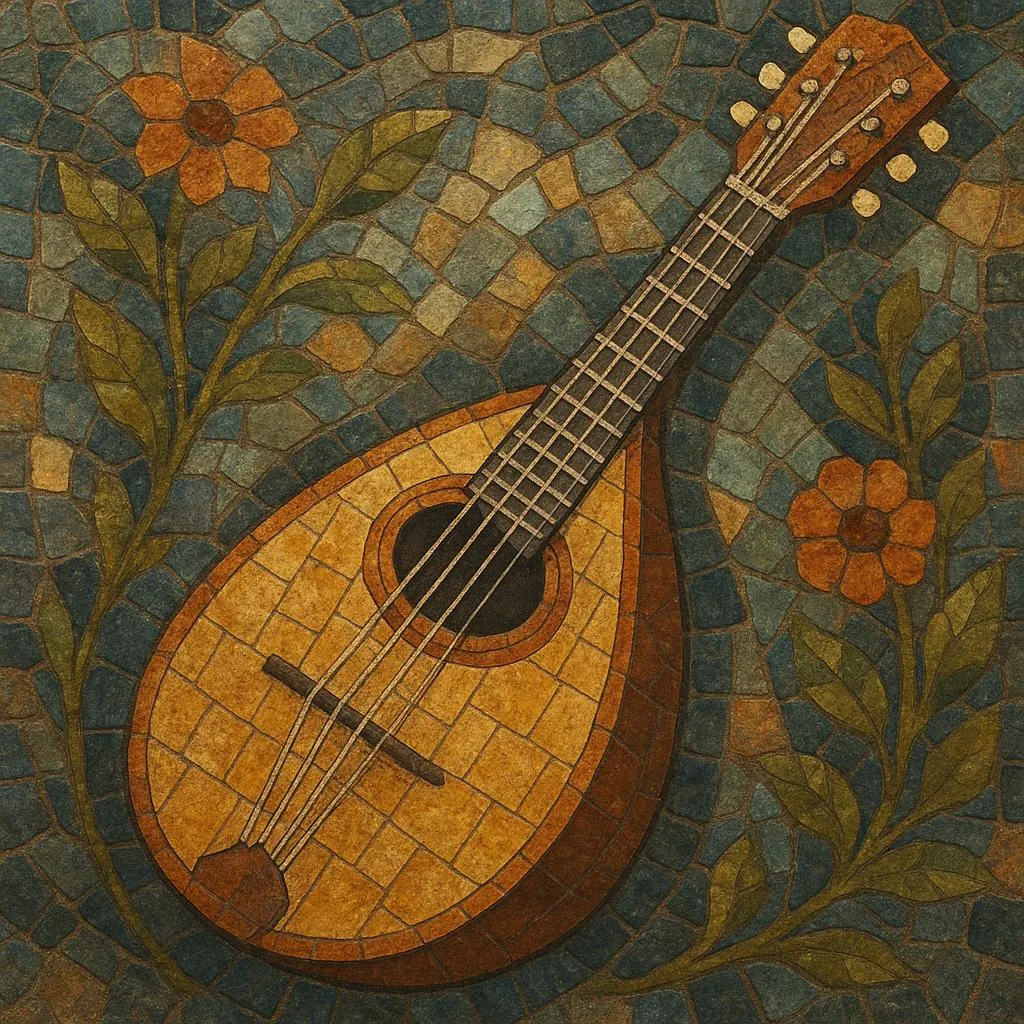
Mandolin (as a genre tag) refers to repertoire and performance traditions centered on the mandolin family—music written for, led by, or idiomatically shaped around the instrument’s bright, plucked timbre and violin-like tuning. The modern Neapolitan mandolin took form in 18th‑century Naples (notably in the Vinaccia workshop), and its tuning in fifths, four double courses, and fretted fingerboard helped it flourish among amateurs and virtuosi alike.
Across centuries, mandolin music has spanned classical concert works, salon pieces and mandolin‑orchestra literature, popular and folk dance tunes, and later American roots styles such as bluegrass—each adopting core techniques like plectrum tremolo, double‑stops, and percussive chord “chops.” The instrument’s lineage from the European lute family and its 18th–19th‑century popularity waves frame the broad stylistic umbrella now described as “mandolin.”
History
The modern bowl‑back (Neapolitan) mandolin emerged in Naples in the mid‑1700s, with the Vinaccia family credited for key design traits. Its violin‑like tuning and fretted fingerboard made it accessible and expressive, anchoring early classical and salon repertoire.
By the late 1800s, mandolin clubs and orchestras spread through Europe and the Americas. In the U.S., the Milwaukee Mandolin Orchestra (founded 1900) illustrates the period’s organized plectrum ensembles and their light‑classical, dance, and popular repertories. Composers/virtuosi such as Raffaele Calace and Carlo Munier expanded technique, pedagogy, and the family’s range (e.g., liuto cantabile), consolidating a "classical mandolin" tradition.
In the 1940s, Bill Monroe’s Blue Grass Boys recast mandolin as a driving lead and rhythmic engine in bluegrass, popularizing the back‑beat "chop" and down‑stroke attack within string‑band formats. Parallel traditions thrived elsewhere (e.g., Brazilian choro), but in American roots the mandolin became emblematic of high‑energy picking styles.
From the late 20th century onward, the instrument has enjoyed renewed classical visibility (modern concert artists and new commissions), ongoing mandolin‑orchestra activity, and genre‑crossing hybrids that fold jazz, folk, and global idioms into a still‑growing mandolin repertoire.
Use the Neapolitan (bowl‑back) or modern carved‑top mandolin tuned in fifths (G–D–A–E, like violin). In classical or orchestral settings, consider the full family—mandolin I/II, mandola, liuto/mandocello—for quartet or orchestra textures.
For mandolin orchestra, program light classical dances, waltzes, polkas, and tangos alongside transcriptions; balance tremolo pads, arpeggiated inner voices, and melody doubling across chairs.