Your digging level
Description
Lesotho traditional refers to the indigenous musical practices of the Basotho people, characterized by powerful communal singing, antiphonal (call-and-response) structures, poetic praise recitation (lithoko), and functional songs tied to work, herding, initiation, weddings, and healing.
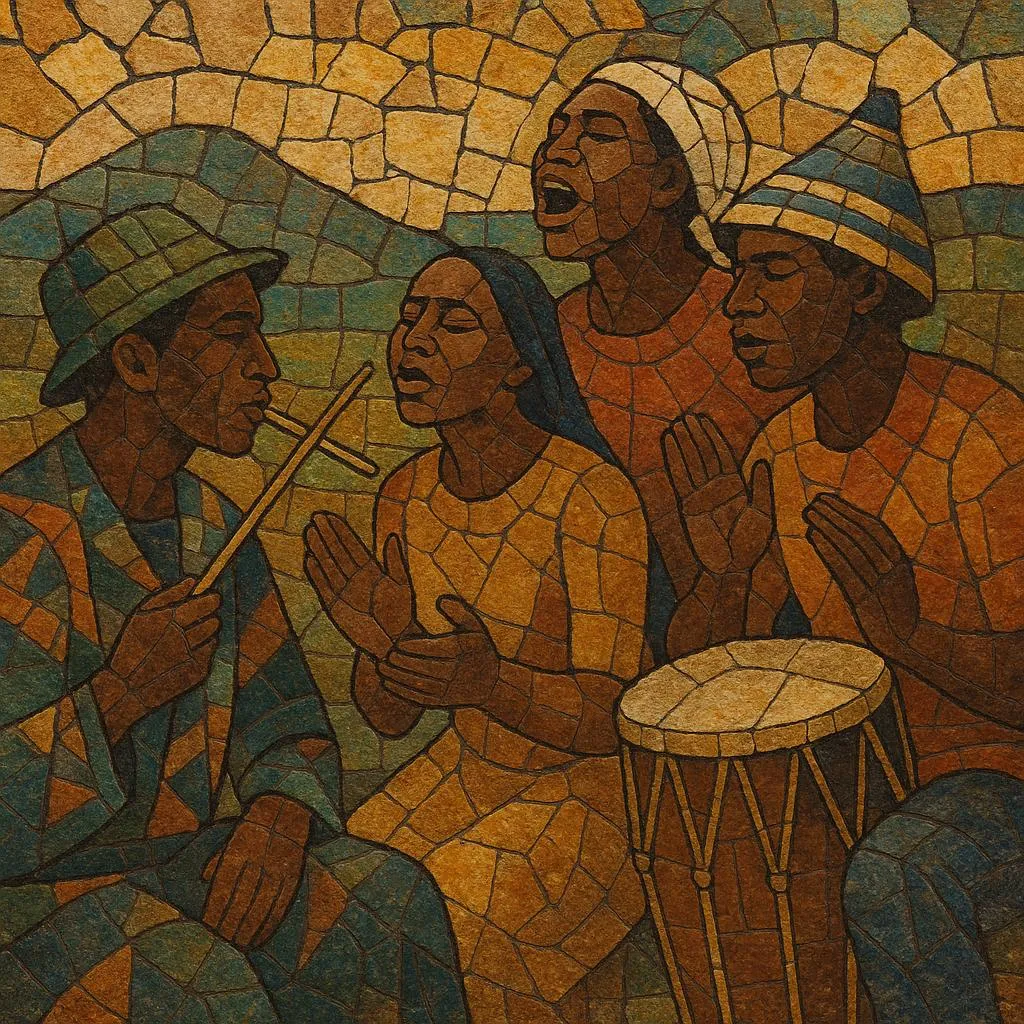
Vocal ensembles—often gendered or age-based—use close parallel harmonies, leader–chorus exchanges, ululation, and handclaps. Typical instruments include the lesiba (a mouth-resonated musical bow that produces haunting, flute-like overtones), the setolotolo (jaw harp), various frame and barrel drums (often called moropa), and whistles or horns fashioned from animal horn. Dance and music are inseparable: men’s stamping dances (mohobelo) and women’s kneeling dances (mokhibo) imprint percussive rhythms while reinforcing social roles.
Melodically, songs often pivot around pentatonic or hexatonic pitch collections and flexible intonation shaped by voice-leading rather than equal temperament. Rhythms favor lilting compound meters (6/8, 12/8) with polyrhythmic handclap patterns. The Sesotho language’s prosody and praise-naming tradition (seboko) deeply shape lyrics, delivery, and phrasing.
History
Basotho musical life predates the 19th century and is woven into cattle-herding, agriculture, healing, warfare, and initiation rites. Songs coordinated labor and movement, communicated over distance in mountainous terrain, and encoded history through praise poetry (lithoko). Instruments like the lesiba and setolotolo, alongside drums and handclaps, supported solo leaders and communal choruses.
From the mid-1800s, missionary schooling introduced European hymnody and tonic-dominant choral thinking. Basotho choirs integrated these harmonies into local vocal aesthetics without abandoning call-and-response or traditional functions. This created a distinctive overlap between indigenous song forms and church-influenced choral textures.
Basotho migrant labor to South African mines intensified contact with neighboring Nguni musics (mbube/isicathamiya). While village life sustained ritual, herding, and dance songs, urban exchanges encouraged new ensemble formats and performance contexts. Field recordings and national broadcasting helped codify and circulate styles within and beyond Lesotho.
Traditional repertoire remains vital at ceremonies (weddings, initiations), community gatherings, and cultural festivals. Meanwhile, modern artists draw on lithoko, mohobelo rhythms, and timbres of the lesiba to fuel new fusions—from folk ensembles to global “world music” stages and contemporary Afro-fusion. The throughline is the Basotho emphasis on text, social function, and participatory performance.