Your digging level
Description
Kurdish pop is contemporary popular music performed primarily in the Kurdish languages (notably Kurmanji and Sorani), blending Western pop structures and production with regional melodies, modes, and dance rhythms.
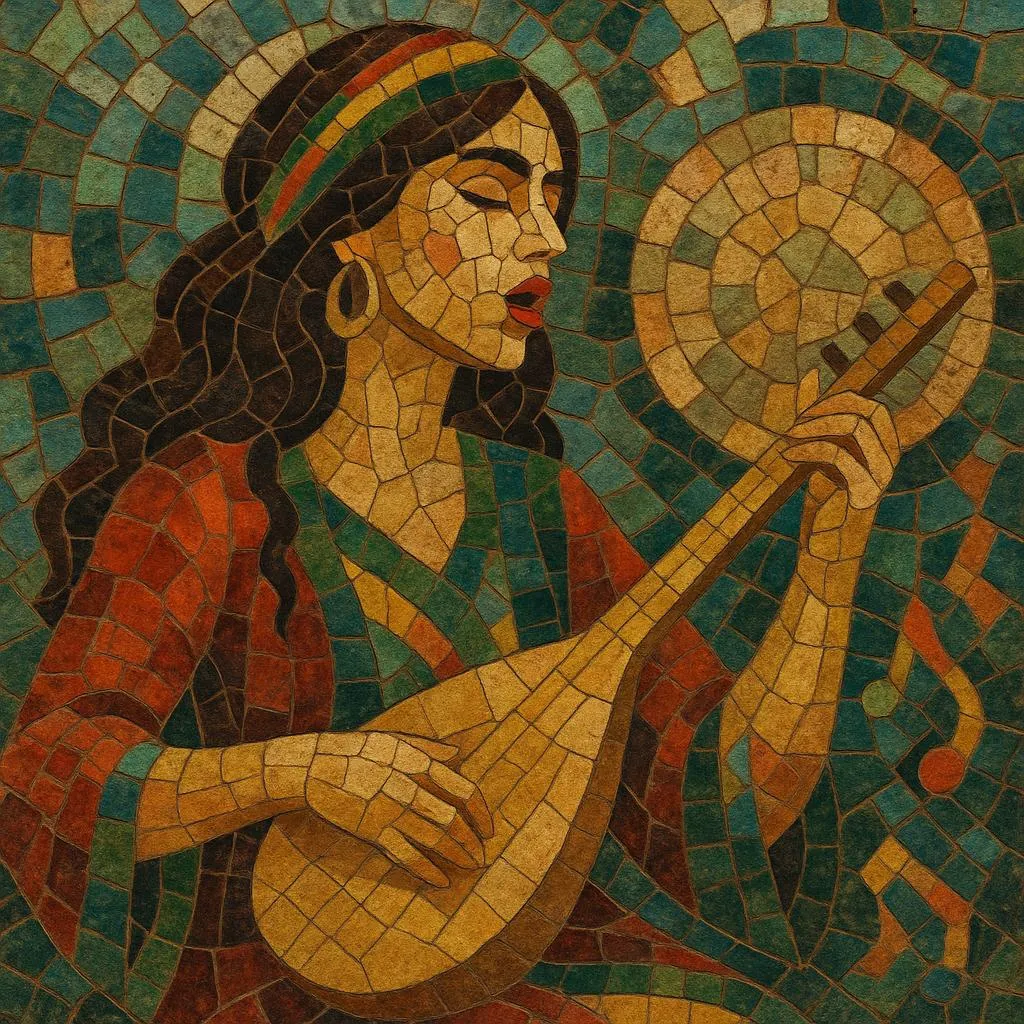
Stylistically it merges catchy verse–chorus songwriting, synthesizers, drum machines, and modern studio polish with characteristic Kurdish scales and ornamentation. Traditional timbres—such as saz/bağlama, tembûr, bilûr (flute), and frame drums like the daf/erbane—often color arrangements, while line‑dance rhythms (govend/halparke) give many tracks a communal, celebratory pulse.
Because Kurds live across Turkey, Iraq (Kurdistan Region), Iran, Syria, and a large diaspora (especially in Germany and Scandinavia), Kurdish pop is transnational. It circulates via cassettes and CDs historically, then satellite TV, and today through streaming platforms and social media, creating a shared, modern Kurdish sound.

History
Kurdish pop grew from the modernization of Kurdish folk and urban song traditions as Kurdish artists encountered Western pop/rock and regional popular styles. Early steps were taken by artists who adapted Kurdish melodies to electric instruments and studio production, often circulating recordings through underground or diaspora cassette networks due to censorship in several countries.
In the 1980s, exile communities in Germany, Sweden, and elsewhere became crucial hubs. Independent labels and community events helped Kurdish-language pop flourish outside strict controls, while artists fused Kurdish musical identity with contemporary pop aesthetics.
The late 1990s and 2000s saw a public-facing boom as Kurdish satellite TV channels from Iraqi Kurdistan began broadcasting music videos and live programs. This gave Kurdish pop a new visibility across the region and the diaspora. Production values rose, and artists experimented with dance-pop, pop-rock, and ballad formats while keeping Kurdish poetic and melodic signatures.
Streaming, YouTube, and social media lowered barriers for new singers and producers across Turkey, Iraq, Iran, Syria, and the diaspora. Contemporary Kurdish pop now spans glossy dance tracks, romantic ballads, and hybrid styles that borrow from EDM, hip-hop, and reggaeton, while continuing to reference govend dance rhythms and maqam‑derived motifs. Lyrically, themes of love, longing, place, and cultural pride remain central, and some artists address social and political realities in coded or explicit ways.
Today, Kurdish pop is a transnational genre with a shared sonic vocabulary—Kurdish language, modal color, and dance grooves—delivered through modern pop production. It serves as both entertainment and a vehicle of cultural continuity for Kurdish audiences worldwide.