Your digging level
Description
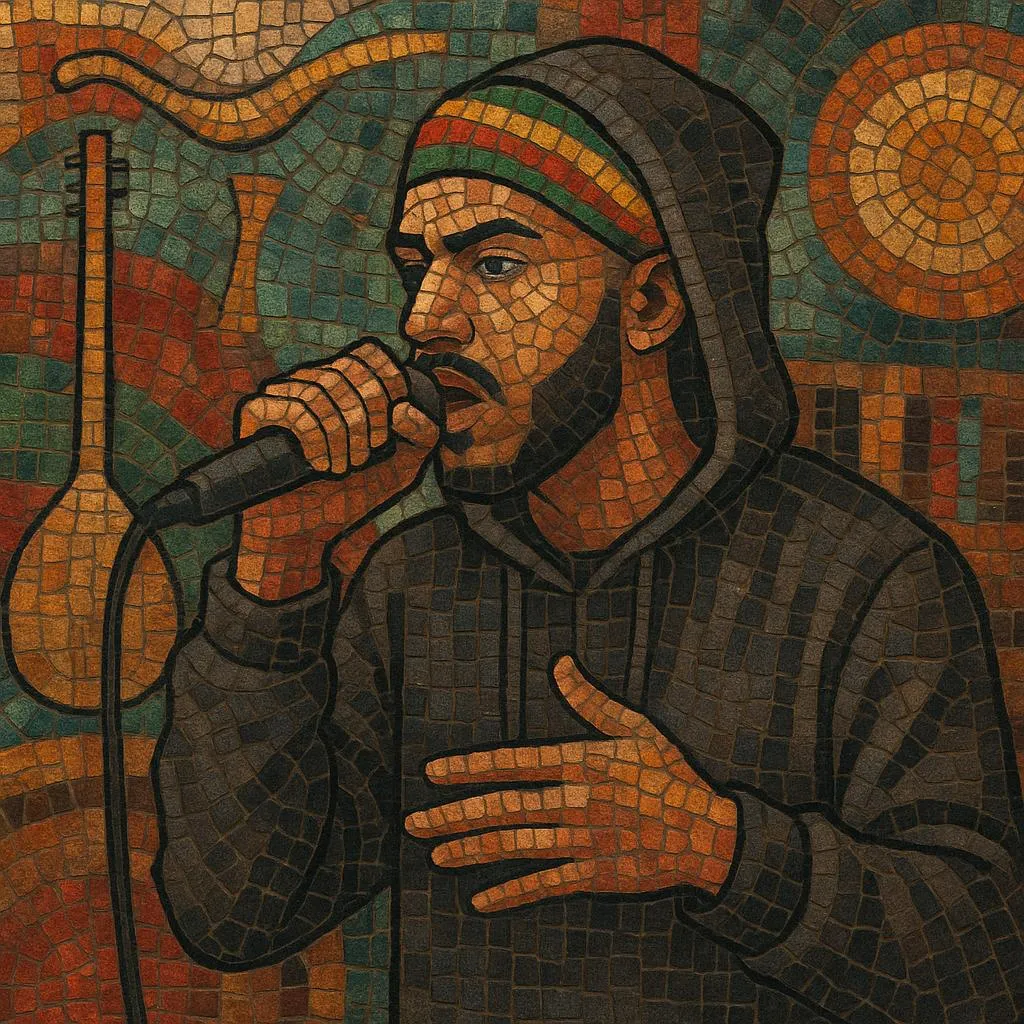
Kurdish hip hop blends global rap aesthetics with Kurdish linguistic and musical identity. Artists rap and sing in Kurmanji, Sorani, and Zazaki, often code‑switching with German, Turkish, Persian, Arabic, or English to reflect diasporic life.
Sonically, it spans boom‑bap and trap, but is distinguished by sampling or reinterpreting Kurdish folk timbres (tembûr/bağlama, duduk, daf) and modal colors related to Maqam Kurd/Phrygian flavors. Lyrically, it ranges from political and social commentary to street narratives, migration, and pride in Kurdish culture—frequently weaving traditional refrains into contemporary hooks.
History
Kurdish rap emerges at the turn of the millennium within European diaspora hubs (notably Germany and Scandinavia) alongside growing hip hop scenes in Turkey, Iran, Iraq (Kurdistan Region), and Syria. Early practitioners adapt boom‑bap and later Southern/club idioms, but differentiate themselves by rapping in Kurdish dialects and sampling Kurdish folk melodies. Independent CD‑R releases, community radio, and nascent online platforms help the style coalesce into a named scene.
Streaming platforms, YouTube, and social media enable broader transnational circulation. Producers integrate trap’s 808s, double‑time hats, and spacious sub‑bass with Kurdish modal fragments and folk percussion (daf, bendir). Themes diversify: from resistance, displacement, and minority rights to everyday urban life and aspirational narratives. Cross‑border collaborations (Germany–Turkey–Kurdistan Region–Iran) become common, and Kurdish hooks on club‑ready beats expand the audience.
The scene professionalizes with higher‑fidelity production, regional micro‑scenes, and stylistic fusions (Afrobeats inflections, drill‑style cadences, melodic auto‑tune hooks). Artists toggle between Kurdish and host‑country languages to reach both Kurdish listeners and broader national markets. Live shows at diaspora festivals and venues in Erbil, Sulaymaniyah, Duhok, Diyarbakır, Istanbul, Berlin, and Stockholm further solidify Kurdish hip hop’s identity as both a musical and cultural movement.