Your digging level
Description
Kokborok pop is contemporary popular music sung primarily in Kokborok, the indigenous language of the Tripuri people of Tripura in Northeast India.
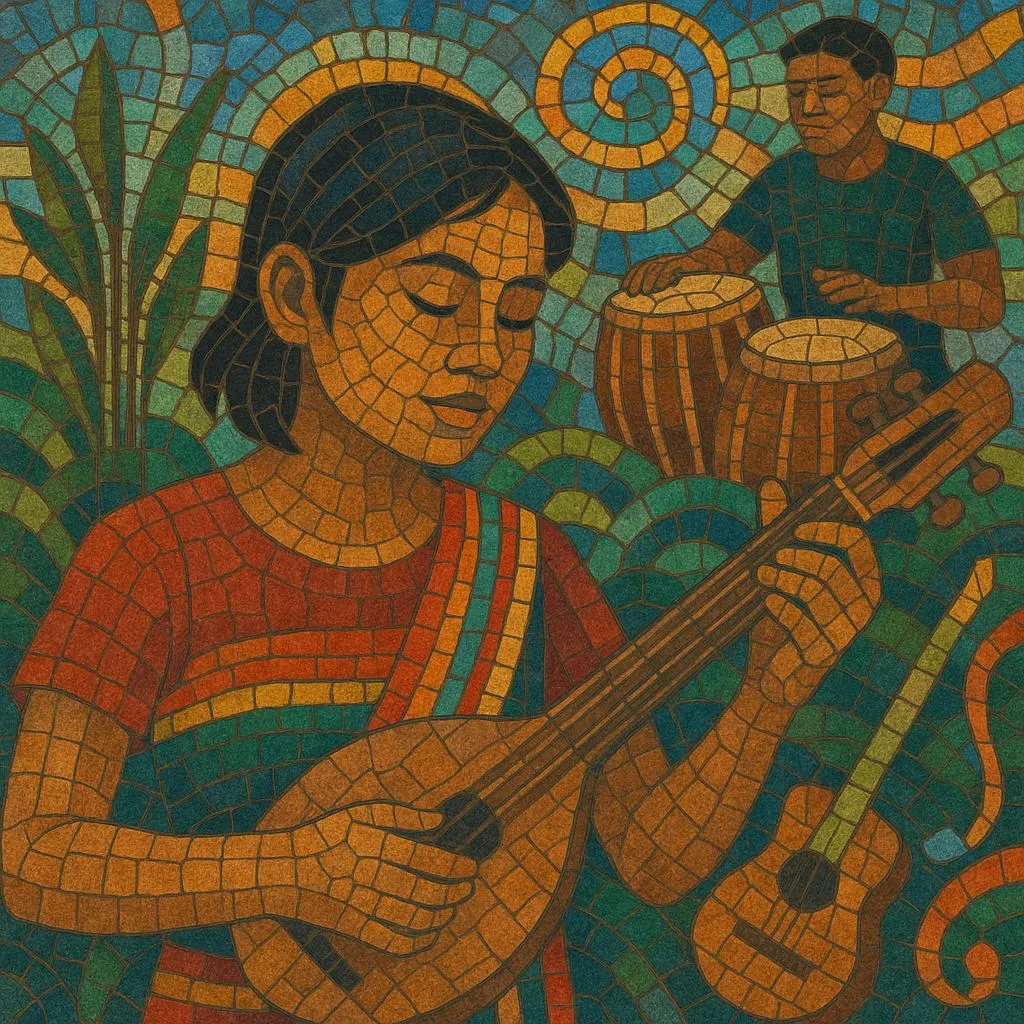
It blends mainstream Indian pop songwriting and production with local melodic contours, pentatonic-leaning vocal lines, and occasional use of Tripuri folk instruments such as the kham (double-headed drum), the sumui (bamboo flute), and the chongpreng (plucked lute). In practice, most releases are created by independent singer‑songwriters and small production teams who distribute via YouTube and social platforms, mixing glossy synths, guitar‑driven pop, and dance‑pop beats with lyrics about love, community pride, festival life, and everyday youth experience.
Because Kokborok pop centers the language itself, it also functions as cultural advocacy: it makes Kokborok audible in modern, radio‑ready formats, helping sustain and normalize the language among young listeners.
History
Kokborok popular singing has precursors in recorded Kokborok folk and devotional cassettes/CDs from the 1990s–2000s, but a distinct pop idiom cohered only as affordable digital audio workstations and camera‑phones arrived. Local college fests, church/community stages, and small studios in Agartala and district towns incubated young singers who began writing hook‑forward songs in Kokborok rather than defaulting to Hindi/Bengali.
By the mid‑2010s, YouTube and Facebook enabled direct-to-audience releases. Producers adopted mainstream Indian pop and electropop templates—four‑on‑the‑floor kicks, bright pads, and layered harmonies—while keeping Kokborok lyrics front and center. This period saw a steady trickle of singles and performance videos shared virally across Tripuri diaspora networks.
In the 2020s, Kokborok pop diversified: romantic ballads, dance‑pop, acoustic pop, and pop‑rock all appeared, sometimes fusing with hip hop or EDM. Live arrangements often reintroduced Tripuri timbres (kham, sumui, chongpreng), and lyricists increasingly emphasized language pride, heritage, and local festivals alongside universal pop themes. Small labels and community media amplified the scene, and collaborations with neighboring Northeast Indian musicians became more common.
Beyond entertainment, Kokborok pop acts as a language‑maintenance tool. Releasing catchy Kokborok songs in contemporary styles gives younger Tripuris daily, shareable contact with their language, complementing formal revitalization efforts and broadening representation within Indian popular music.