Your digging level for this genre

0/8
🏆
Sign in, then listen to this genre to level up

Description

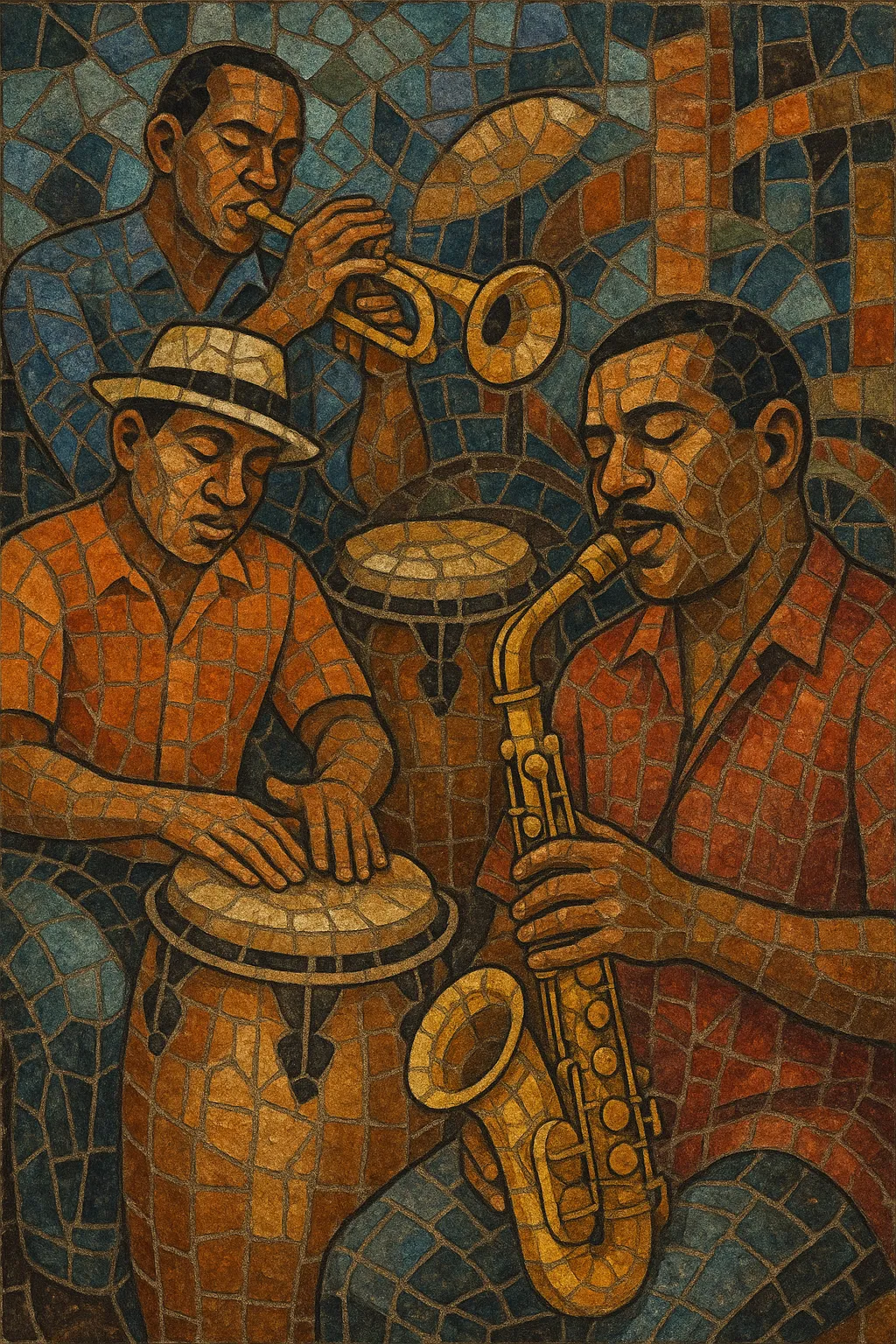
Jazz puertorriqueño (Puerto Rican jazz) blends modern jazz harmony and improvisation with Afro–Puerto Rican rhythms—especially bomba and plena—alongside salsa phrasing, bolero lyricism, and occasional jíbaro (highland folk) colors.

Emerging through both the island’s scene and the Nuyorican diaspora, it keeps the jazz language (swing feel, bebop/hard bop vocabulary, extended chords) while grounding the groove in clave-informed Afro-Caribbean percussion. Characteristic textures include the sound of barriles de bomba and panderos de plena alongside a jazz rhythm section, horn mambos, and montuno vamps.

History

Origins (1940s–1960s)

Puerto Rican musicians were present in U.S. jazz since the swing and bebop eras, and their perspective helped define Latin jazz as it emerged in New York. By the 1950s and 1960s, artists with Puerto Rican roots began fusing jazz language with Afro–Puerto Rican forms. On the island, the popularity of bomba and plena intersected with jazz arranging, while in New York, Nuyorican bandleaders introduced sophisticated harmony and improvisation into dance-band contexts.

Consolidation on the Island and in the Diaspora (1970s–1990s)

From the late 1970s onward, Puerto Rico’s own jazz identity crystallized. Groups like Batacumbele explored progressive fusions of Afro-Caribbean rhythms with modern jazz, and a new generation of instrumentalists (e.g., conguero Giovanni Hidalgo, trumpeters Charlie Sepúlveda and Humberto Ramírez) raised the technical and stylistic bar. In the 1990s, William Cepeda’s “Afro-Rican Jazz” and Papo Vázquez’s trombone-driven projects formalized a vocabulary that placed bomba and plena at the core of jazz expression, not just as color but as primary rhythmic engines.

Global Recognition (2000s–present)

Saxophonists David Sánchez and Miguel Zenón brought Puerto Rican jazz aesthetics to international stages, weaving jíbaro song forms and the Puerto Rican songbook into contemporary jazz frameworks. Festivals and conservatory programs on the island helped cultivate a steady pipeline of players. Today, jazz puertorriqueño thrives as a flexible, modern idiom—equally at home in small-group improvisation, large-ensemble writing, and cross-genre collaborations—while remaining anchored by bomba/plena grooves and a deep sense of clave.

How to make a track in this genre

Core Instrumentation
•   Rhythm section: piano (or guitar), acoustic/electric bass, drum set. •   Latin percussion: congas, bongó, timbales, plus barriles de bomba and panderos de plena for authentic Afro–Puerto Rican grooves. •   Horns: trumpet, saxophones, trombone for melodies, mambos (shout choruses), and counterlines. •   Optional color: cuatro puertorriqueño or requinto to reference jíbaro/bolero timbres.
Rhythms and Groove
•   Treat bomba and plena as primary engines. For bomba, start with sicá or yubá patterns on barriles; for plena, interlock panderos (requinto, seguidor, punteador) in 2/4 with a driving, danceable feel. •   Keep strict clave awareness (2–3 or 3–2) even when using bomba (which has its own timeline). Align bass tumbao and piano montuno so they lock with the clave and percussion bell patterns. •   Alternate sections: swing or straight‑8th modern jazz in the head/solos, then open a vamp with bomba/plena feel for the montuno, mambos, and call‑and‑response coros.
Harmony and Melody
•   Use jazz harmony: extended tertian chords (9ths, 11ths, 13ths), tritone subs, and modal colors. Classic ii–V–I movement works well; introduce altered dominants for tension before rhythmic hits. •   Write singable, folkloric melodies that can be reharmonized over montunos. Reference Puerto Rican song contours (bolero lines, jíbaro turns) while keeping phrases rhythmically syncopated to the clave.
Form and Arranging
•   Common form: head (in unison or harmonized horns) → solos (over swing or straight‑8th) → montuno vamp → horn mambos and breaks → head out. •   Orchestrate mambos with tight, riff-based horn writing that accents clave. Use rhythmic hits with percussion cues (e.g., timbal fills) and leave space for requinto/lead pandero improvisation in plena or subidor calls in bomba.
Improvisation and Feel
•   Phrase with clave consciousness: place bebop lines across 3‑2 or 2‑3 tension points; use rhythmic cells (3‑3‑2, cascara‑inspired figures) to converse with percussion. •   Bassists: mix walking in swing sections with tumbao in Latin sections; drummers: switch between ride‑cymbal swing and bell/cáscara patterns as the arrangement demands.
Production Tips
•   Mic panderos and barriles for presence; layer congas/timbales to glue the groove. Keep piano and bass slightly forward so montuno/tumbao articulate the pocket.

Top tracks

Locked
Share your favorite track to unlock other users’ top tracks
Influenced by
Has influenced
Challenges
Digger Battle
Let's see who can find the best track in this genre
© 2025 Melodigging
Melodding was created as a tribute to Every Noise at Once, which inspired us to help curious minds keep digging into music's ever-evolving genres.
Buy me a coffee for Melodigging