Your digging level

For this genre
0/8
🏆
Sign in, then listen to this genre to level up

Description

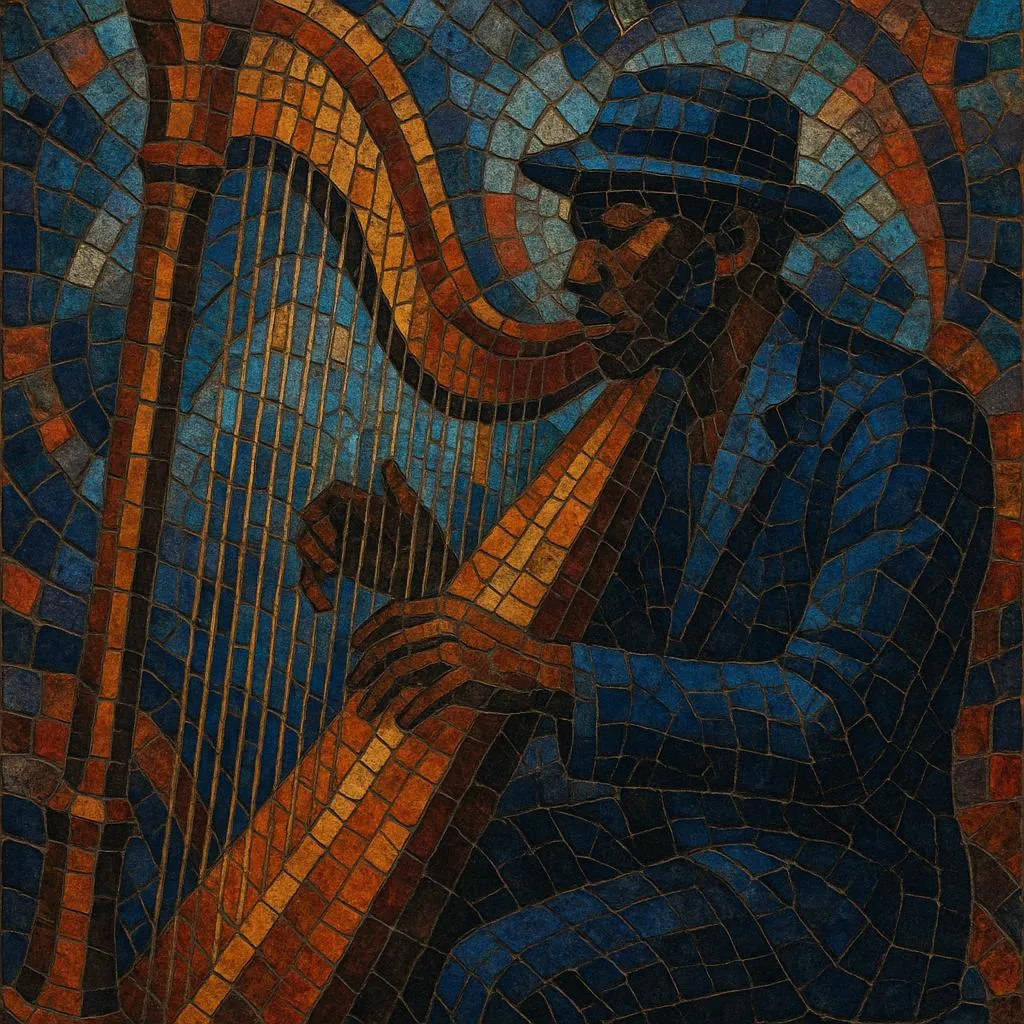
Jazz harp is a subgenre and instrumental practice that brings the concert harp (and, increasingly, amplified and electric harps) into jazz idioms—swing, bebop, cool, Latin, post‑bop, and contemporary jazz. Pioneers demonstrated that the harp can comp, solo, and drive rhythm sections much like a piano or guitar while exploiting uniquely idiomatic textures: glissandi, harmonics, pedal bends, and lush rolled voicings.

Its sound world blends jazz harmony and improvisation with techniques native to the harp—selective damping, resonant pedal shifts, and percussive effects—producing timbres that can be crystalline and airy or surprisingly punchy and groove‑forward. Modern players range from straight‑ahead and Latin approaches to boundary‑pushing fusion and chamber‑jazz settings, often using amplification and effects to expand the instrument’s palette.


Sources: Spotify, Wikipedia, Discogs, Rate Your Music, MusicBrainz, and other online sources

History

Early Foundations (1950s–1960s)

The modern concept of jazz harp crystallized in the United States during the 1950s, when harpists began applying bebop and cool‑jazz language to the concert harp. Early innovators proved the instrument could comp, walk bass lines, and improvise with the agility expected of jazz rhythm‑section instruments, while using glissandi, harmonics, and pedal colors as expressive signatures.

Expansion and Recognition (1970s–1990s)

Through the 1970s and 1980s, jazz harp diversified in ensemble settings—from small combos to larger chamber‑jazz and third‑stream configurations. Players integrated Latin and Afro‑Cuban grooves, Brazilian bossa and samba feels, and modal/post‑bop harmony. Amplification became common, enabling clearer articulation and more assertive roles in bands, while some artists experimented with electric/electroacoustic harps.

Contemporary Era (2000s–Present)

A new generation of harpists has established the instrument across mainstream jazz venues and festivals worldwide. They balance tradition (swing, standards, hard‑bop vocabulary) with global rhythms, modern harmony (melodic‑minor modes, extended tertian and quartal voicings), and contemporary production aesthetics. Today, jazz harp thrives in small‑group contexts (trios and quartets), voice‑and‑harp formats, and cross‑genre collaborations that intersect with world fusion, chamber jazz, and ambient‑leaning substyles.

How to make a track in this genre

Instrumentation and Setup
•   Core settings: harp-led trios/quartets (harp, bass, drums, plus horn or voice). Harp can substitute for piano/guitar in the rhythm section. •   Use a concert pedal harp for chromatic fluency; consider amplification, light compression, and a clean preamp. For modern sounds, add subtle reverb/chorus or a volume pedal for swells.
Harmony and Voicing
•   Favor extended chords (9ths/11ths/13ths), upper-structure triads, and quartal stacks. Roll wide voicings to avoid adjacent seconds across strings. •   Typical functions: drop‑2/3 textures adapted to harp, guide-tone shells in the mid‑range, and pedal‑enabled chromatic passing colors. •   Reharmonize standards with tritone subs, backdoor II–V, and melodic‑minor modes (Lydian dominant, altered, Dorian b2).
Rhythm and Comping
•   Practice swing feel with metronome on beats 2 and 4; comp sparsely, interlocking with ride cymbal and bass. •   For Latin feels, outline tumbao‑informed bass with left hand and clave‑aware comping in the right; for bossa/samba, use steady syncopation and crisp damping.
Improvisation Language
•   Scale resources: bebop dominant/major, pentatonics, modal jazz scales, and melodic‑minor modes. Outline guide tones first; fill with chord‑scale color tones and rhythmic motifs. •   Exploit harp idioms: harmonics for accent points, glissandi as transitions or cadential flourishes, and controlled pedal slides for micro‑bends and chromatic approach notes.
Technique and Articulation
•   Damping is essential for clarity—selectively mute to articulate swing lines and prevent harmonic smear. •   Create percussive textures by nail taps, xylophonic plucks, and muted-strum effects; balance resonance with precise articulation.
Arranging Tips
•   In trio: left hand anchors roots/guide tones; right hand comps and answers soloists. Trade fours with drums using rhythmic gliss clusters and harmonics. •   With voice or horn: leave registral space; use counter‑lines and call‑and‑response. Consider intros/outros with modal vamps or rubato harp cadenza.

Top tracks

Locked
Share your favorite track to unlock other users’ top tracks
Influenced by
Challenges
Digger Battle
Let's see who can find the best track in this genre

Download our mobile app

Get the Melodigging app and start digging for new genres on the go
© 2026 Melodigging
Melodding was created as a tribute to Every Noise at Once, which inspired us to help curious minds keep digging into music's ever-evolving genres.
Buy me a coffee for Melodigging