Your digging level

For this genre
0/8
🏆
Sign in, then listen to this genre to level up

Description

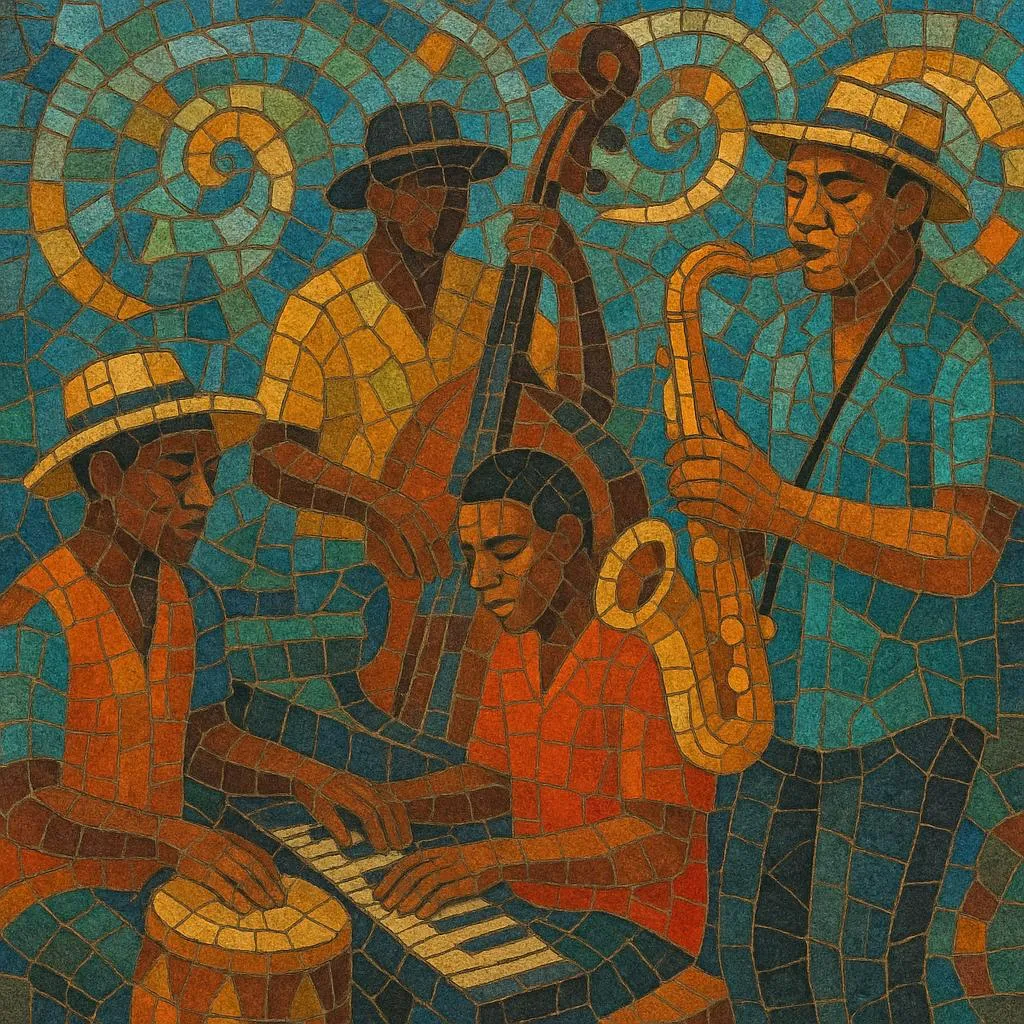
Jazz caraïbes (Caribbean jazz in the Francophone Antilles sense) blends modern jazz harmony and improvisation with the dance rhythms, percussion, and song forms of Guadeloupe and Martinique.

At its core you will hear a straight‑ahead jazz rhythm section—piano, double bass/electric bass, and drum set—interlocking with ka drums and ti‑bwa patterns from gwo ka, the call‑and‑response and hand‑drum feel of bèlè, and creolized ballroom meters such as mazurka and valse créole. The result ranges from hard‑swinging, horn‑driven arrangements to lyrical, roots‑inflected ballads in French and Antillean Creole.

Historically it grew alongside Parisian biguine‑jazz in the interwar years, revived in the 1970s–1990s by Antillean musicians who brought local rhythms into post‑bop and fusion, and in the 2000s matured into distinct subcurrents (e.g., gwo ka jazz) that sit comfortably next to Latin jazz while keeping a uniquely French‑Caribbean identity.


Sources: Spotify, Wikipedia, Discogs, Rate Your Music, MusicBrainz, and other online sources

History

Origins (1930s)

Caribbean jazz in the Francophone world first crystallized in the interwar period, when musicians from Martinique and Guadeloupe brought biguine to Paris. They fused the habanera‑like sway and creole dance meters with the instrumentation and improvisational language of jazz clubs, laying the conceptual groundwork for what would later be called "jazz caraïbes."

Post‑bop and roots revival (1970s–1990s)

From the 1970s onward, a new generation of Antillean artists—many active between the French Antilles and Paris—absorbed bebop, hard bop, and modal jazz while re‑centering local traditions. Gwo ka’s seven rhythm families, bèlè’s drum‑dance dialogues, and creole mazurka/valse patterns were woven into jazz piano trios, horn groups, and electric fusion settings. This era established the scene’s pedagogy (arranging, rhythmic codification) and its concert circuits and festivals in the Antilles and France.

Consolidation and global visibility (2000s–present)

In the 2000s, projects explicitly framed around gwo ka jazz and broader "jazz caraïbes" aesthetics flourished. Ka drums and ti‑bwa became core colors alongside drum set; call‑and‑response vocals in Creole sat next to post‑bop tenor lines; and harmonic language expanded with contemporary reharmonization and polyrhythmic ostinati. Today the style moves fluidly between acoustic small‑group settings and modern, studio‑produced jazz, collaborating with wider Afro‑diasporic and Latin scenes while preserving a distinct French‑Caribbean cadence and timbre.

How to make a track in this genre

Core instrumentation and texture
•   Start with a jazz rhythm section (piano, bass, drum set). Add ka drums (boula/maké), ti‑bwa (wooden stick pattern on drum shell), congas, shakers, or tanbou bèlè to anchor Antillean grooves. •   Front line can be tenor/soprano sax, trumpet, or voice in French/Creole; guitars or steelpan may color the palette.
Rhythm and groove design
•   Reference gwo ka rhythms (e.g., léwoz, toumblak, graj). Translate ti‑bwa ostinati to ride cymbal/hi‑hat while a ka part interlocks with bass drum. •   Incorporate biguine/mazurka/valse créole meters: a lilted 2/4 or 6/8, often with habanera cells (♩ ♪ ♩ ♩) or 3:2/2:3 clave‑like phrasing. •   Let the bass alternate between jazz walking and tumbao‑style ostinati; ghost‑note the backbeat to keep it danceable.
Harmony and form
•   Use modern jazz harmony: extended II–V–I chains, modal vamps, tritone substitutions, and planed voicings. Reharmonize creole folk themes with quartal stacks or Lydian colors. •   Forms can be head–solo–head; or groove suites that cycle different gwo ka feels. Allow call‑and‑response choruses (voice or horns) between solo choruses.
Melody, language, and improvisation
•   Compose singable, pentatonic/diatonic motifs that lock into the groove; embellish with blue notes and Antillean ornaments. •   Alternate French and Creole lyrics; lean on proverbial, nature, or social‑dance imagery. Scat syllables can mimic ka strokes. •   Improvise with rhythmic cadences drawn from ti‑bwa patterns; use motivic development and polyrhythmic displacement rather than only harmonic running.
Production and arrangement tips
•   Mic ka drums close but leave room mics for the wooden resonance of ti‑bwa. •   Layer hand percussion subtly under the drum set; avoid masking the midrange of piano/horns. •   In arrangements, let percussion trade fours with the drum set, and write shout‑chorus figures that accent the creole backbeat.

Top tracks

Locked
Share your favorite track to unlock other users’ top tracks
Influenced by
Has influenced
Challenges
Digger Battle
Let's see who can find the best track in this genre

Download our mobile app

Get the Melodigging app and start digging for new genres on the go
© 2026 Melodigging
Melodding was created as a tribute to Every Noise at Once, which inspired us to help curious minds keep digging into music's ever-evolving genres.
Buy me a coffee for Melodigging