Your digging level
Description
Indo-Caribbean music is the umbrella of musical traditions created by descendants of South Asian indentured laborers who settled in the Caribbean after 1838. It blends North Indian devotional and folk practices with local Afro‑Caribbean and creole popular styles.
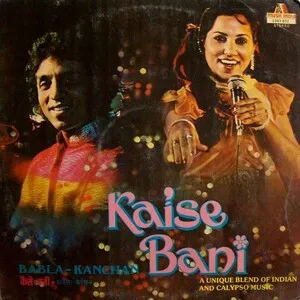
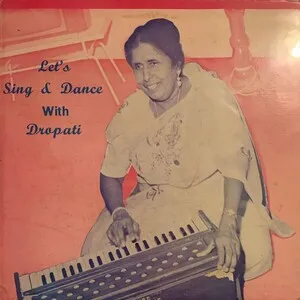
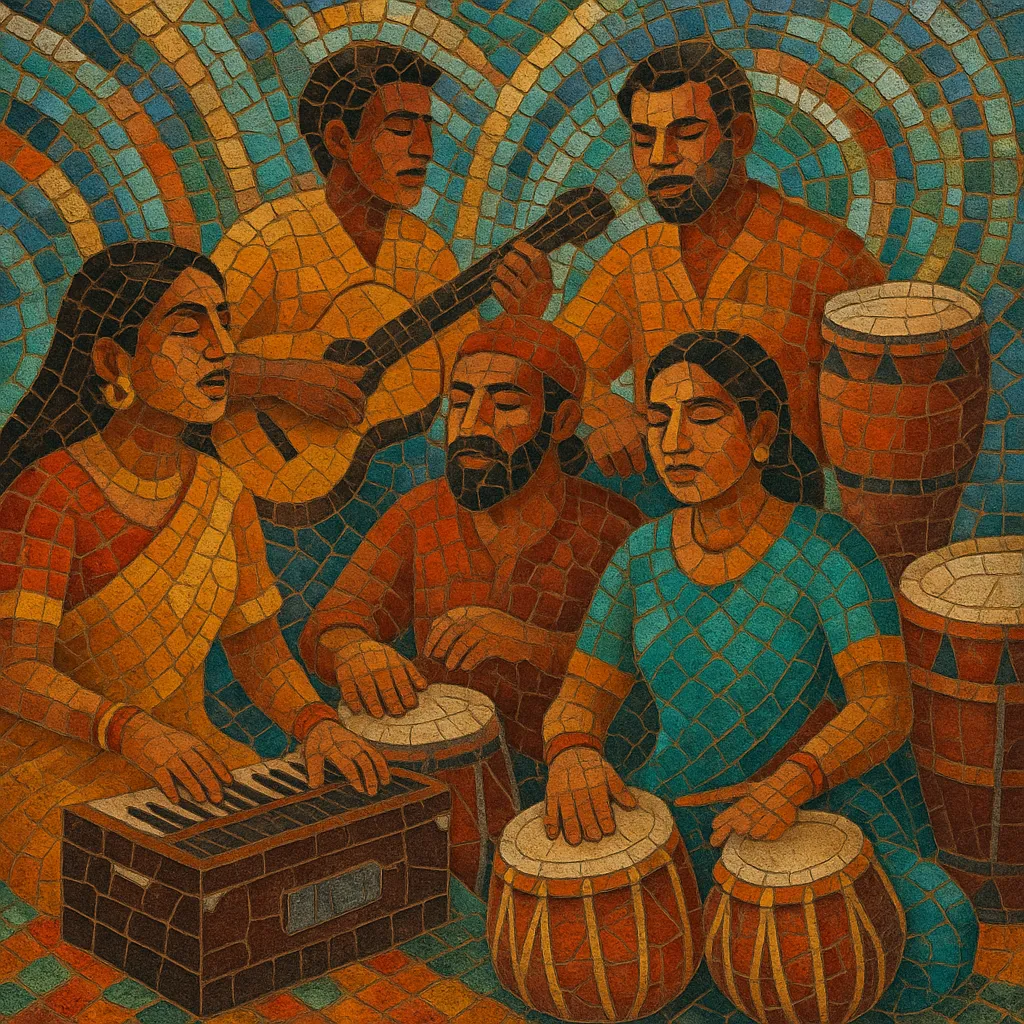
Core practices include Hindu bhajan and kirtan singing, wedding and lifecycle songs (such as sohar and matkor), tassa drumming used in festivals like Hosay, and salon-style seated music that later fed into modern popular forms. Over the 20th century these roots fused with calypso, soca, and reggae to produce distinct hybrids—most famously chutney and chutney‑soca—performed in English/creole alongside Bhojpuri/Hindi/Urdu.
The tradition is most prominent in Trinidad and Tobago, Guyana, Suriname, Jamaica, and Martinique, and today thrives in diaspora hubs (New York/Queens, Toronto, London, and the Netherlands) where Indo‑Caribbean communities continue to record, innovate, and celebrate these styles.
History
Beginning in 1838, hundreds of thousands of Indians—primarily from the Bhojpuri‑speaking belt of North India—arrived in British and Dutch Caribbean colonies (notably present‑day Guyana, Trinidad and Tobago, and Suriname). They brought devotional repertoires (bhajans, kirtans), folk wedding/lifecycle songs (sohar, matkor, kajri), storytelling song forms, and drums and small instruments (dholak, dhantal, manjira, harmonium). In the Caribbean, these adapted to new environments and intersected with Afro‑Caribbean musical life.
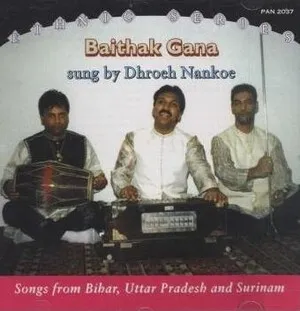
In Trinidad and Tobago, tassa ensembles (paired kettle drums with jhal/cymbals) developed distinctive rhythms for weddings, Muharram/Hosay processions, and public festivities. In Suriname and Guyana, seated house‑concert traditions (“baithak”) and Hindu community singing flourished. While largely ceremonial, these practices gradually met the popular sphere through radio, tent shows, and early recordings.
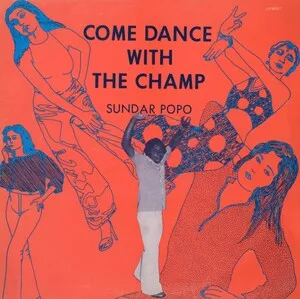
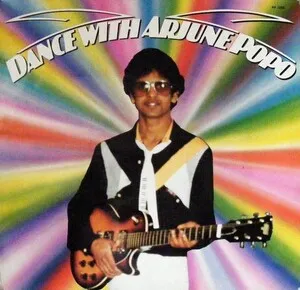
By the late 1960s, artists such as Sundar Popo helped codify “chutney”—a modern dance‑pop expression of Indo‑Caribbean identity that fused harmonium/dholak with calypso and soca backbeats and bilingual lyrics. In the 1980s–90s, chutney‑soca brought the sound into Carnival, with amplified bands, synthesizers, and stage competitions (e.g., Chutney Soca Monarch). Parallel threads drew on reggae and dancehall in Jamaica and on creole styles in Martinique.
Large Indo‑Caribbean communities in Queens (NYC), Toronto, London, and the Netherlands (Surinamese diaspora) supported robust recording scenes and festival circuits (Phagwah/Holi, Divali Nagar, summer fetes). Contemporary bands blend tassa breaks, soca BPMs, EDM textures, and melodies that still gesture to raga‑influenced contours and Hindi/Bhojpuri lexicon—sustaining a living dialogue between South Asian heritage and Caribbean popular culture.