Your digging level
Description
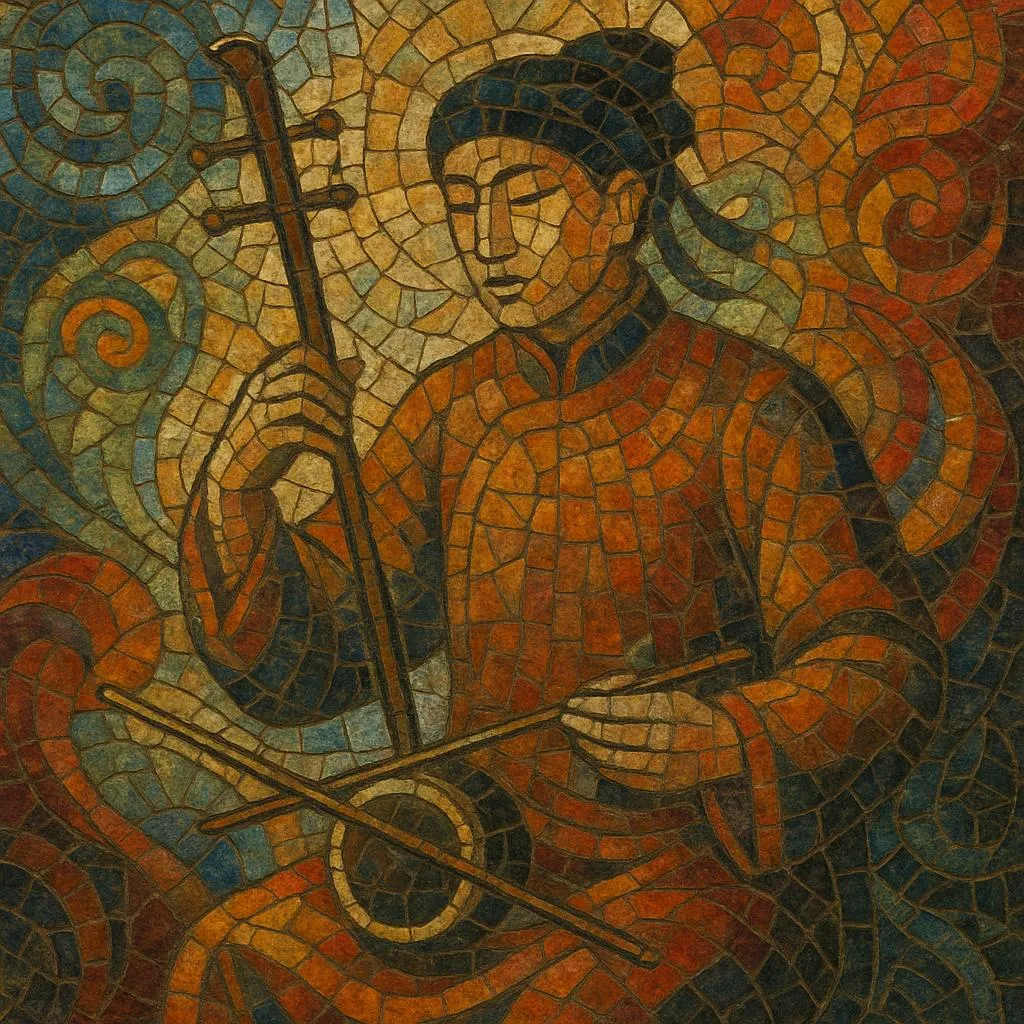
Huqin refers to the family of Chinese bowed, spike-fiddles whose best-known members include the erhu, gaohu, zhonghu, jinghu, and banhu. Typically built with two strings, a small resonator (often covered with snakeskin on the erhu/gaohu family), and a bow threaded permanently between the strings, huqin instruments produce a vocal, highly expressive tone capable of wide dynamic nuance, portamento, and flexible intonation.
As a musical style and performance tradition, huqin encompasses solo repertory, regional folk airs, opera accompaniment (especially in Peking/Jing opera with the jinghu), and roles in modern Chinese orchestras. Its melody writing is predominantly pentatonic with modal inflections, rich ornamental language (slides, vibrato, turns), timbral shading through bow pressure and contact point, and heterophonic textures when played in ensemble with other traditional instruments.
History
The word "huqin" (literally "Hu people’s qin") points to steppe and frontier influences that entered Chinese musical life by the Song (960–1279) and Yuan (1271–1368) periods. Early relatives like the xiqin evolved into a family of two-string spike-fiddles with a small resonator and a bow passing between the strings.
By the Ming and Qing dynasties, huqin instruments were embedded in regional folk ensembles and urban entertainment, and became indispensable in Chinese opera traditions. The jinghu emerged as the leading melodic carrier in Peking (Jing) opera, while other members such as the erhu and banhu served different regional styles and tessituras.
Modernization accelerated in the late Qing and Republican eras. Composer-performer Liu Tianhua codified technique, introduced etudes, and created concert works that helped transform the erhu (and, by extension, huqin practice) from an accompanying instrument into a respected solo voice. Conservatory training, new repertory, and notational standardization (jianpu and staff notation) followed.
From the mid-20th century, huqin sections were integrated into large Chinese orchestras (guoyue), with instrument development (e.g., zhonghu for viola-like range) and expanded solo repertoires. Star virtuosi popularized programmatic showpieces and regional airs on concert stages worldwide. Today, huqin performance spans traditional opera pits, folk ensembles, contemporary chamber music, and crossovers with jazz, film, and pop.