Your digging level
Description
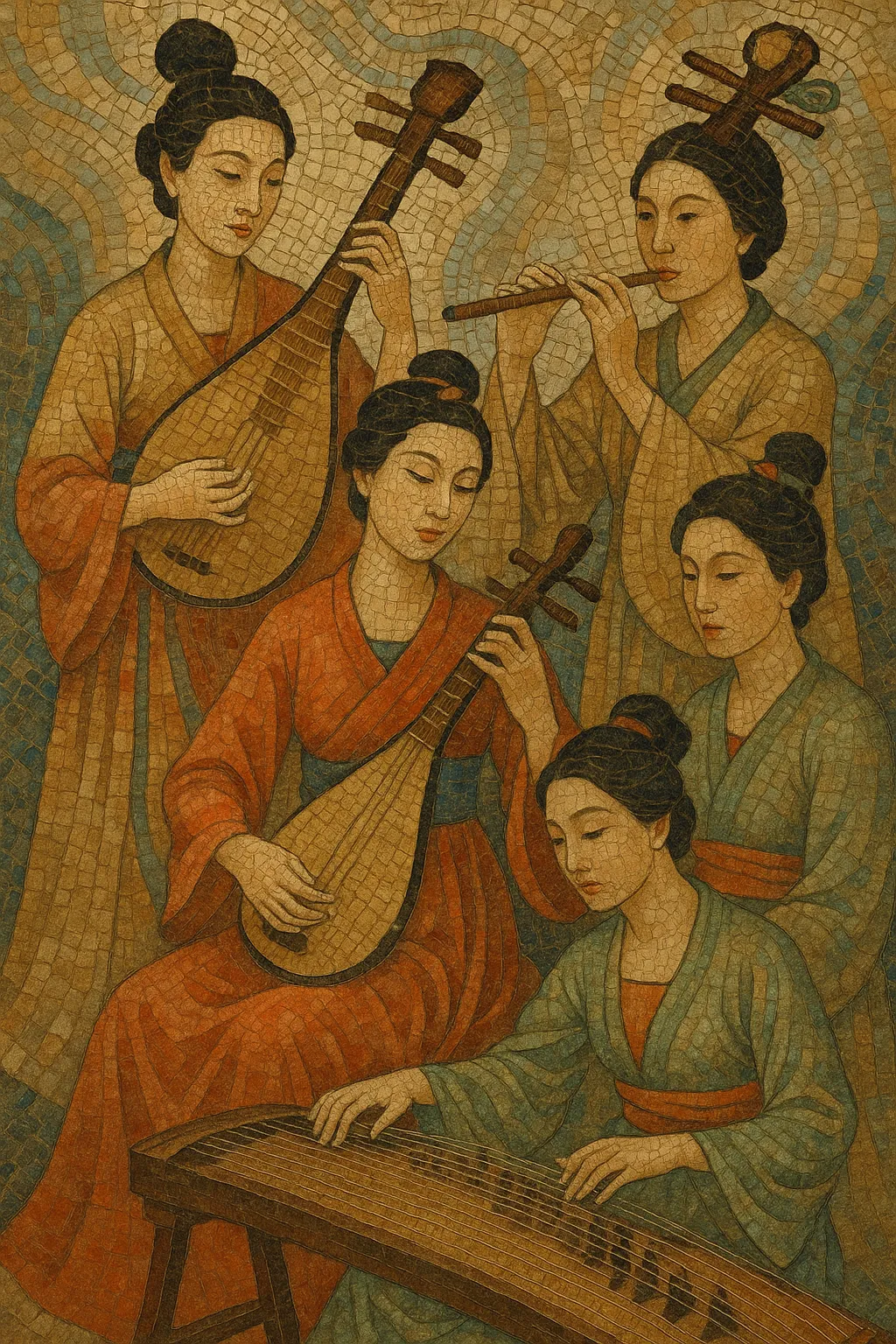
Chinese classical performance refers to the modern, concert-stage presentation of China’s traditional art-music repertoire, drawing on literati, court, regional ensemble, and opera traditions while adopting formal recital and orchestral practices.
It is characterized by modal, largely pentatonic pitch organization (gong, shang, jiao, zhi, yu), flexible rhythm that alternates between free-tempo introductions and steady, metered sections, and a predominantly heterophonic texture in which multiple instruments shadow and ornament the same melody.
Signature timbres and techniques include the guqin’s slide- and harmonic-rich subtlety, the pipa’s rapid tremolo (lun) and strums, the erhu’s expressive portamento and vocal-like vibrato, the guzheng’s right-hand plucks with left-hand bends and glissandi, and the dizi/xiao’s breathy inflections and grace notes. Repertoire is transmitted and performed using staff notation, gongchepu, and especially jianpu (numeric notation), with programmatic titles and sectional forms that foreground narrative atmosphere and timbral nuance.
Today the style is heard in solo recitals, chamber settings (e.g., Jiangnan sizhu-derived ensembles), and modern Chinese orchestras, and it often interfaces with film, stage, and crossover projects while preserving core aesthetics of ornamentation, modal color, and expressive rubato.
History
Chinese classical performance grows out of long-standing elite (literati/guqin), court (yayue), and regional ensemble/opera practices. These traditions developed modal systems, ornamental vocabularies, and heterophonic textures that underpin the modern concert style.
The emergence of conservatories (e.g., Shanghai Conservatory, 1927) catalyzed a shift from private salons and ritual/court contexts to public recital stages. Canonical pieces (such as Flowing Water on guqin or Ambush on All Sides on pipa) were codified, notated (often in jianpu), and adapted for concert audiences.
In the PRC era, state ensembles and conservatory curricula standardized techniques, created graded repertoires, and developed the modern Chinese orchestra (minyue/guoyue). Luthiery innovations (e.g., redesigned huqin, expanded zheng ranges) and orchestrational practices brought traditional timbres into symphonic frameworks while preserving modal language and heterophony.
Virtuosi toured internationally, collaborating with Western orchestras and contemporary composers. High-fidelity recordings, competitions, and new concerti for pipa, erhu, and zheng expanded the repertory and audience, while film and television further popularized signature timbres and techniques.
Digital platforms, conservatory-trained soloists, and intercultural projects have broadened the stage for Chinese classical performance. New works fuse classical ornamentation and modal color with contemporary forms, while historic pieces remain central, taught through master-apprentice lineages and formal institutions alike.
Choose iconic solo instruments (guqin, pipa, erhu, guzheng, dizi/xiao, sheng) or a small ensemble/Chinese orchestra. Exploit each instrument’s idiomatic timbres and techniques: guqin harmonics and slides; pipa tremolo (lun), rasgueado-like strums, and left-hand bends; erhu portamento and wide vibrato; guzheng glissandi and pitch bends; dizi grace notes and fluttered tonguing.
Use pentatonic modes (gong, shang, jiao, zhi, yu) with occasional altered degrees (bianyin) to add color. Favor heterophony: multiple parts render the same melody with distinct ornamentation and rhythmic nuance. Avoid functional harmony; instead, emphasize modal cadences, drones, and parallel embellishments.
Open with a free-tempo prelude (sanban-style) to establish mode and mood, then move into metered sections with recurring rhythmic cells. Sectional forms and qupai (fixed-tune) structures work well. Shape phrasing with rubato, dynamic swells, and timbral contrast rather than harmonic tension/release.
Prioritize expressive ornaments—slides, mordents, turns, trills, and microtonal inflections—tied to instrument technique. Let melodic contour and timbre carry narrative meaning; programmatic titles and descriptive imagery can guide pacing and color.
Compose and share parts in jianpu (numeric notation) or staff notation with detailed articulation and fingering guidance. In ensemble settings, layer principal melody with lightly varied, ornamented lines; reserve percussion (luogu) for sectional punctuation and climactic emphasis. In orchestral writing, balance choirs by timbre (huqin, plucked, winds, percussion) and preserve modal clarity.