Your digging level

For this genre
0/8
🏆
Sign in, then listen to this genre to level up

Description

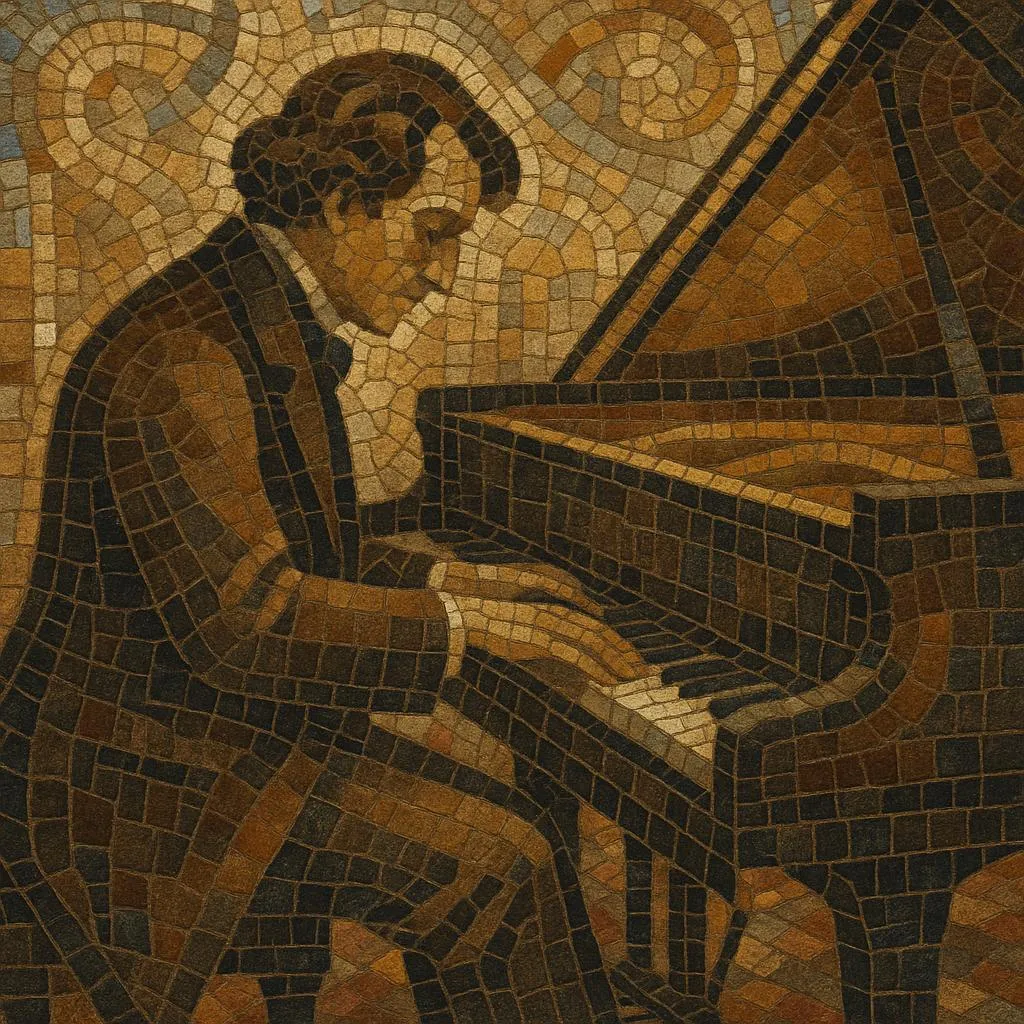
Historic piano performance refers to documented interpretations by pianists from the first half of the 20th century (and late 19th century pioneers), preserved on early discs, cylinders, and reproducing piano rolls (e.g., Welte‑Mignon, Duo‑Art, Ampico). It also includes modern restorations and re‑performances of those sources.

What distinguishes the style is not the repertoire but the performance practice: flexible tempo and rubato, expressive asynchrony between the hands, arpeggiation of chords, unnotated ornamentation, highly personalized pedaling, and a speaking, vocal approach to phrasing rooted in Romantic aesthetics and salon traditions.

Listeners encounter transfers of 78‑rpm records, piano‑roll replays on restored instruments, and archival radio or film sound, often curated by specialist labels and scholars. The result provides a sonic window into pre‑war pianism—its freedoms, colors, and priorities—before mid‑century standardization and studio editing reshaped classical interpretation.


Sources: Spotify, Wikipedia, Discogs, RYM, MB, user feedback and other online sources

History

Origins (1890s–1910s)

The earliest piano interpretations to be widely preserved emerged with acoustic recording (cylinders and 78‑rpm discs) and, crucially, reproducing piano technology such as Welte‑Mignon (introduced 1904 in Germany) and later Duo‑Art and Ampico. These systems captured nuances of touch and pedaling and allowed star pianists to disseminate their style beyond the concert hall.

Electrical Era and the Golden Age (1920s–1930s)

The adoption of electrical recording (mid‑1920s) extended frequency range and dynamic realism. Major European and American labels signed celebrated virtuosos, while piano‑roll catalogues flourished. Performance practice featured Romantic rubato, agogic flexibility, expressive dislocation of the hands, and free arpeggiation—traits widely heard in Chopin, Liszt, and salon transcriptions.

War, Tape, and Transition (1940s–1950s)

Magnetic tape and radio archives preserved broadcast recitals, capturing a transitional generation whose playing retained pre‑war freedoms even as pedagogies and orchestral standards began to prioritize textual fidelity, steadier pulse, and cleaner ensemble.

Revival, Restoration, and Scholarship (1960s–present)

From the LP era onward, specialist labels, collectors, and musicologists restored historic sides and rolls, while modern reproducing pianos enabled faithful re‑performances. Scholarly work reframed early recordings not as curiosities but as primary evidence for Romantic performance practice, informing contemporary pedagogy and historically informed approaches to 19th‑ and early‑20th‑century repertoire.

How to make a track in this genre

Instruments and Sources
•   Use a high‑quality acoustic grand (ideally period‑appropriate—e.g., Bechstein, Blüthner, Erard—or a well‑voiced modern concert grand). If available, explore reproducing piano rolls (Welte‑Mignon, Duo‑Art, Ampico) to study or re‑perform documented historic interpretations. •   When producing, emulate mono archival perspective with minimal editing; accept light surface noise in transfers to preserve articulation and pedal detail.
Touch, Tempo, and Phrasing
•   Employ Romantic tempo rubato: flexible inner‑phrase stretching and slight accelerandi/ritardandi that mirror vocal breathing. Cadences may broaden; climaxes may surge. •   Use tasteful hand asynchrony (melody slightly before accompaniment) and rolled chords to project line and harmony, especially in lyrical repertory. •   Shape phrases with agogic accents (tiny delays on expressive notes) and dynamic swells rather than strict metronomic regularity.
Articulation, Pedaling, and Color
•   Alternate cantabile legato with light, pearly passagework; avoid uniform touch. •   Pedal with nuance: half‑pedal, flutter pedaling for color blending, and expressive una corda shifts at intimate moments. Let resonance speak; do not fear brief tonal haze if it supports line. •   Add discreet ornamental turns, appoggiaturas, or inner‑voice inflections where historically plausible.
Repertoire and Presentation
•   Favor 19th‑ and early‑20th‑century core (Chopin, Liszt, Schumann, Brahms, Debussy/Ravel), Classical works in Romantic dress, salon transcriptions, and historic paraphrases. •   Consider programming that contrasts editions or roll vs. disc realizations to illuminate interpretive traditions.
Production Notes (if recording)
•   Close yet natural microphone placement; gentle restoration (de‑click/de‑crackle) if transferring 78s without erasing transient detail. •   Preserve complete takes and audible audience/room cues to reflect historic continuity.

Top tracks

Locked
Share your favorite track to unlock other users’ top tracks

Upcoming concerts

in this genre
Influenced by
Has influenced

Download our mobile app

Get the Melodigging app and start digging for new genres on the go
© 2026 Melodigging
Melodding was created as a tribute to Every Noise at Once, which inspired us to help curious minds keep digging into music's ever-evolving genres.
Buy me a coffee for Melodigging