Your digging level
Description
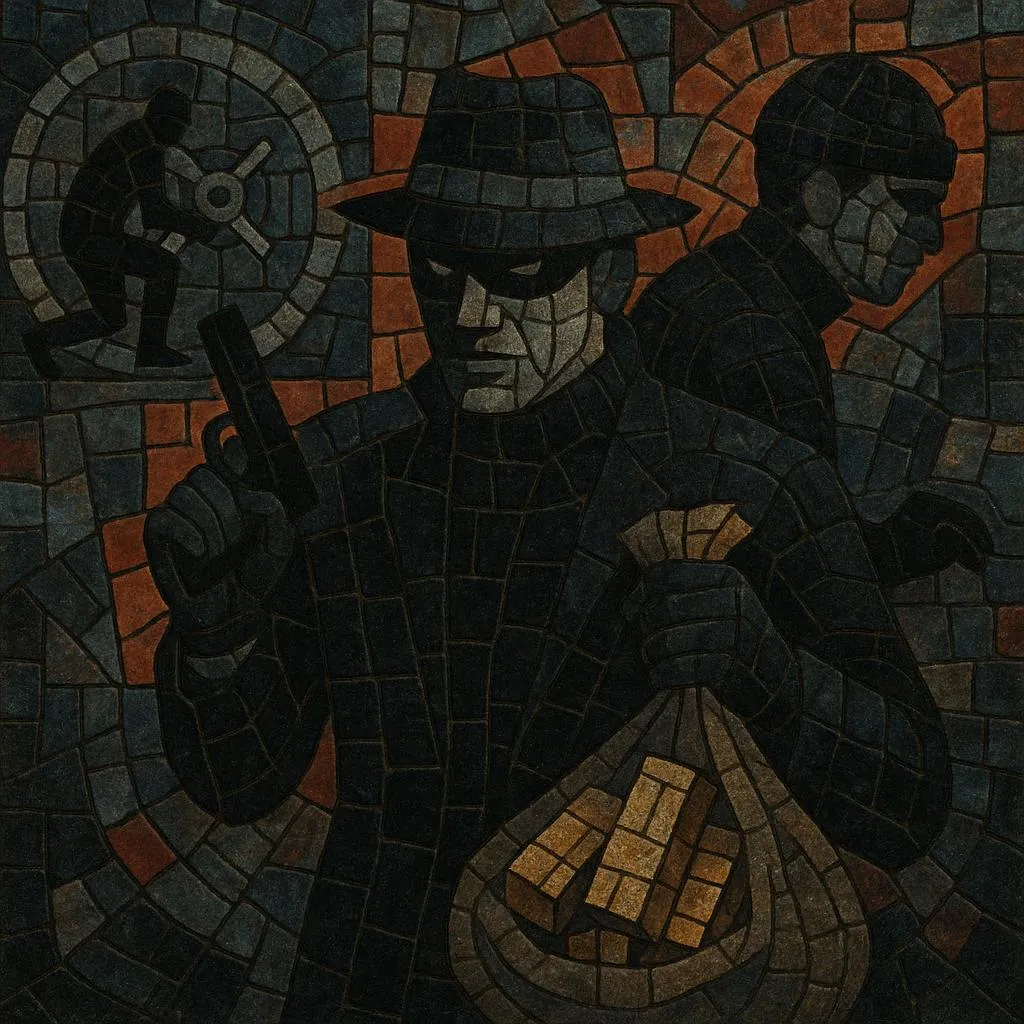
A heist film is a crime-centered screen genre built around the planning and execution of a major theft, typically by a specialized crew with complementary skills. Involves a planned theft by a gang of conspirators.
Musically, the heist film canon helped codify a distinctive “caper sound”: cool jazz combos, sly chromatic lines, ticking ostinatos, and later, funk- and electronica-driven grooves that underscore stealth, timing, and mounting tension. From mid-century noir capers to glossy modern ensembles, scores balance stylish swagger with precision clockwork, mirroring the step‑by‑step mechanics of the job.
History
The heist film cohered as a form in postwar cinema, synthesizing film noir’s moral ambiguity with procedural detail from crime pictures. American titles such as The Asphalt Jungle (1950) and The Killing (1956) laid out the template: assembling a crew, planning, execution, double‑cross, and fallout. In France, Rififi (1955) added near‑silent, hyperreal break‑in set pieces that became iconic.
Musically, these films leaned on jazz idioms—muted brass, walking bass, vibraphone—which conveyed both urban sophistication and criminal cool. The “caper” palette quickly became a shorthand for precision and stealth.
Caper comedies and international productions—The Pink Panther series, The Italian Job (1969), Topkapi (1964), The Thomas Crown Affair (1968)—brought brighter palettes and groove‑forward scoring. Composers blended big‑band swing, bossa, early funk, and lounge textures; the result shaped later acid‑jazz and crate‑digging cultures that sampled these scores.
Heist films resurged with ensemble casts and slick editing (Heat, Ocean’s Eleven, Inside Man). Scores mixed breakbeats, modular pulses, and retro‑jazz signifiers, often using minimalist ostinati to pace planning montages and frenetic cues for the getaway. The genre’s musical language migrated into game and TV scoring for stealth and crime narratives.
Modern entries hybridize electronics (granular synths, side‑chained bass, clock ticks) with vintage caper signifiers (vibes, bongos, Hammond organ). Some blend high‑concept sound design (time‑dilation effects, Shepard tones) with stylish funk or nu‑jazz grooves, preserving the core grammar: cool precision for the plan, kinetic propulsion for the job, and noir tension for the twist.