Your digging level

For this genre
0/8
🏆
Sign in, then listen to this genre to level up

Description

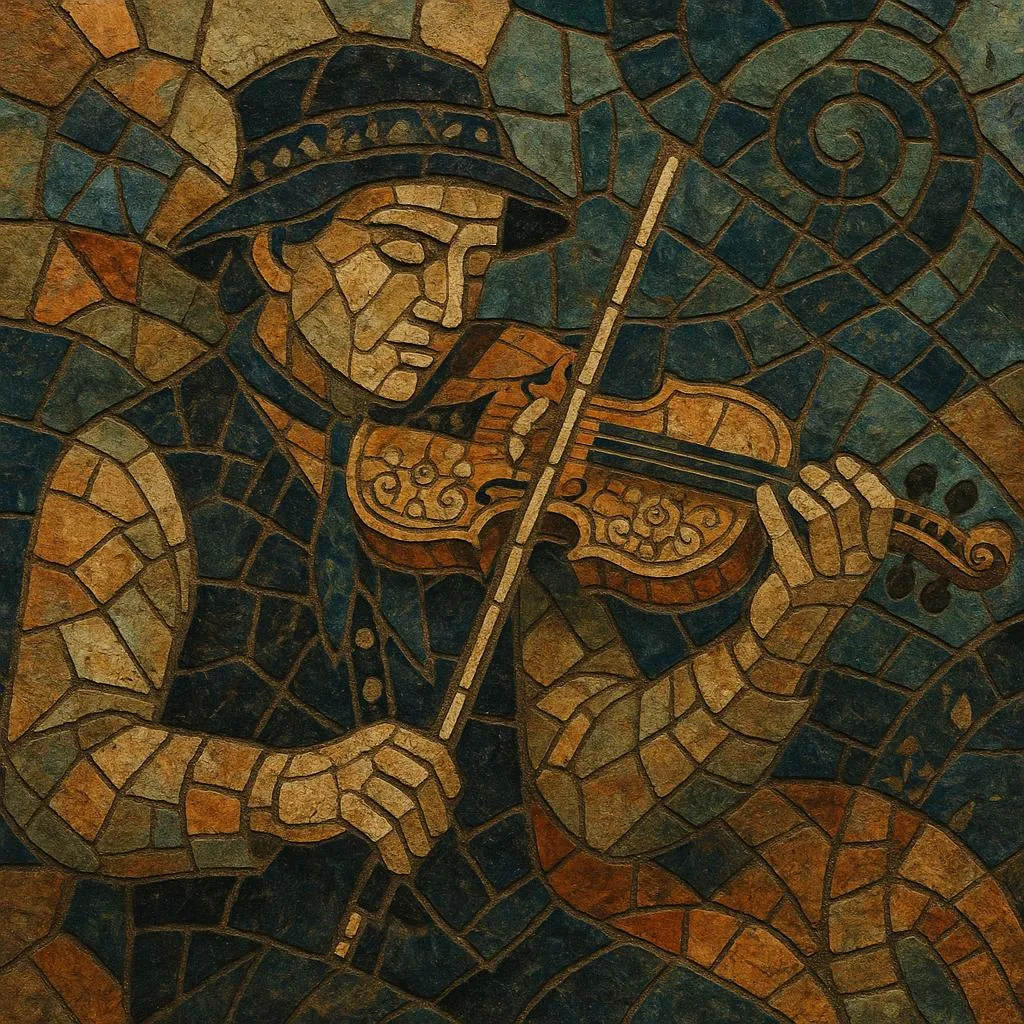
Hardingfele refers to the Hardanger fiddle tradition of Norway—both the specially built fiddle and its repertoire of rural dance-tunes (slåttar) and listening pieces.

The instrument looks similar to a violin but has 4 (sometimes 5) bowed strings above, plus 4–6 sympathetic strings underneath that vibrate in resonance, producing a shimmering, bell-like halo. Players use cross-tunings (scordatura) tailored to each tune family, abundant double-stops and drones, highly ornamented fingering, and subtle bow pulses. Rhythms often carry the distinctive asymmetrical triple-time swing of regional springar styles, and melodies gravitate to modal colors (Dorian, Mixolydian) with flexible intonation.


Sources: Spotify, Wikipedia, Discogs, RYM, MB, user feedback and other online sources

History

Origins (17th–18th centuries)

The Hardanger fiddle emerged in western Norway (Hardanger/Voss) in the 1600s, likely shaped by Baroque violin-making ideas and local folk aesthetics. By the 1700s, it had spread to Telemark, Setesdal, Valdres, and other valleys, where distinctive regional repertoires and tunings formed around dance-types (springar, gangar, halling) and ceremonial pieces (e.g., brureslått—wedding tunes).

19th-century prominence

A "golden age" of local virtuosi and makers established the instrument’s prestige. Legendary fiddlers like Myllarguten (Torgeir Augundsson) brought valley styles to national attention, including a landmark 1849 concert facilitated by violinist-composer Ole Bull, which helped bridge folk and art-music spheres. Families of luthiers (notably in Hardanger and Telemark) refined the decorated, inlaid instrument with sympathetic strings that define its sound.

20th-century preservation and revival

Modernization and urbanization reduced rural dance contexts, but community ensembles (spelemannslag), archives, and competitions like Landskappleiken safeguarded styles. Collectors and scholars documented regional variants, bowing language, microtiming (the "swing" of springar), and tunings. From mid-century onward, a broader folk revival brought the hardingfele to stages, radio, and recordings.

Contemporary practice and crossovers

Today, tradition-bearers and innovators coexist. Masters maintain local dialects of style, while contemporary artists integrate hardingfele with jazz, ambient, and even metal and pop textures. Education, festivals, and a living network of makers and players sustain the instrument at the heart of Norway’s musical identity.

How to make a track in this genre

Choose tune-type and pulse
•   Pick a traditional form: springar (asymmetrical triple), gangar (duple walking tune), halling (athletic dance), or brureslått (ceremonial). •   For springar, shape a lilted 3-beat with unequal beat lengths (regionally varying patterns such as long–short–medium). Dancers feel this microtiming—let your bowing breathe with it.
Tunings, resonance, and tone
•   Use scordatura (cross-tuning). Common setups center on A/E drones; a classic “gorrlaus” variant for the top strings is A–E–A–C♯ (sympathetic strings tuned to a related chord/scale). •   Exploit sympathetic strings: sustain notes and open drones so the understrings ring. Aim for a bright yet warm tone with clear articulation.
Melody, mode, and ornament
•   Compose within modal colors (Dorian, Mixolydian, or major with flexible leading tones). Keep ranges singable and fiddle-friendly. •   Write phrases in short motifs suited to variation. Traditional structures often cycle A–A–B–B with evolving ornaments. •   Add grace-notes, trills, mordents, crushed notes, and quick finger-taps. Use double-stops and open-string drones to outline harmony without full chordal writing.
Bowing language and groove
•   Use short, danceable bow strokes with intermittent bow pulses (trøkk) to emphasize steps. •   Vary slurs vs. separate strokes to articulate motif shape, and lean into off-beat accents that energize the dance.
Arrangement and context
•   Solo hardingfele is idiomatic, but you may add second fiddle, langeleik, voice (stev/slåttetrall), or subtle percussion (foot-stomps) if desired. •   For ceremonial pieces, write processional contours and ringing cadences; for dance tunes, prioritize momentum and clear sectional repeats.
Notation and learning style
•   Notation can be a guide, but the style lives in ear-learning: microtiming, swing, bow pressure, and ornaments are best internalized from recordings and master players.

Top tracks

Locked
Share your favorite track to unlock other users’ top tracks

Upcoming concerts

in this genre
Influenced by
Has influenced

Download our mobile app

Get the Melodigging app and start digging for new genres on the go
© 2026 Melodigging
Melodding was created as a tribute to Every Noise at Once, which inspired us to help curious minds keep digging into music's ever-evolving genres.
Buy me a coffee for Melodigging