Your digging level
Description
Hardbass is a high‑energy Russian subgenre of pumping house that emerged in Saint Petersburg in the late 1990s.
It blends the driving bounce of bouncy techno and happy hardcore with the heavy kicks and distorted textures of hardstyle, adding the trademark "donk" bass timbre and simple, catchy chants or rapped hooks.
Typical tempos range from 150 to 175 BPM, with four‑on‑the‑floor drums, rolling off‑beat bass stabs, and aggressively compressed, metallic synths.
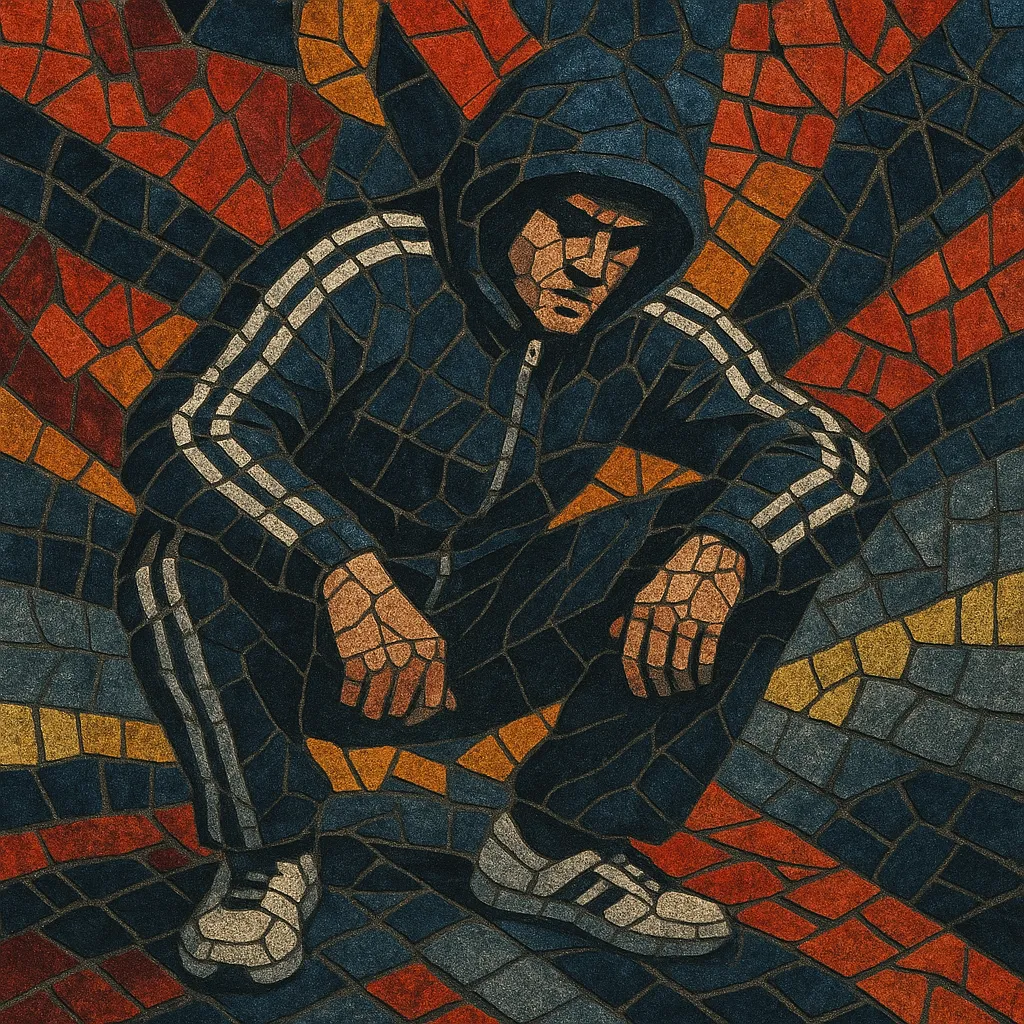
Beyond clubs, hardbass became a social phenomenon across parts of Europe via public "hardbass" gatherings, where masked dancers perform synchronized, high‑intensity moves—sometimes with moshing—turning the genre into both a sonic and visual meme.




History
Hardbass arose in Saint Petersburg, Russia, at the intersection of local pumping house scenes and imported hard dance styles. Producers pushed tempos higher, emphasized a distinctive "donk" bass hit, and favored distorted, straightforward sound design suitable for gritty warehouse systems.
Through the 2000s, Russian and Eastern European DJs and netlabels circulated tracks on forums and file‑sharing sites, codifying the genre’s fast 4/4 beats, clipped off‑beat basslines, and simple, chantable vocal phrases. Regional club nights and outdoor raves spread the sound across the CIS and parts of Central Europe.
Viral videos and meme culture vaulted hardbass beyond niche scenes. Groups of masked participants staged spontaneous "hardbass" dances in public squares, reinforcing the genre’s reputation for tongue‑in‑cheek bravado and physical intensity. Online, humorous imagery coexisted with serious production, helping hardbass tracks reach global audiences.
Modern hardbass maintains its core formula—150–175 BPM, donk timbres, heavy kicks—while borrowing from contemporary hardstyle and hands up aesthetics. It remains a staple of Slavic club culture, gaming montages, and internet meme compilations, valued for its immediate, kinetic impact.
• Set the tempo between 150–175 BPM.
• Use a four‑on‑the‑floor kick pattern with tight sidechain compression to make space for the bass.
• Program an off‑beat, staccato "donk" or FM/ROMpler bass stab that hits between the kicks and drives the bounce.
• Craft the donk using FM or subtractive synthesis: short decay, pronounced pitch envelope, and metallic overtones.
• Layer a hard, clipped kick with subtle distortion and a short, clicky transient for definition.
• Add simple supersaw or square‑based leads for hooks; process with distortion, bitcrush, and OTT‑style compression for aggression.
• Keep harmony minimal—one or two minor‑key chords, or modal riffs built around tonic–minor third–fifth.
• Write repetitive, monosyllabic toplines that leave room for drums and bass.
• Incorporate short chants, crowd shouts, or playful rap phrases; call‑and‑response works well.
• Use heavy filtering, megaphone effects, or formant shifts to match the rough texture.
• Structure as intro → build → drop → break → second drop; keep sections concise (16–32 bars) to sustain momentum.
• Use risers, snare rolls, reverse bass swells, and quick filter sweeps to tee up the drop.
• Prioritize loudness and impact: strong low‑mid control on the donk, a glued drum bus, and a limiter that preserves transient punch.
• Test on small speakers and club systems to ensure the kick–donk interplay remains clear.