Your digging level for this genre

0/8
🏆
Sign in, then listen to this genre to level up

Description

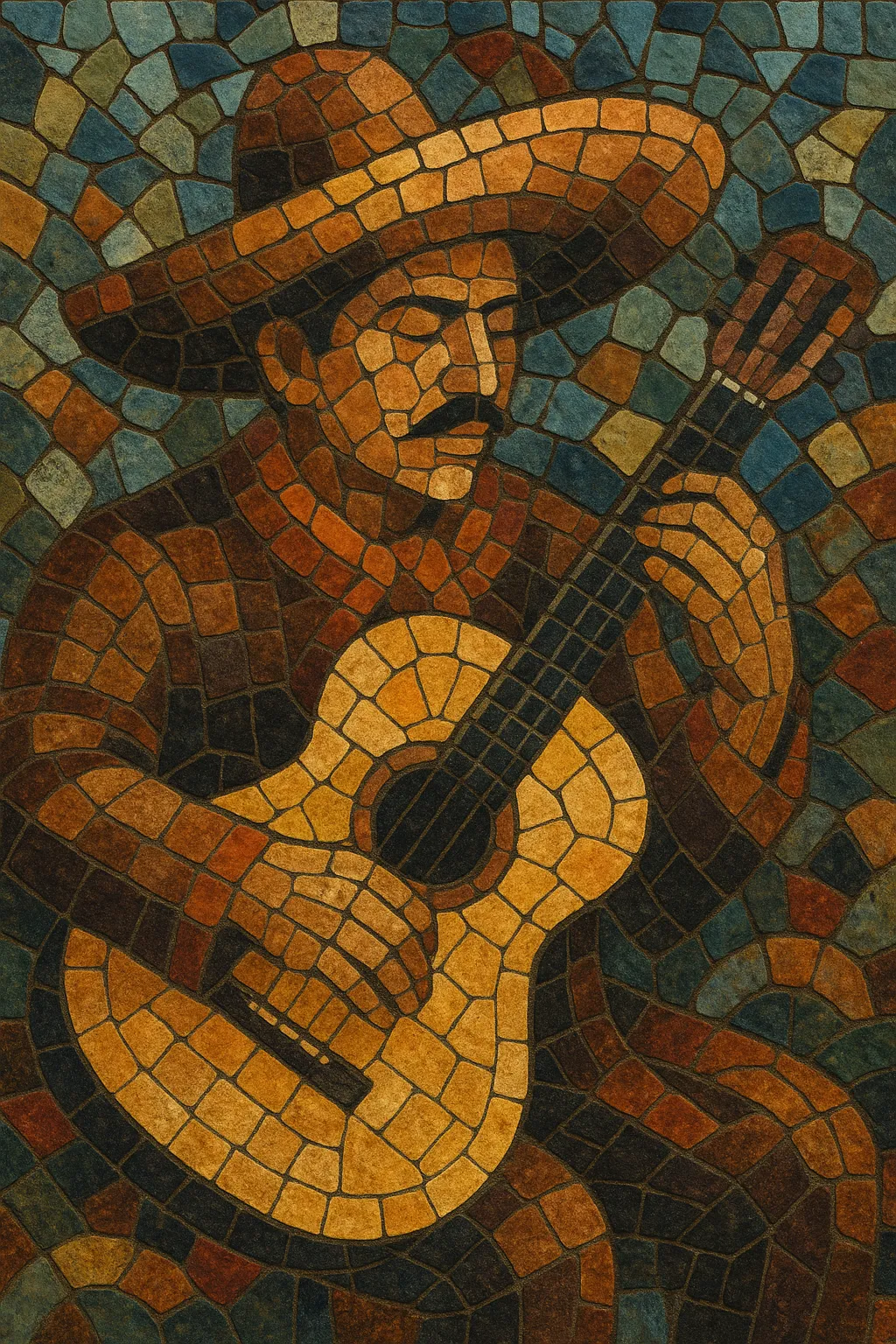
Guitarra mexicana refers to the Mexican tradition of guitar-centered performance and repertoire, from romantic bolero trío stylings with requinto to instrumental interpretations of regional sones and rancheras. It privileges nylon‑string timbres, expressive melodic leads, and refined accompaniment patterns rooted in both Iberian and local folk practice.

In practice, the style often features a small ensemble or solo guitarist using the requinto (tuned a fourth higher) to carry lyrical melodies, while a standard classical guitar provides harmonic support through arpeggios and bolero rhythms. Its repertoire spans serenade-ready boleros, huapangos, waltzes, and instrumental versions of mariachi and canción traditions, projecting intimacy, nostalgia, and virtuosity.

History

Origins (late 19th–early 20th century)

Mexican guitar practice grew from the meeting of Iberian guitar traditions and a diverse set of regional folk styles. By the late 19th century, guitars were central to salon music and to local son forms such as son jarocho and son huasteco, while classical training and repertoire also circulated in urban centers.

Bolero trío era and the requinto (1940s–1960s)

The 1940s marked a turning point with the rise of bolero trío ensembles. Within these groups, the requinto—tuned a fourth higher—emerged as a lead instrument capable of singing, tremolo, and lyrical counter‑melodies. This period codified hallmark accompaniment patterns (bolero rhythms, elegant arpeggios) and a serenade aesthetic that came to symbolize guitarra mexicana worldwide.

Diversification and instrumental recordings (1970s–1990s)

As mariachi and ranchera gained international audiences, guitarists issued instrumental albums that translated beloved songs into expressive guitar miniatures. Parallel to this, regional trío groups refined close‑harmony vocals with polished guitar interplay, while concert and studio techniques improved the recorded guitar sound.

Contemporary developments (2000s–present)

In the 21st century, the tradition informs sierreño and modern corrido offshoots, where requinto‑style lead lines and intricate accompaniment remain central. Solo and duo concert acts have revived acoustic virtuosity, blending bolero phrasing with classical articulation and occasional flamenco‑adjacent techniques, keeping guitarra mexicana both rooted and exploratory.

How to make a track in this genre

Instruments and tuning
•   Use nylon‑string classical guitars for warmth and articulation. •   Feature a requinto guitar as the melodic lead, typically tuned a fourth higher (A–D–G–C–E–A), with a standard guitar providing harmonic support.
Rhythm and groove
•   For bolero: employ a steady bolero patrón with soft bass notes and off‑beat brush strokes; alternate arpeggios and light rasgueados to shape phrases. •   For huapango/son influences: alternate 6/8 and 3/4 feels, inserting accented bass notes and syncopated arpeggios. •   Waltz pieces (3/4) suit serenade moods; keep the pulse graceful and understated.
Harmony and melody
•   Favor diatonic progressions (I–vi–ii–V, I–IV–V) with tasteful secondary dominants and borrowed iv or bVII for color. •   Compose singable, vocal‑like melodies for the requinto; use tremolo, ligado (hammer‑ons/pull‑offs), and subtle portamento to emulate a lyrical singer. •   Arrange short instrumental interludes between verses; echo the main theme with ornamented variations.
Texture and arrangement
•   Duo or trío settings work well: requinto (melody), guitar (harmony/comping), and optional second guitar for counter‑lines. •   Balance arpeggios and block‑chord punctuations; leave space for cadential fills and brief cadenza‑style flourishes.
Production and performance tips
•   Record with a condenser microphone near the 12th fret to capture detail; add a body mic for warmth. •   Keep dynamics intimate; prioritize clarity of right‑hand articulation (apoyando/free stroke as needed) and clean rasgueado. •   If including vocals, use close‑harmony trío voicings; lyrics typically express romance, longing, and serenade imagery.

Top tracks

Locked
Share your favorite track to unlock other users’ top tracks
Influenced by
Has influenced
Challenges
Digger Battle
Let's see who can find the best track in this genre
© 2025 Melodigging
Melodding was created as a tribute to Every Noise at Once, which inspired us to help curious minds keep digging into music's ever-evolving genres.
Buy me a coffee for Melodigging