Your digging level
Description
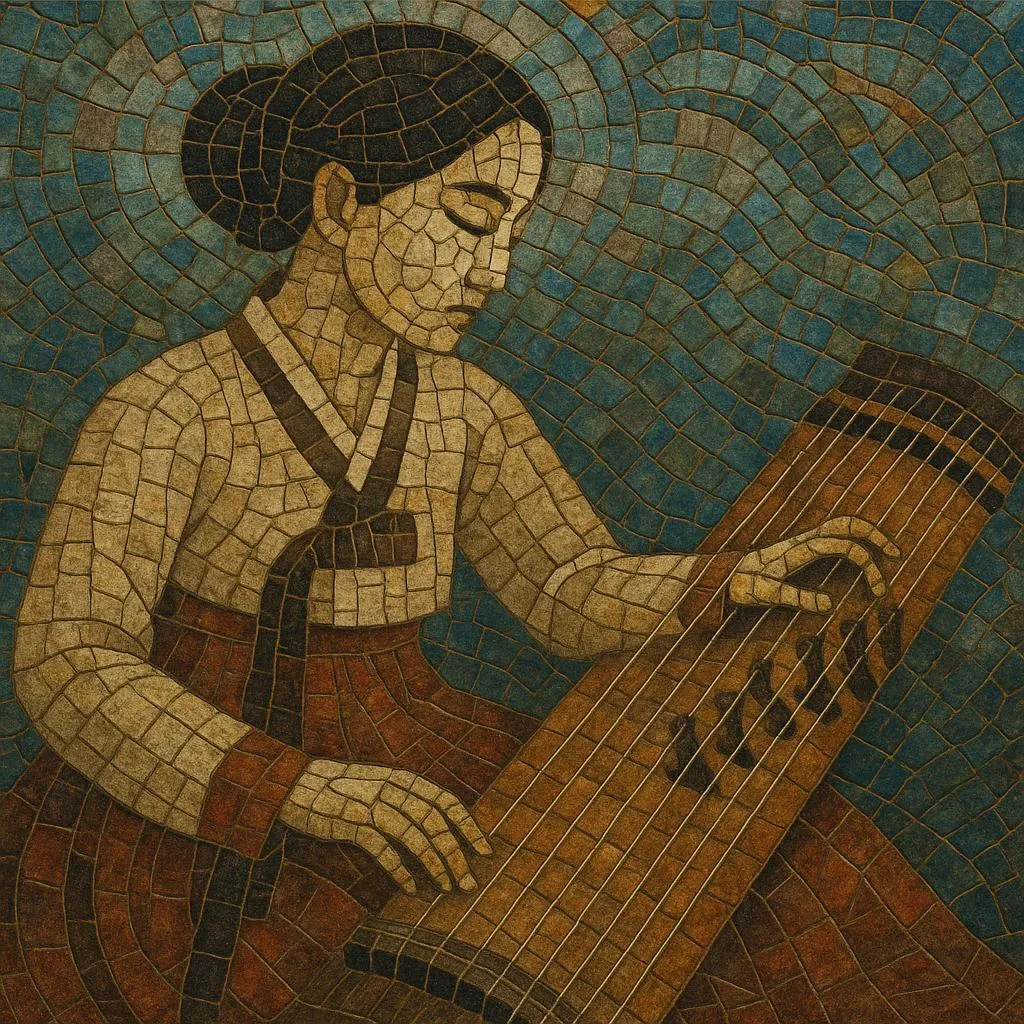
Gayageum is music centered on the gayageum, a traditional Korean plucked zither with movable bridges. The classic instrument has 12 silk (now often nylon) strings, while modern concert versions commonly feature 18, 21, or 25 strings for broader range and chromatic possibilities.
Its sound world is defined by supple plucked tones, rich overtones, and expressive pitch inflections created by pressing and bending strings left of the bridges. Core repertoire spans court and literati traditions (jeongak), lyrical song accompaniment (gagok/sijo), and virtuosic solo suites (sanjo), as well as improvisatory shaman-derived practice (sinawi). In contemporary music, the gayageum appears in chamber ensembles, jazz, film scores, and cross‑genre collaborations, retaining its idiomatic ornaments and rhythmic cycles (jangdan) while adapting to new harmonic languages.
History
According to Korean historical tradition, the gayageum was devised by the musician Ureuk in the Gaya confederacy during the 6th century CE. The instrument and its repertory soon entered Silla and later courtly circles, where plucked-zither timbres became integral to ceremonial and refined entertainment music.
Through the Goryeo and Joseon periods, the gayageum was established in jeongak (court and aristocratic music). It accompanied refined vocal genres such as gagok and sijo, and participated in ensemble textures alongside piri, daegeum, haegeum, and percussion, emphasizing elegant melody, restrained ornament, and cyclical meters (jangdan).
In the late 19th century, Kim Chang-jo formalized gayageum sanjo—an extended solo form that moves from very slow (jinyangjo) to faster rhythms (jungmori, jungjungmori, jajinmori, hwimori), showcasing idiomatic ornaments and improvisatory flair. Parallel practices like sinawi (group improvisation with shamanic roots) informed the instrument’s expressive vocabulary.
The 20th century brought organological changes: additional strings (18/21/25) and modern materials enabled wider tessitura and chromaticism. Conservatories codified schools of performance (e.g., Kim Juk‑pa’s lineage in sanjo). Composers created new concert pieces, and the instrument began to appear in radio, cinema, and intercultural settings.
Today the gayageum thrives in both traditional and experimental contexts—world/jazz collaborations, new music ensembles, and popular crossovers—while remaining a pillar of gugak (Korean traditional music). Recordings, pedagogy, and international tours have helped its techniques and repertoire gain global recognition.