Your digging level

For this genre
0/8
🏆
Sign in, then listen to this genre to level up

Description

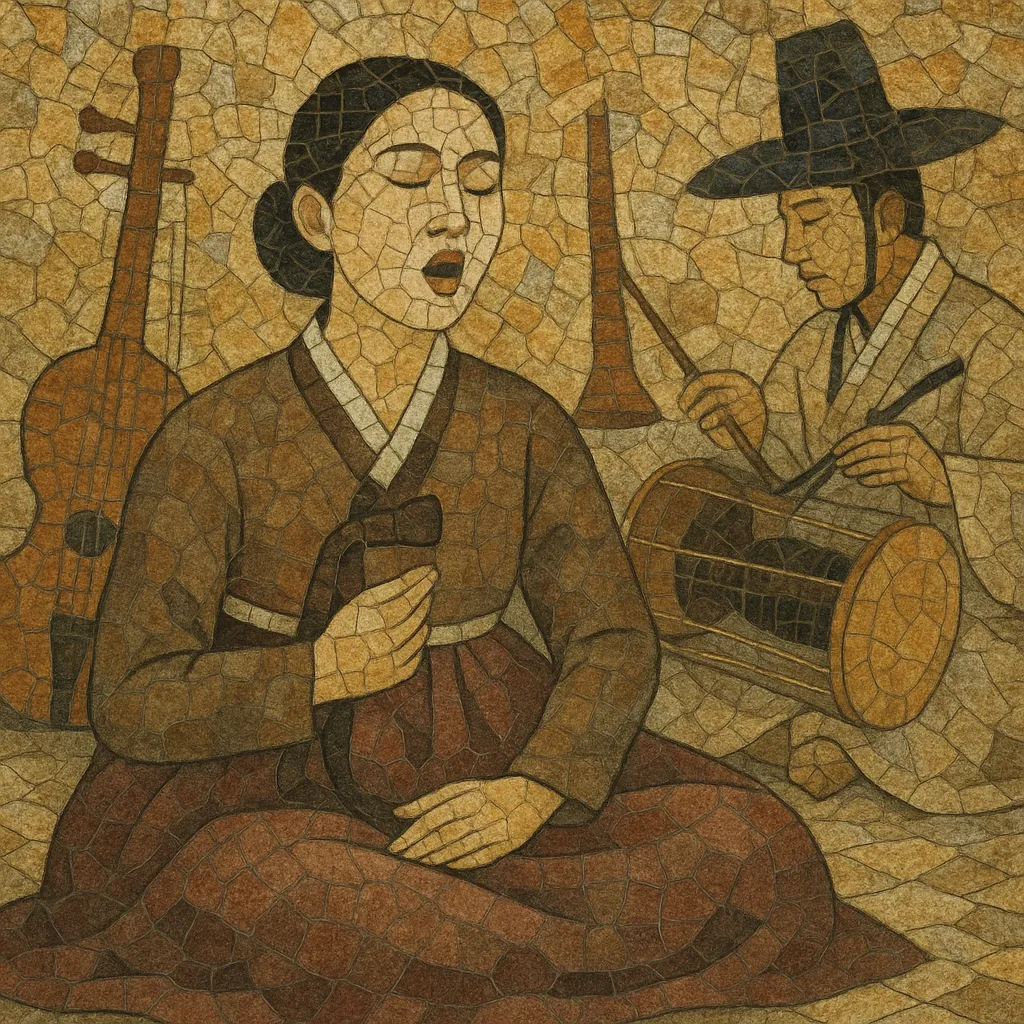
Gagok (가곡) is a refined genre of Korean courtly vocal music consisting of lyric song cycles set to sijo poetry and accompanied by a small jeongak ("proper music") orchestra. It exists in distinct repertoires for male (namchang) and female (yeochang) voices.

Emerging from the aristocratic salon culture of late Joseon Korea, gagok shapes three-line sijo texts into extended, highly ornamented melodies in the ujo and gyemyeonjo modal systems. The accompaniment typically features a soft yet stately chamber ensemble (piri, daegeum, haegeum, gayageum or geomungo, and janggu) that articulates cyclical rhythms (jangdan) while sustaining a contemplative pace.

Considered one of the most elegant vocal traditions within Korean classical music, gagok was recognized as a National Important Intangible Cultural Heritage in the 1960s and inscribed by UNESCO in 2010 as an Intangible Cultural Heritage of Humanity.


Sources: Spotify, Wikipedia, Discogs, RYM, MB, user feedback and other online sources

History

Origins and Courtly Roots

Gagok traces its lineage to the aristocratic jeongak sphere and the sijo sung-poetry practice enjoyed by the literati from the Goryeo (918–1392) into the Joseon dynasty (1392–1897). In late Joseon, sijo performance grew from intimate recitation into elaborated, cyclical songs with full chamber accompaniment, forming the basis of gagok as a distinct, courtly vocal genre.

Formal Consolidation in Joseon

By the 18th–19th centuries, gagok coalesced into named cycles distinguished by tempo and character: mandaeyeop (very slow), jungdaeyeop (moderate), and sakdaeyeop (faster). Over time, the brisker sakdaeyeop became the prevailing concert form, while the slowest variants largely faded from active practice. Parallel male (namchang) and female (yeochang) traditions developed with subtly different tessituras, ornamentation, and favored instruments (geomungo often associated with male gagok and gayageum with female gagok).

Preservation and Modern Performance

Following early 20th‑century disruptions, scholars, master singers, and state cultural bodies undertook systematic preservation. Gagok was designated a National Important Intangible Cultural Heritage (Korea) in the 1960s and, in 2010, was inscribed by UNESCO as an Intangible Cultural Heritage of Humanity. Today, gagok is taught in conservatories and gugak (traditional music) institutions, and performed by specialist vocalists and court‑music chamber ensembles in both traditional and curated concert settings.

How to make a track in this genre

Text and Form
•   Start with a sijo poem (three lines, each typically subdivided into rhythmic/melodic segments). Maintain the dignified, introspective ethos of literati verse: nature images, moral reflections, and restrained emotion. •   Map each line to a large-scale melodic span within a cyclical rhythmic framework (jangdan). Plan cadential points where the voice and instruments breathe together.
Mode and Melody
•   Use ujo and gyemyeonjo modal systems common in jeongga: ujo projects a bright, open quality; gyemyeonjo is tender and plaintive. •   Compose a single, extended melody per poem with subtle, continuous ornamentation (nong, chuseong, toeseong). Avoid wide leaps; favor graceful, stepwise motion and lingering tones.
Rhythm and Pace
•   Employ slow to moderate court cycles. Historically, mandaeyeop (very slow) and jungdaeyeop (moderate) existed; concert practice often favors the comparatively brisk sakdaeyeop. •   Let percussion (janggu) articulate the cycle gently; rhythmic interest comes from micro-ornamentation and breath, not percussive drive.
Instrumentation and Texture
•   Score for a small jeongak chamber ensemble: piri (double reed), daegeum (large bamboo transverse flute), haegeum (bowed fiddle), gayageum and/or geomungo (zithers), and janggu (hourglass drum). Keep textures transparent and homophonic, with instrumental preludes/interludes outlining the mode and cycle. •   Balance the voice above a quiet, sustained accompaniment; allow timbral contrast by alternating piri and daegeum lines with zither underpinning.
Vocal Delivery and Ornamentation
•   Write for either namchang (male) or yeochang (female) tessitura; adapt range and ornament density accordingly. •   Emphasize controlled breath, straight tone with refined vibrato, and nuanced pitch inflection characteristic of jeongga. Ornament syllable onsets/offs delicately rather than with virtuosic flourishes.
Notation and Rehearsal
•   Compose from established melodic archetypes (bon-jo) if writing within tradition, or notate in staff with annotated ornaments and jangdan markers for modern performers. •   Allow space for customary introductions (yeongsan hoesang-derived preludes are common in jeongak contexts) and brief instrumental codas.

Best playlists

Top tracks

Locked
Share your favorite track to unlock other users’ top tracks

Upcoming concerts

in this genre
Influenced by
Has influenced

Download our mobile app

Get the Melodigging app and start digging for new genres on the go
© 2026 Melodigging
Melodding was created as a tribute to Every Noise at Once, which inspired us to help curious minds keep digging into music's ever-evolving genres.
Buy me a coffee for Melodigging